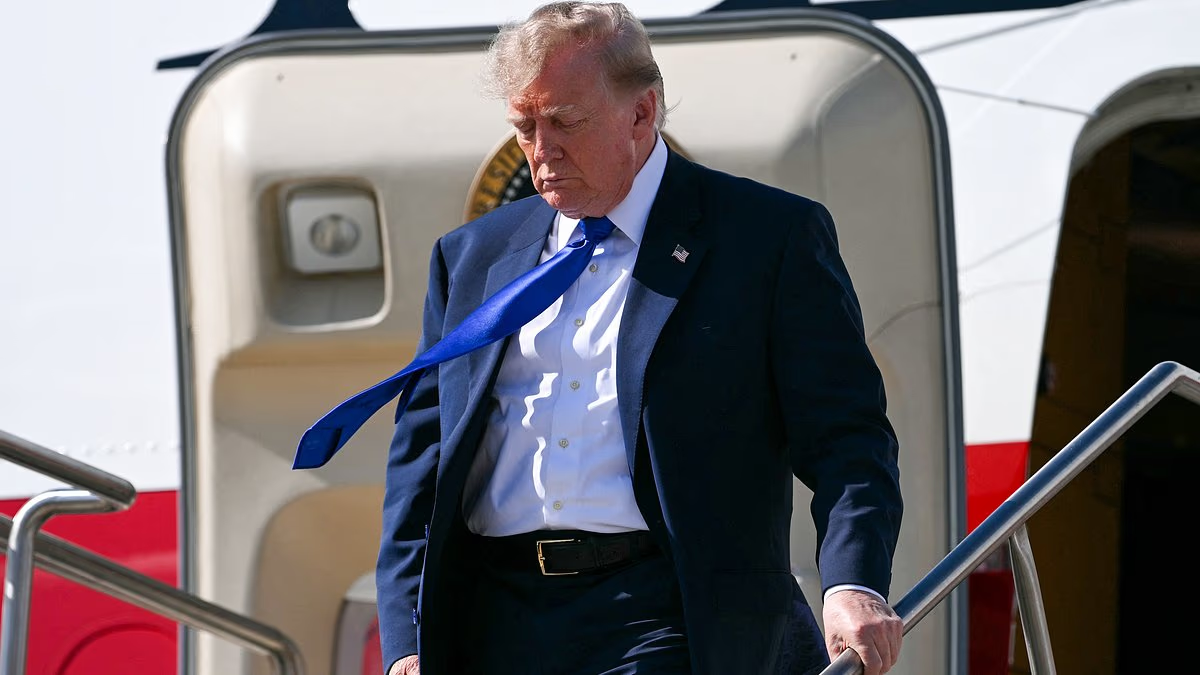

Iranian forces launched a barrage at a military base in Jordan that hosts US fighter jets, just hours after Donald Trump warned Tehran “not to get cute.”
About nine American aircraft were damaged during the Wednesday night strikes on Muwaffaq Salti Air Base in Jordan, CBS News reported.
Among the aircraft hit was an A-10 Thunderbolt II, the attack jet commonly known as the Warthog. The plane, valued at roughly $20 million, reportedly lost a wing. No service member deaths or injuries have been reported so far.
Eight F-15 fighter jets, each valued at more than $90 million, also suffered minor damage but have since returned to service. US forces fired more than 30 Patriot missiles overnight to counter the attacks, sources told CBS News.
US military officials have previously raised concerns about shrinking supplies of Patriot interceptors and other precision munitions used in operations against Iranian forces.
The strikes came only hours after Trump cautioned Iran over reported activity at Pickaxe Mountain, one of the regime’s suspected nuclear sites.
“We notice there’s a little activity at Pickaxe. I would advise Iran not to get cute because we will have to hit them very hard,” Trump told supporters Wednesday at the midterm Republican convention in Dallas, Texas.
The site is viewed as one of the regime’s remaining major facilities for storing and enriching uranium for its nuclear program. Satellite images reportedly indicate construction activity at a nearby building.

During his Republican Midterm convention speech on Wednesday night, Trump told the regime ‘not get cute’ around their Pickaxe Mountain nuclear site

An A-10 Thunderbolt II, the jet known as the Warthog, worth about $20 million was hit and lost a wing

US military officials have previously said they are concerned about dwindling stockpiles of Patriot missiles and other precision munitions used against Iranian forces

US forces fired more than 30 Patriot missiles to defend against the attacks
A spokesperson for the Center for Strategic and International Studies told CNBC that the latest data indicates the site ‘has shifted from active excavation toward probable internal construction and continued exterior reinforcement.’
Trump has previously threatened to launch attacks at the site’s underground bunker if Iran attempted to reconstruct the nuclear program.
Tensions in the region have grown in recent weeks after a flurry of attacks between the US and Iran over the Strait of Hormuz, a narrow waterway responsible for one-fifth of all global oil.
Recently, the US has launched various military strikes on Iranian military assets, including their radar systems, along with the strait to stop them from harassing US-backed oil tankers.
Brent crude was trading at a high of $101 per barrel on Thursday morning, its highest level since May, as traders braced for further disruption to Middle East supplies.
Economists warn that a drawn-out war with Iran could keep the global oil market in turmoil for years by driving up the cost of gas and consumer goods for Americans.
The US and Iran agreed to a temporary ceasefire in June, but it collapsed weeks later when Washington resumed strikes after accusing Tehran of attacking commercial ships in the strait.
Negotiations remain stalled, with Trump refusing to accept a deal that falls short of his nuclear demands.

Tensions in the region have grown in recent weeks after a flurry of attacks between the US and Iran over the Strait of Hormuz

US cruise missiles are launched at Iranian military targets along the Strait of Hormuz

The vice president and secretary of state told the president that Tehran could keep resisting US pressure and military strikes right up until Inauguration Day in January 2029
Washington wants Iran to end its nuclear program and hand over its stockpile of highly enriched uranium.
Tehran wants joint control of the Strait of Hormuz and the ability to charge tankers for passage to help cover the damage caused by US strikes.
Trump’s top advisers, including JD Vance and Marco Rubio, have warned him that the war with Iran could drag on for the rest of his presidency.
The vice president and secretary of state told the president that Tehran could keep resisting US pressure and military strikes right up until Inauguration Day in January 2029, according to the Wall Street Journal.


