
In March 2021, after more than two years away and an unusual journey through nearly empty roads in a lockdown-bound Scotland, I finally returned to my cottage on the outskirts of Stornoway.
The winter had been long, isolating, and terribly harsh. There were moments when tears would unexpectedly spill while I stood at the sink, and I suspect that the socially distant, mask-laden months weren’t particularly joyful for you either.
But on this late Saturday evening, I found myself back at home, the fire merrily crackling, my little dogs overjoyed, and a glass of something delightful in hand. I was once again in my own haven, surrounded by familiar belongings, with the rare luxury of focusing solely on myself.
I imagine this is much like the serene respite our mild-mannered King experiences when he can, amidst his obligations, sink into a cozy chair at Birkhall.
Charles III, blessed with numerous official residences alongside a handful of private retreats ranging from Gloucestershire to Romania, never lacks a place to call home.
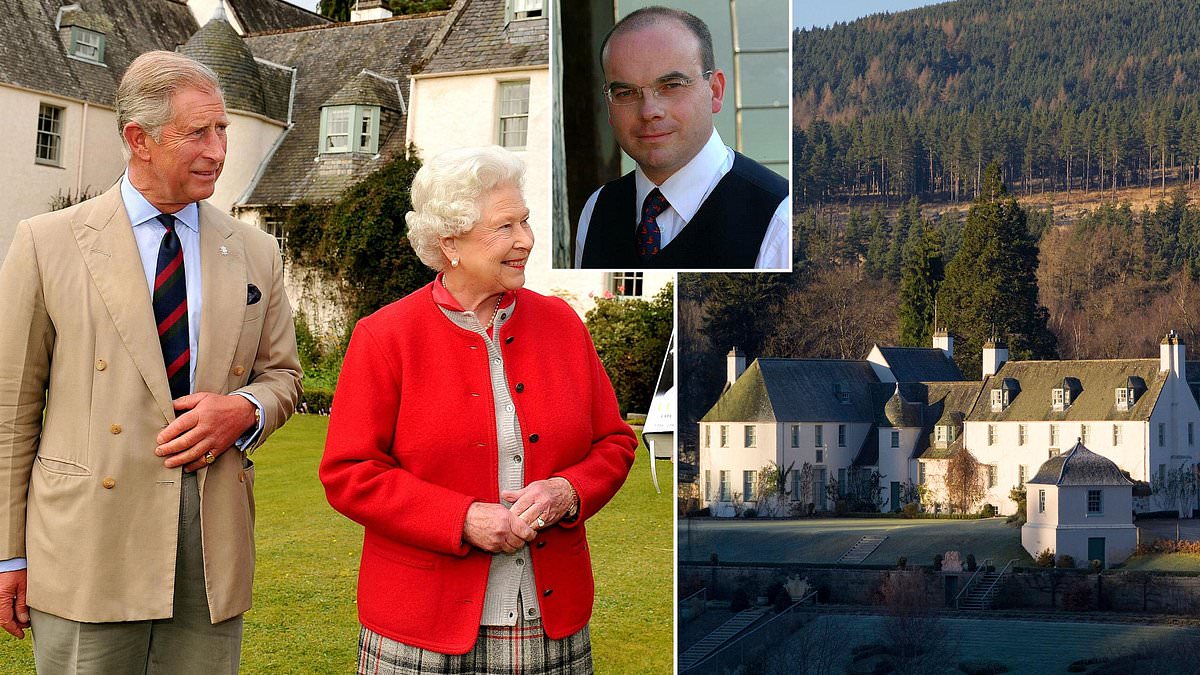
Yet, among all these, Birkhall—a charming, secluded, cream-colored L-shaped abode by the River Muick in Royal Deeside—holds a special place in his heart. Unlike the late Queen’s strict seasonal rotation of her residences, the King is known to appear there spontaneously, even if just for a weekend visit, at any time of the year.
Though in the Royal Family’s hands since the 1840s – Victoria had envisaged Birkhall as a Scottish lair for her eldest son, but the future Edward VII just stayed there once and did not like it – it was only from 1932 that Birkhall became the prized summer retreat of the then Duke and Duchess of York.
Birkhall House is the King’s favoured residence
It has been cherished by generations ever since. Here the Princesses Elizabeth and Margaret sat out the first months of Hitler’s war; a wendy house built for them is now enjoyed by the great-grandchildren.
Here, amidst the snows that closed out 1947, Elizabeth and Philip enjoyed a secluded honeymoon.
In the summer of 1952, her newly-widowed and broken mother hid herself away, thinking of quitting public life entirely. Family and ladies-in-waiting conspired, and Winston Churchill – no less – invited himself to tea at Birkhall and gently winkled the Queen Mum back out.
And here, some years later, the teenage Charles would fly to his grandmother for desperate comfort amidst his boarding school immiseration.
Birkhall, with its tartan wallpaper, its cartoons by Spy, its 11 longcase clocks – all of which chime at slightly different times, none quite right – and the constant, babbling wash of the Muick has been precious to him ever since.
Here he hid away in 1992, amidst the rubble of his first marriage. Here Charles proposed to Camilla. Here they self-isolated in 2020, as the heir to the throne spluttered through Covid.
In September 2022, he spent his first wracked night as King, before flying to his capital to present himself; here, too, Charles relaxed after his coronation – and here, since his accession, he has seen in every New Year.
Birkhall isn’t grand. The Queen Mother once perkily described it as ‘a small big house or a big small house’. She actually had to extend it a bit in her widowhood; coats and hats she left behind hang yet in the hall.
Camilla has been at rather less liberty to refurbish and redecorate here than at Clarence House – the other significant pile Charles inherited in 2002 – and is, presumably, tolerant of His Majesty’s delight in red squirrels.
Queen Elizabeth II with Prince Charles, Prince of Wales is presented with one of the first copies of ‘Queen Elizabeth the Queen Mother, The Official Biography’ by author William Shawcross in the garden at Birkhall
A window or two is always left open for them – in any event, the King is notoriously averse to heat – and they have the run of the house, rooting into coats and jackets wherein he has thoughtfully secreted some hazelnuts.
The 18th century manor might still feel very familiar to the Queen Mother. The gardens are another matter – ‘made a bit more interesting,’ Charles has laconically recorded. In fact, they have been redesigned wholesale, planted to look their very best in the weeks of high summer when the King and Queen lodge here for weeks on end.
The King is not his mother. He is more whimsical, more extravagant, consciously funnier and – sigh staff – far more demanding. When she was truly angry, there was silence and the death stare: when Charles is furious, no one within earshot is left in any doubt. And he has one quirk: he never, ever eats lunch. Even when he is hosting one.
But, as he has settled into his role – within hailing distance of 74 when he ascended the throne – his strengths have come to the fore.
The self-deprecating charm. The command of languages – French, German, Italian – and concerns for nature and the environment articulated as early as 1970 and which indeed proved prophetic.
He is a far more assured, relaxed and – as the moment calls for it – much funnier speaker than Elizabeth II, as his recent tour de force in Washington attested.
All the more impressive given recent health concerns – not that, in America or on other state visits, King Charles has looked the least ill – and the signal trial that is his younger and oceanically self-absorbed son.
Like his grandmother, he enjoys the grandest entertaining: the best dinner service, masses of flowers, gleaming crystal and gourmet fare.
But Charles is perfectly capable of roughing it. During a deftly discreet stay on Berneray, Harris, in 1987 – he has long been fascinated by the crofting life – he tilled the land, repaired fences and took avidly to mince and tatties.
After Tottenham was trashed by protracted riots in 2011 – shops looted; family businesses burned down – the Prime Minister and all the party leaders paid sententious visits. Once.

The then Prince of Wales with a red squirrel at his Birkhall home on the Balmoral Estate
‘I got a number of phone calls in the course of that day,’ local MP David Lammy recalled several years later. ‘David Cameron, Ed Miliband, Nick Clegg and they all said “Can we come?” And they came. None came back.
‘Prince Charles also phoned. He came; he has been back five times and he doesn’t just come back to look at it, he’s brought all his charities. He hasn’t done it with a fanfare, he hasn’t put out press releases, he’s just done it because he cares.’
If anything, the King is still more adored in South Ayrshire, where his rescue and restoration of Dumfries House have been a parallel with a host of endeavours for good in post-industrial communities long blighted by unemployment.
This is scarcely Last Night of the Proms country – and yet, when he visited Kilmarnock in 2012 (in the course of one day he joined an archery session, listened to an Alzheimer’s Society choir, dropped by on a homework club and charmed some dental nurses) crowds lined the streets to cheer him.
Walkabouts and that we see. Seldom, sadly, do we glimpse the gentle monarch off-duty in Deeside. Laying a hedge, or deftly casting his fly-line into the foamy Muick: a King, at last, come into his own.


