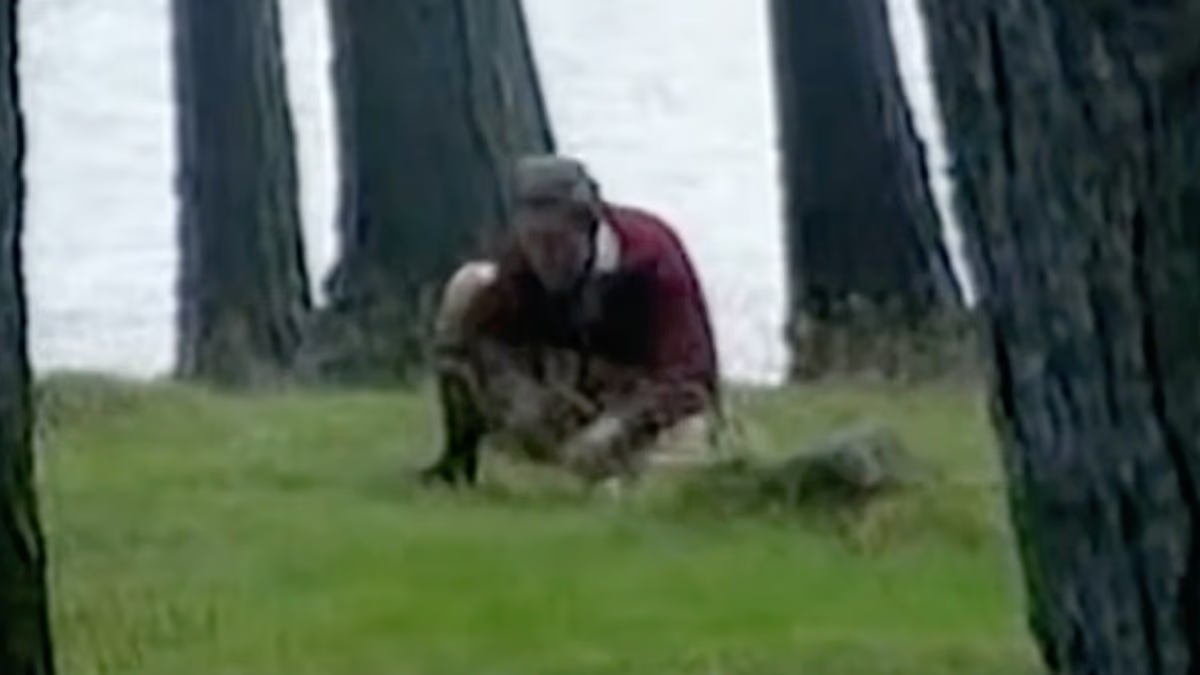

Forget the familiar image of a formal, distant royal father. Footage of King Charles in a kilt, racing after his young sons through the Balmoral woods, offers a far more playful glimpse of his approach to parenting.
There is an endearing absurdity to the then Prince of Wales, dressed in traditional Highland clothing, throwing himself into a game of chase with William and Harry. The boys appear to relish their father’s carefree mood.
The footage provides a rare look at royal family life away from the public gaze, challenging the image of the stern patriarch that has so often shaped Charles’s public narrative.
In these scenes, Charles appears relaxed and thoroughly engaged with his children, revealing a warmth and playfulness not always associated with him.
Balmoral, the Royal Family’s Scottish retreat, had long served as an escape for the young princes. Its fresh air and quiet Highland surroundings offered relief from London’s constant attention, flashing cameras and intense scrutiny.
William and Harry spent their summers there, enjoying the freedom of the countryside and taking part in outdoor pursuits including hunting, shooting and fishing, away from photographers.
As members of the Royal Family, the brothers were never likely to experience an entirely ordinary childhood. Yet Balmoral gave them a magical Highland refuge where they could run freely and, for a while, put their royal identities aside.
The Scottish landscape was not the only reason the estate held such importance. Their father also offered a sense of familiarity, stability and continuity.

Forget the familiar image of a formal, distant royal father. Footage of King Charles in a kilt, racing after his young sons through the Balmoral woods, offers a far more playful glimpse of his approach to parenting.

The footage provides a rare look at royal family life away from the public gaze, challenging the image of the stern patriarch that has so often shaped Charles’s public narrative. Pictured, Charles and William in the 1994 footage.
The scenes suggest that Charles could bring affection, humour and a strong sense of fun to family holidays—qualities that may have helped make Balmoral such a joyful place for his sons.
In his memoir Spare, Prince Harry described his father as emotionally reserved, recalling a childhood in which physical affection and spoken expressions of love were not always freely offered.
Charles’s public image was further shaped by the difficulties surrounding his marriage to Diana and his later relationship with Camilla, now Queen.
His demanding royal duties often kept him away from family life, while Diana was widely viewed as the more openly affectionate and hands-on parent. Comparisons between the two rarely worked in Charles’s favour.
Yet this clip, taken from ITV’s 1994 documentary Charles: The Private Man, the Public Role, shows him charging through the woods and reveals another side of the King.
A single home video cannot establish the full nature of his parenting, but it does capture a lively and engaging side of his character—a father prepared to join in the fun.
William’s relationship with Charles has inevitably been influenced by the weight of the Crown and the unusual pressures of growing up within an institution where duty takes precedence over almost everything else.
In recent years, William has spoken candidly about the effect of his parents’ separation, saying: ‘The drama and stress when you’re small affects you when you’re older.’

There is an endearing absurdity to the then Prince of Wales, dressed in traditional Highland clothing, throwing himself into a game of chase with William and Harry. The boys appear to relish their father’s carefree mood.

In these scenes, Charles appears relaxed and thoroughly engaged with his children, revealing a warmth and playfulness not always associated with him.
Royal biographers have nevertheless observed that father and son grew closer over time, developing a relationship grounded in mutual respect and a shared commitment to duty.
Harry, by contrast, has spoken more critically about his relationship with Charles. Both brothers, however, know the extraordinary difficulties of growing up in a family whose private life is seldom permitted to remain private.
Diana became closely associated with a more hands-on style of parenting. She hugged her sons in public, took them to Thorpe Park and tried to give them experiences that felt normal beyond palace life. They were often photographed in jeans and baseball caps, appearing like any other family enjoying a day out.
Charles was more often seen with the boys in traditional royal attire, including tweed and sensible shoes. These images, however, suggest that different parenting styles do not necessarily indicate a lack of sincere affection.
Charles is now King and, following his cancer diagnosis in 2024, continues to balance his health with the responsibilities of the Crown. William and his family remain central to his life, while Harry has said he wants to preserve a relationship with his father.
Whatever disagreements may have passed between them, the younger prince must surely remember those carefree Scottish summers with some affection—when his father would race after him through the woods in a kilt.


