
Sir Clive Alderton, the long-serving private secretary to King Charles, has become a particularly unpopular figure in the eyes of the Duke of Sussex.
Prince Harry made his hostility toward the senior royal aide clear in his memoir, Spare, where he devoted some of his sharpest criticism to the courtier who has worked closely with his father for more than 10 years.
The 59-year-old former diplomat was portrayed by Harry as a symbol of what he considered to be deeply flawed within the modern British monarchy.
Harry gave him the nickname “the Wasp” and claimed he was one of three “middle-aged white men” who had strengthened their influence inside the Royal Household through what he described as calculated, Machiavellian manoeuvres.
In his account, Harry depicted Sir Clive as “lanky, charming, arrogant” and full of “jazzy energy”, while alleging that the courtier’s approach was to appear unfailingly courteous—even submissive—before making his influence felt.
Harry wrote that even an apparently undeniable statement could be met with elaborate hesitation, suggesting that the speaker might have misunderstood the facts. He illustrated the point with a deliberately exaggerated exchange about whether the sun rises in the morning, portraying Sir Clive as responding with polite uncertainty over what exactly “mornings” meant.

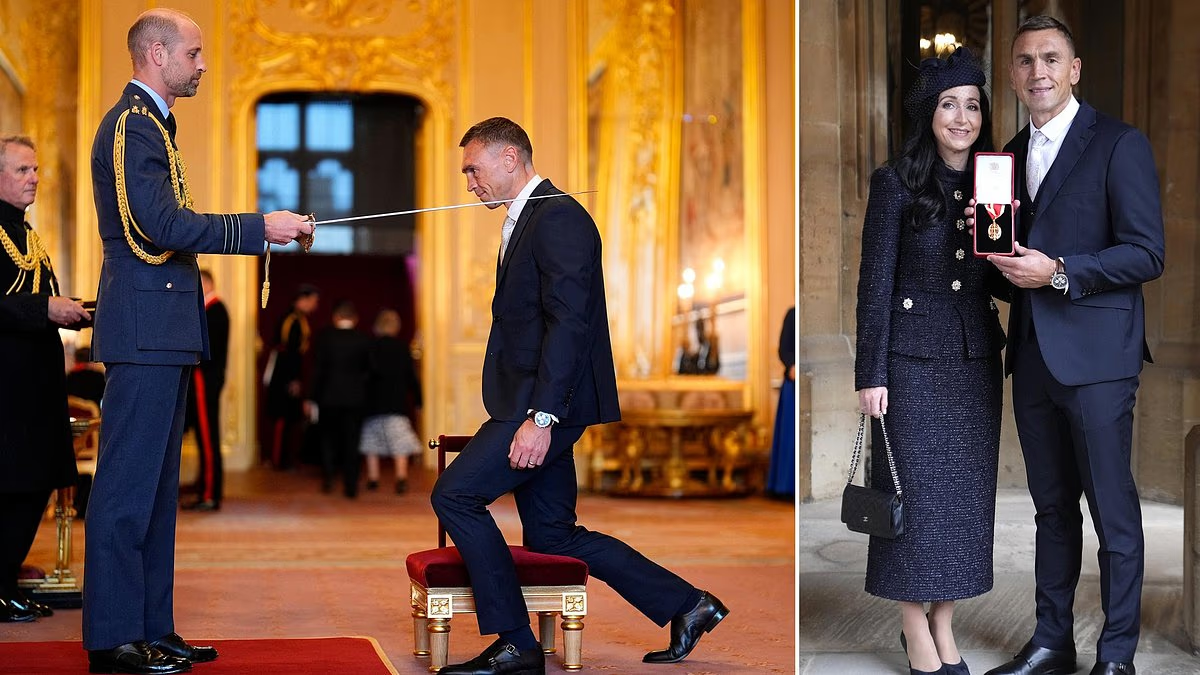
King Charles with his Private Secretary Sir Clive Alderton in March this year
The Duke claimed that Sir Clive’s modest, self-effacing manner could encourage people to press their arguments, only for the courtier to respond later with a sudden and forceful counterattack that left them wondering where it had come from.
Yet this week, Sir Clive was placed in the unusual position of using precisely the charm and energy Harry had described to assist the Duke—a man who has publicly criticised him and labelled him a “usurper”.
At the King’s request, the senior aide stepped in to help protect the future of the Invictus Games, which are scheduled to be held in Birmingham next July.
The sporting event for wounded, injured and sick former service personnel was facing fresh uncertainty after Uganda announced it might withdraw. The development followed a letter issued on the King’s behalf that restated Harry and Meghan’s position as non-working members of the Royal Family.
Sir Clive subsequently contacted Uganda’s military chief, General Muhoozi Kainerugaba, in an effort to repair the relationship and resolve the dispute.
A Ugandan spokesman said Sir Clive had conveyed that King Charles was moved by the general’s sensitivity toward the monarch’s views on the Invictus Games, founded by Prince Harry. He also reportedly made clear that the King had no objection to Uganda taking part.
Uganda later reversed its decision and confirmed that it would remain involved in the Games.
The intervention may also have reassured other participating nations that had been considering whether to follow Uganda’s lead and pull out.
According to Palace sources, Sir Clive’s role underlines the King’s backing for both the Invictus Games and its Birmingham host city. They insist that support was never in question. The event was launched with backing from the Royal Foundation of Prince William and Catherine alongside Harry, while Charles and Camilla attended the opening ceremony of the first Games in London in 2014, as did William.

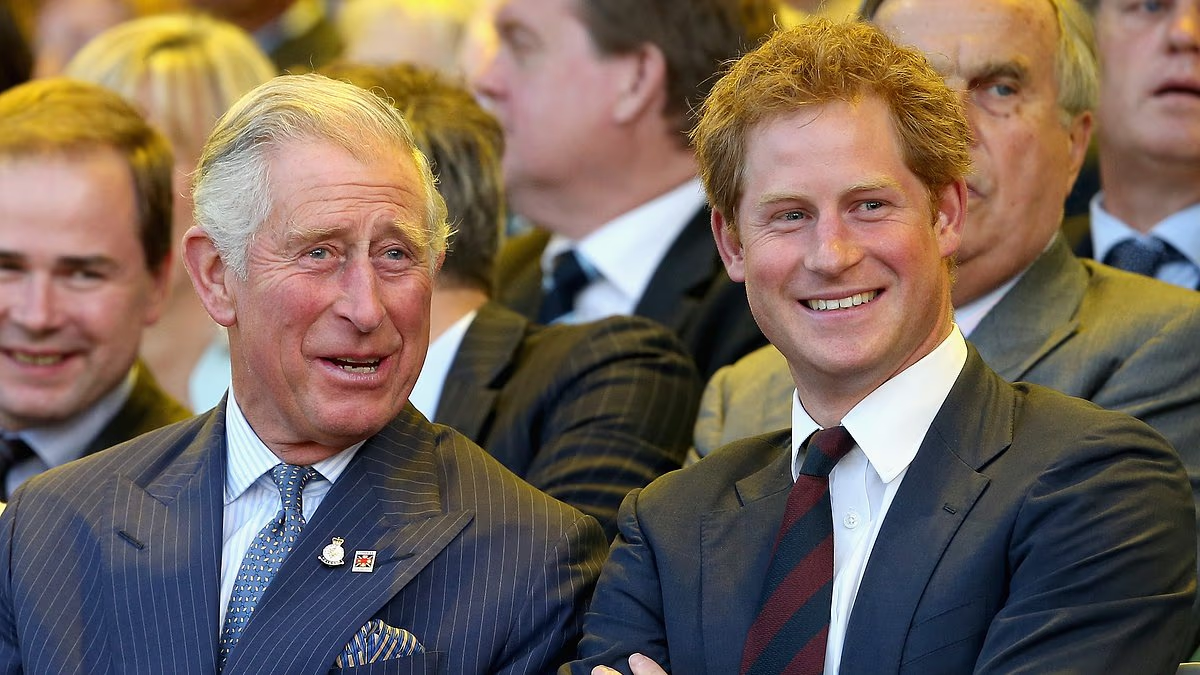
Palace sources say Sir Clive’s involvement demonstrates the King’s support for the Invictus Games (Charles and Prince Harry pictured in 2014 at the Invictus Games)
Even so, the confusion among Ugandan officials over the King’s position is understandable. The fact that Sir Clive needed to intervene has highlighted the uncertainty surrounding Charles’s response to Harry and Meghan’s plans to return to Britain.
The King had asked the Lord Chamberlain, Richard Benyon, to write to government departments and military organisations confirming that the Duke and Duchess of Sussex remain non-working royals. Intended as a clarification, the letter appears instead to have raised further questions.
If Harry and Meghan are regarded as “akin to private citizens with commercial and charitable interests”, as the letter stated, it is unclear why Commonwealth nations such as Uganda should not participate in an event patronised by Harry.
Sir Clive’s intervention is evidence that the King is now dancing to Harry’s tune. Not only is the ‘usurper’ having to work in the duke’s interests, but the Sussexes have managed to achieve what they have long campaigned for: a review of their right to automatic, taxpayer-funded protection.
The fiasco over the education of the children, Prince Archie and Princess Lilibet, who were withdrawn from their school after two days because of security fears, might suggest that the Sussexes’ return has been chaotic. The couple are, however, quietly on their way to achieving what they wanted, thanks to our well-meaning but misguided monarch and his loyal servant Sir Clive.
Read more: