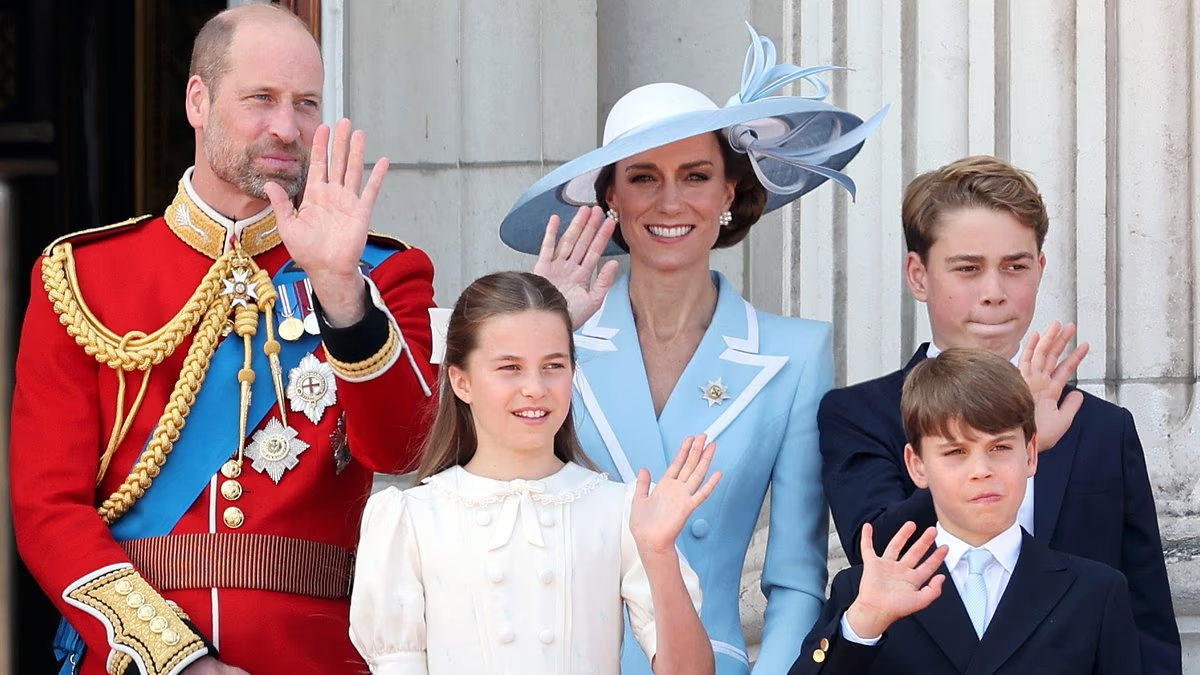

Prince William has described Forest Lodge as the family’s intended “forever home”, but the nearer he moves to the throne, the harder it becomes to ignore the practical demands of monarchy. One of those demands may be another move. After King Charles’s unexpected confirmation last week that he will never live in Buckingham Palace, some royal traditionalists are still hoping William will restore the old pattern and make the world’s best-known palace his home. Yet a former courtier I spoke to this weekend suggested Charles’s decision has changed the conversation for good. “The spell is broken,” the former aide said. “Buckingham Palace will always be the symbol of monarchy, but this clears the way for the prince never to live there. Times change — and expectations change with them.” History offers some precedent: William IV, the future king’s namesake, loathed Buckingham Palace, calling it “a most ill-contrived house” and even proposing it become army barracks or an alternative House of Commons. He was hardly enthusiastic about Windsor Castle either, but public expectation ultimately compelled him to live there.
William faces scrutiny over royal spending

The same former courtier believes William may find himself under similar pressure. “Of course Forest Lodge is meant to be a private, protected family base for him, his wife and their children, and that is completely understandable,” the source said. “But Windsor Castle was built by William the Conqueror, and the Royal Family has lived there ever since. However much the prince wants to modernise the monarchy, that is not something he can simply sidestep. Buckingham Palace has been a royal residence for 200 years, and it is easy to see why it may no longer work as a home. Windsor, however, has been lived in for a thousand years.” The expectations on William are intensifying at a time when he is trying to reshape a smaller monarchy without alienating the public. A weekend report found that the Royal Family’s workload has fallen by half while taxpayer funding has more than tripled since the Sovereign Grant was introduced in 2012. In an effort to demonstrate transparency and value for money, both William and King Charles have been required to disclose the tax they pay.
Fewer royals, fewer public duties

According to the report, the royals carried out 2,273 public engagements last year, compared with 4,127 in 2012. “In part, the workload has dropped because the number of working royals has fallen from 15 to 11,” it noted. “It has also declined because of age, illness, and because the Prince and Princess of Wales, who take around 16 weeks a year away with their children, are focusing on a more campaigning style of monarchy rather than traditional ribbon-cutting duties.” The implication is clear: the public should not expect William and Kate to be far more visible in the old-fashioned sense, because that is not how they intend to operate. But if the public is to see less of them, the argument goes, the monarchy’s core rituals and settings become even more important. State Banquets, Trooping the Colour, Garden Parties and the wider ceremonial architecture of royal life are expected to remain untouched. And if William and Kate are less frequently encountered in person, many will still expect to see them associated with Buckingham Palace and Windsor Castle. For some, nothing else will feel sufficient.
Why William must stay close to London

That is why, according to the former official, a future King William is unlikely to be able to reign primarily from a private country retreat an hour from London. “The Palace is the royal engine room, with as many as 800 people working there on some days — courtiers, officials, secretaries and everyone involved in keeping the monarchy visible and functioning,” the source said. “William cannot expect his private secretary or valet to jump in a cab and travel out to Forest Lodge whenever he calls. He will need to come into the office, just as Queen Elizabeth did every day during her reign. That means he will require a convenient London base very close to the Palace — just as Charles has with Clarence House.” At present, William and Kate have use of Apartment 1a at Kensington Palace, a vast 20-room residence. Although “KP” still appears as their address in daily Court Circular engagement reports, the couple are rarely seen there now.
Clarence House tipped as future royal home

“When he becomes king, William cannot be crossing London at rush hour with a convoy of security vehicles and motorbike outriders,” I was told. “Kensington Palace is two miles from Buckingham Palace, and the traffic between them is probably the worst in Britain. He will need to be much closer to the office.” One possible solution is Clarence House, a short distance down The Mall, where Charles has lived and where Queen Elizabeth, as a newlywed, and the Queen Mother also spent important chapters of their lives. That option may depend on whether Queen Camilla chooses to reduce her public duties once a new reign begins. If not, William would have other possibilities: St James’s Palace contains 27 royal apartments, including York House, a grand and secluded mansion long associated with kings-in-waiting. George V, Edward VIII and George VI all lived there, and it would also mark a personal return for William, who stayed there with King Charles and Prince Harry after Charles’s 1992 separation from Princess Diana. As William weighs the realities ahead, the idea that Forest Lodge could remain a permanent family sanctuary may prove to have been just that — an idea.


