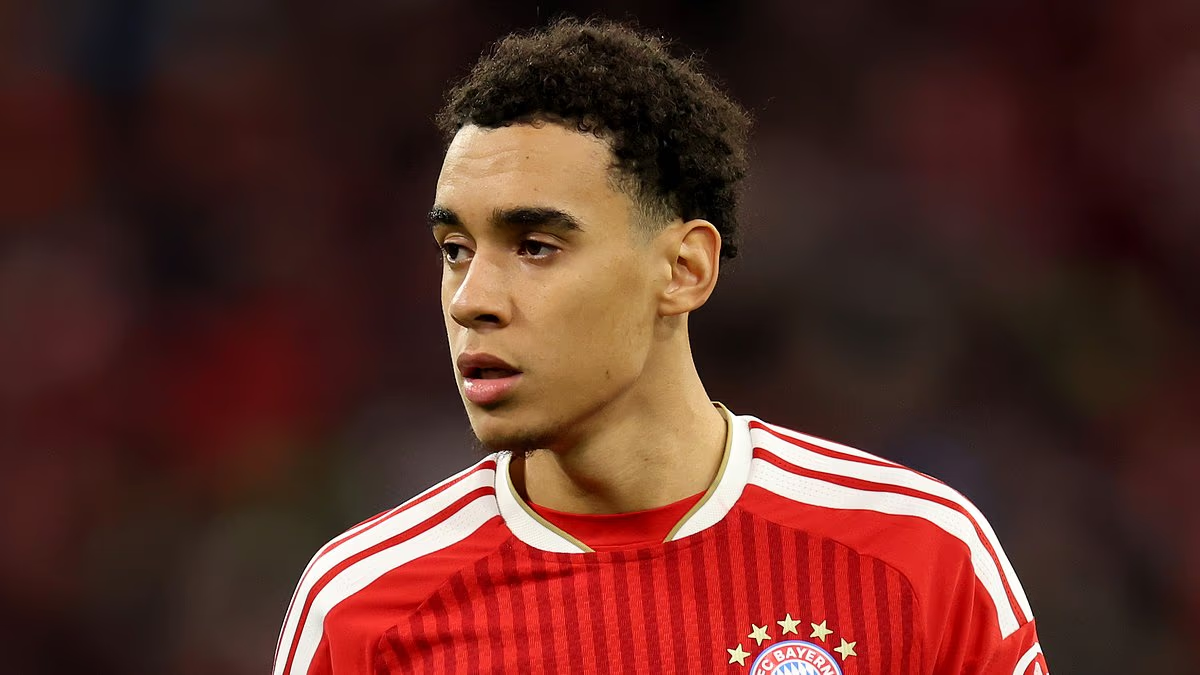

Bayern Munich are facing criticism from FIFA’s players’ union and prominent figures across football amid claims the club is considering reducing Jamal Musiala’s wages after he was diagnosed with a “neurological dysfunction”.
The Germany international was diagnosed during the summer with absence seizures, a form of epilepsy that causes “brief but easily treatable seizures”.
Musiala alarmed the sporting world after collapsing during two matches earlier this season. Bayern manager Vincent Kompany later said the incidents were linked to the player’s reaction to a change in medication.
Comments from senior Bayern officials have triggered controversy in Germany and beyond, with several appearing to question the future of Musiala’s contract, which runs until 2030, if he does not return to his previous level of performance.
Honorary president Uli Hoeness was the first prominent figure to raise concerns about a possible long-term decline, saying earlier this month that Musiala “may never regain the performance level he once had”.
“We are facing a dilemma in this case, as he is suffering from an illness that cannot simply be cured, but it can be controlled to a certain extent with the use of medication,” Hoeness told German outlet BR24.

Fifpro and players from around the world have backed Musiala amid concerns Bayern Munich could reduce his salary

Uli Hoeness and Karl-Heinz Rummenigge have both suggested there could be consequences if Musiala does not return to his previous level

Jan-Christian Dreesen also said Bayern would need to “assess” the situation if Musiala’s performances fail to return to their previous standard
Chief executive Jan-Christian Dreesen subsequently echoed Hoeness and indicated that Musiala’s contract could be subject to an “assessment”.
“We’re monitoring his level of play. He’ll certainly need time to improve further – like any injured player,” Dreesen said in an interview with AZ. “And then we need to calmly assess the situation and, if necessary, sit down with his family and management.
“Either we’ll all be happy together and he’ll be the same Jamal he always was – or, if he’s a different Jamal along the way, we’ll have to discuss it.”
“If we’re not consistently at a level that also aligns with the economic realities, then we’ll have to talk to each other. Nevertheless, we have a valid contract, and that’s the end of it.”
The 23-year-old is among Bayern’s highest earners after signing a contract extension in February 2025. The agreement is reportedly worth £18.4 million per year.
The debate intensified several days later when former chief executive Karl-Heinz Rummenigge told Sky Sports/RTL that renegotiating the deal could be considered if Musiala does not regain his former level.
“That is certainly possible and cannot be ruled out,” he said. “Unfortunately, what we know suggests that it will be difficult to reach the level that he has so often shown here in this stadium.”
“We need to talk to the family, the player and, above all, the agency. Because then these sums are – sorry, with all due respect – no longer feasible.
“I can’t imagine Jamal leaving the club or another club buying him under these circumstances. That’s a problem. I think we handled this very sensitively with the player, and we’re all interested in him coming back – ideally in top form. But what happens if that’s not the case? Then we’ll still have to think about the finances. And that’s a task that the board and the supervisory board unfortunately have to make.”
Rummenigge also said he did not consider it “problematic” for the discussions to take place publicly because the club’s priority was seeing Musiala return and perform well.
But players’ union Fifpro strongly rejected those comments, issuing a statement that suggested everyone publicly discussing Musiala’s contract “should know better”.
“Bayern’s honorary president, chief executive and former chief executive have all publicly questioned Musiala’s contract in quick succession,” the statement said.
“In Fifpro’s view, this is a co-ordinated strategy to put pressure on Musiala and his representatives ahead of any negotiations. A club of Bayern’s standing should know better.”
After journalist Fabrizio Romano shared the statement on social media, high-profile players including Jude Bellingham and Musiala’s Bayern team-mate Michael Olise were among those who liked the post.

Musiala collapsed during two matches in August, including Bayern’s meeting with RB Leipzig, where team-mates helped him from the pitch

The 23-year-old has been diagnosed with absence seizures and is managing the condition with medication

Vincent Kompany has supported Musiala through his difficulties and brought him off the bench successfully last weekend
Rio Ferdinand expanded on the criticism in a social media post, writing that Bayern were “better than this”.
“If they want to negotiate more reasonable terms for the club going forward due to the health issues Jamal has, then surely speak to him and his team rather than to the media,” Ferdinand wrote on X. “This situation must be hard enough to deal with for Jamal without the media and club officials talking about it publicly.
“Bayern Munich are one of the clubs who from afar have always carried themselves with a class and standard that most have admired. Sadly, this just doesn’t feel like Bayern Munich in this situation.”
The backlash was even stronger in Germany, where Michael Franz, vice president of the country’s players’ union, accused Bayern officials of harassment.
“What the Bayern Munich officials are doing, and I don’t mean Kompany and (Max) Eberl, the director of sport, who have behaved impeccably, seems despicable to me,” Franz told Sport1. “There is even something about it that resembles harassment.”
“A footballer’s level of performance can be discussed publicly, but it is not right to talk about his illness and the salary he receives in such circumstances. We must not forget that Jamal Musiala has done everything in his power to come back.”
“Money has become more important than the person, and that is unacceptable.”
Former Bayern captain Stefan Effenberg also stressed the importance of players receiving “support and protection” from their club, particularly when they are dealing with serious health issues.
“We are talking about someone who is suffering from an illness. What I would have expected is for the club’s senior officials to apologise,” Effenberg said, describing Bayern’s communication as “disastrous”.
Musiala collapsed twice within four days in mid-August. The first incident came during Bayern’s match against Leipzig, shortly after he scored, before he suffered another collapse against Heidenheim.
He returned to action in September, scoring against Bodo/Glimt in the Champions League and Union Berlin shortly before the first international break.
A hamstring injury then kept Musiala out of the team before his return at the end of last week. That match also saw Harry Kane suffer an ankle injury expected to sideline him for more than three months.
Fifpro’s statement also warned Bayern to consider Musiala’s mental wellbeing alongside his physical recovery.
“Bayern has a duty of care to Musiala,” the statement continued. “Across professional football, uncertainty about a player’s future can take a toll on their mental health, particularly when they are recovering from injury.
“Making Musiala’s health and future a matter of public debate adds to that pressure. Any concerns about his contract should be raised privately with him and his representatives.
“Contracts are there to be respected. An injury or a dip in form gives a club no grounds to reopen terms it agreed to, just as a run of outstanding performances gives a player no automatic right to a pay rise.”


