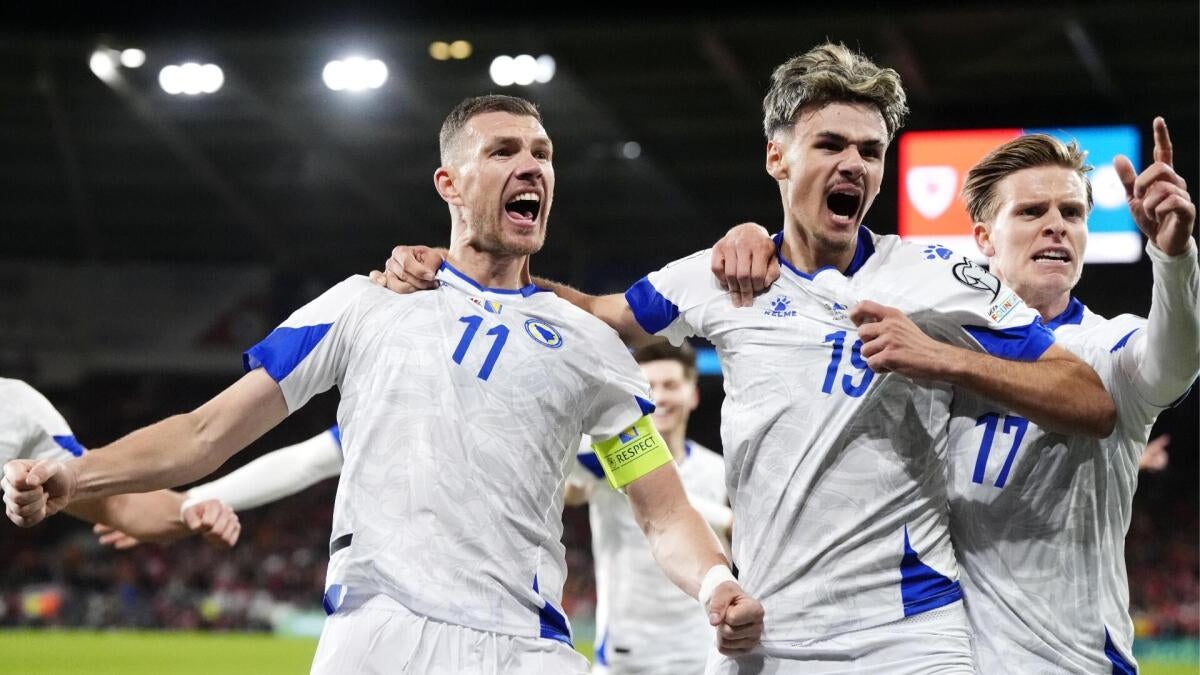

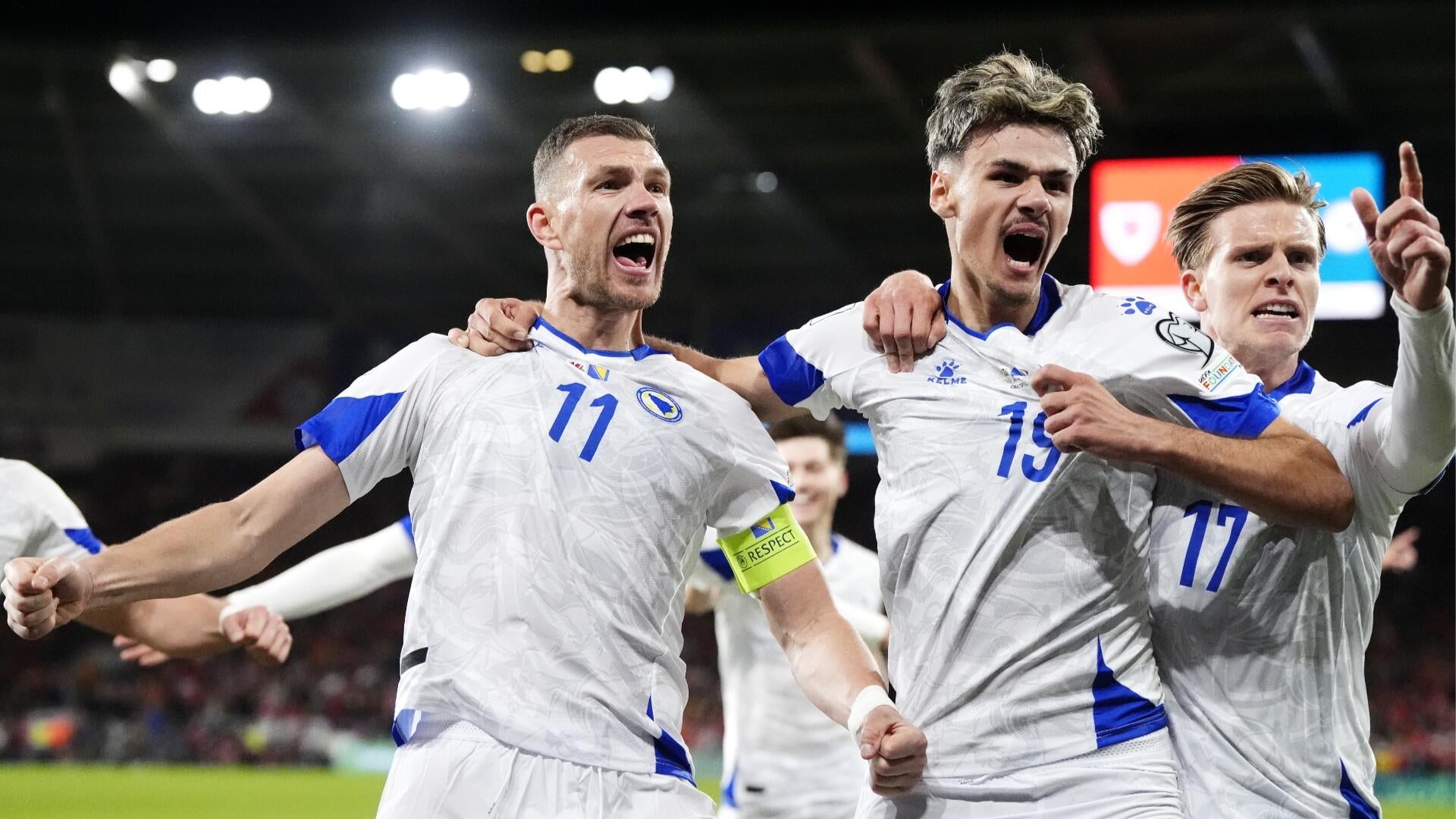
As the World Cup approaches, Edin Dzeko, the captain of Bosnia and Herzegovina, reflects on his unexpected soccer career continuation. After playing a key role in Schalke’s promotion to the Bundesliga, he’s set to lead his nation to their first World Cup since 2014. Since joining Schalke in January, the 40-year-old’s journey has been transformative. While he isn’t focused on the future, Dzeko cherishes his move from Fenerbahçe in Turkey back to Germany, where his career initially flourished with Wolfsburg.
“I never imagined I’d still be playing at 40,” Dzeko shared during a media roundtable. “Had you asked me a decade ago, I would’ve said no. I pay close attention to my body’s signals, putting in extra effort before and after training sessions. Age demands I take care of myself, and that’s exactly what I’m doing. I still feel capable of contributing, as I’ve demonstrated with Schalke and the national team over the past months, which motivates me to continue.”
Dzeko exemplifies how modern sports science extends athletes’ careers into their 40s, but he also highlights the importance of mental resilience in sustaining high-level performance. Nearly 20 years since his debut for Bosnia in 2007, Dzeko is preparing for the World Cup, not from the sidelines but as an active player. He has significantly impacted Schalke’s return to the Bundesliga, scoring six goals and assisting three. For Bosnia, he’s been equally influential, netting five goals and providing an assist during World Cup qualification and playoffs.
The road hasn’t always been smooth for the former Manchester City star, a reality that underpins his surprise at still being on the field. Dzeko reflects on challenging times when he doubted his longevity in the sport.
“When things aren’t going well, like during my first six months at Fiorentina, it messes with your head,” Dzeko explained. “But I’ve always maintained mental strength. Being a professional footballer involves highs and lows. You need to recognize those low points, stay honest with yourself, and work harder to overcome tough situations.”
Such mental fortitude is crucial amid the pressures of promotion and World Cup qualification. Schalke’s relegation from the Bundesliga at the end of the 2019-20 season marked a low point, with a record 16-match winless streak. Yet, the club’s loyal fanbase, one of the largest globally with over 200,000 members, stood firm. Their unwavering support makes Schalke’s return to the Bundesliga—and the revival of the Revierderby against Borussia Dortmund—particularly momentous.
“Schalke were already at the top of the table in January, and they needed another push and some more quality in the team because the second part of the season is always more difficult because the teams, they are fighting for something between relegation or going up in the Bundesliga,” Dzeko said. “[In January], the club brought four or five more players, and that was a big decision for the club because I think all the players that came in January helped us a lot, and at the end, we are going to the Bundesliga, which is well deserved, and my decision in January was in part because I wnated to help this team go back to where they desrerved to be.”
The mission has been accomplished there, but the next mission is just beginning as he captains Bosnia and Herzegovina in a tough group, including co-host nation Canada, Switzerland, and Qatar, but as he mentions, the new generation of Bosnian soccer, which includes young players like Wisconsin-born Esmir Bajraktarevic, is just beginning.
“As the captain, you always have a big responsibility, and especially when the young and new generation is coming,” Dzeko said. “You have to show and lead the new generation in the right way, and I’m so happy that I could do that in the last two years, especially helping the team with these young great players going to the next World Cup, and I think this is something amazing for them, and they have a big future ahead. I think the last two games against Wales and Italy, it will change their lives for sure. Maybe they don’t know it yet, but they will, and I’m happy to be captain of this great generation.”
It’s an amazing thing to be able to bridge generations of Bosnian soccer, and while Dzeko may not know what comes next, he’s doing what he can to ensure that if this World Cup is the close of his soccer career, he’s going out on a high note.


