
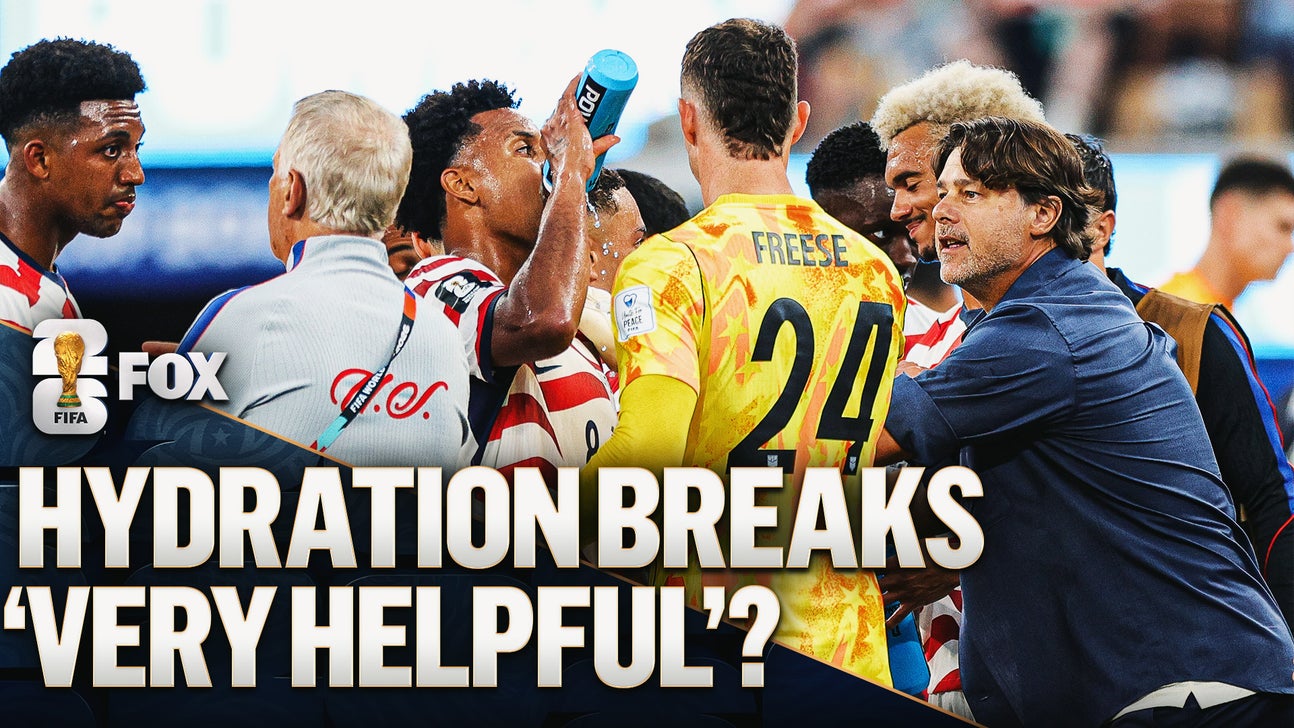
When U.S. head coach Mauricio Pochettino pulled out a laptop during the first hydration break in the friendly against Senegal, it sparked immediate debate over how these stoppages might reshape matches.
Would soccer start to feel more like a four-quarter sport? And which side, if any, would gain the bigger advantage?
“After the U.S.-Senegal game, there was this talk of people going to have the laptop and all that. And since the World Cup started, there’s been no discussion of any of that,” former U.S. head coach and FIFA World Cup NOW analyst Bob Bradley said.
“If the team’s going well, you let guys come over, talk to each other,” Bradley added. “You say a couple of things. And if there is a specific thing which has happened in a few games, then it’s easy to say, ‘Let’s change the way we press.’”

Thomas Tuchel gives instructions to England players during a hydration break in their victory over Croatia. (Alex Pantling – FIFA/FIFA via Getty Images)
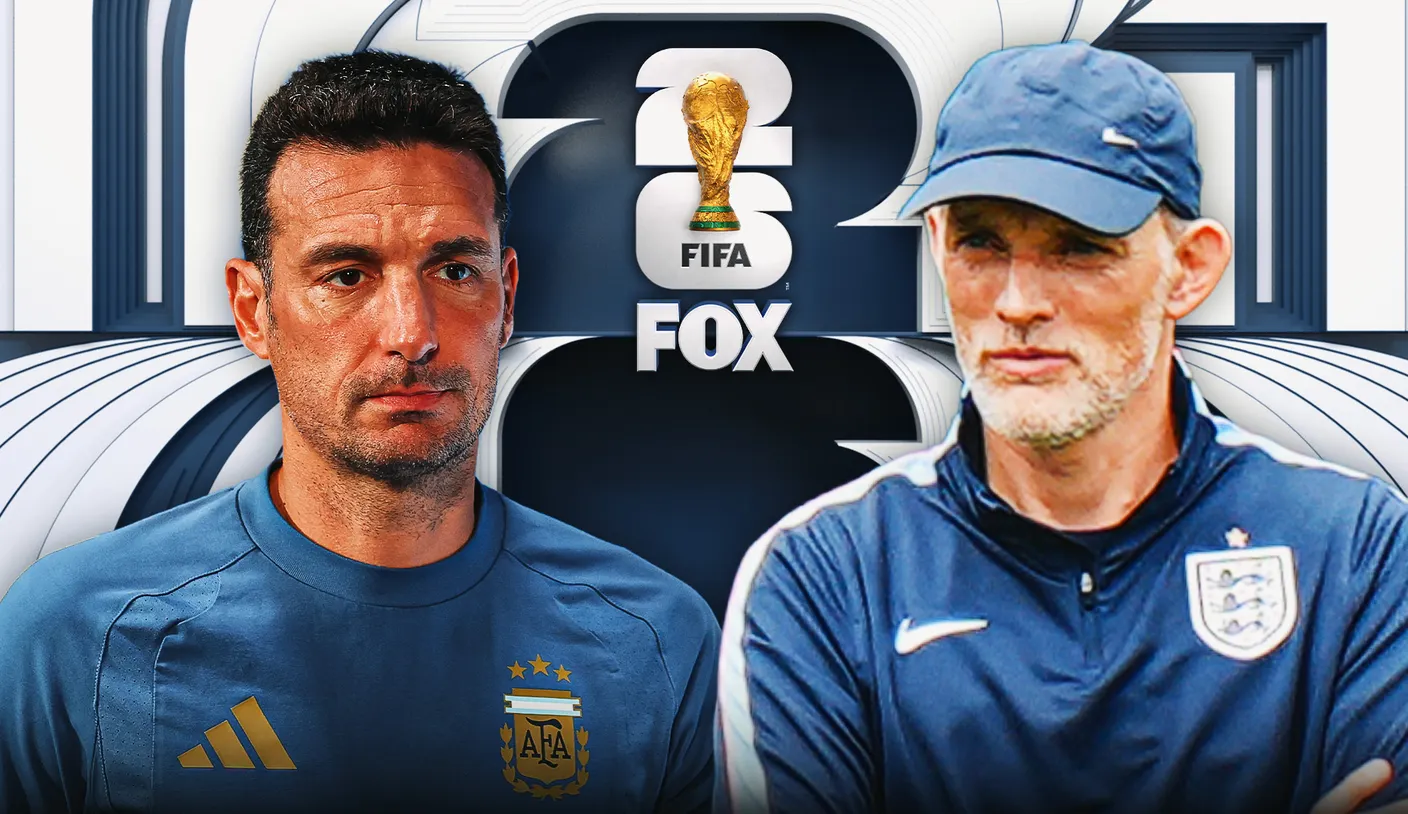
Several leading managers at the tournament have made clear they are uneasy with the breaks. England boss Thomas Tuchel said they “interrupts and changes the identity of a football match much more than I thought.” Argentina’s Lionel Scaloni added, “The ‘four-period’ concept is real.” Portugal manager Roberto Martinez, however, described the stoppage as “revolutionary.”
Uruguay coach Marcelo Bielsa offered an even broader view, saying the four-quarter feel of matches “alters the culturally constructed conception of how to interpret football.”
“They think it disrupts the game,” Bradley said. “They would say that in certain games it might allow them to do something tactically, but they don’t need to do that every game. They would still say that in extreme conditions you need to do it. But what they don’t like is that it breaks the momentum in the game, and they all feel it has changed the identity.”
Portugal’s Roberto Martinez has embraced the hydration breaks. (Michael Steele/Getty Images)
How teams come out of the break in play and how the game changes is also a topic of debate. Bradley covered a potential trend of more action happening immediately after play resumes.
“Then there’s been a little bit of a pattern that, after hydration breaks, you could say that there’s been some chances and shots and goals,” Bradley said. “It’s hard to know what that means because there’s been more goals in the World Cup period.”
The teams who the pauses in the action may benefit the most? The underdogs. They get to change tactics and regain energy as they defend against the teams with the majority of possession.
“Scaloni made a point that actually it’s an advantage for the weaker teams, and that’s true,” Bradley said.
WHAT YOU SHOULD READ NEXT
]


