
A small measure of contrition would not be too much to ask. Manchester City could issue a brief statement acknowledging that the club had been found to breach English football’s rules, apologising for the damage done to one of the country’s most prominent institutions and admitting that supporters had been let down.
That apology is unlikely to arrive. As the implications sank in of what critics have alleged for years — that Abu Dhabi channelled money into City through inflated sponsorship arrangements to evade financial restrictions — supporters instead received another defensive statement from chairman Khaldoon al Mubarak. Its message was familiar: the club was the victim and everything would ultimately be fine.
Those seeking to damage Manchester City were trying to “undermine” the club, Al Mubarak said, using the language of a man whose public appearances are carefully packaged for the club’s website. “We will not give them that opportunity,” he added.
The image of a Gulf billionaire urging the “City family” to remain patient while hinting at further legal action has become increasingly familiar. It was the same response when the Premier League charged City with 115 alleged rule breaches. The club’s 79-word statement at the time claimed it had offered “extensive engagement” and supplied a “vast amount of detailed materials” to investigators. The disconnect between that language and the seriousness of the allegations was difficult to ignore.
When Abu Dhabi took control in 2008, City supporters united behind a banner proclaiming: “Manchester thanks you, Sheikh Mansour.” But the club’s reputational and cultural transformation now feels less like a partnership than an annexation. There is no reason for anyone to defer to a largely absent representative of a Gulf ruling dynasty simply because he owns the club.

Sheikh Mansour and his representatives should be told to sell Manchester City and that they are no longer fit to run a football club in England
Abu Dhabi’s determination to establish itself among Europe’s football elite was so strong that financial regulations appeared to be treated as an inconvenience to overcome. When UEFA introduced Financial Fair Play, the ownership even hired Deloitte — the accountancy firm involved in creating the system. A large legal operation followed.
The methods allegedly used over nine seasons to move undisclosed or disguised funding into Manchester City, involving the club’s strategic communications executive Simon Pearce, have now been exposed to scrutiny. A detailed ruling is expected to make uncomfortable reading for City’s executives, but the ultimate responsibility rests with the owners.
The damage to Abu Dhabi’s reputation may even prompt the owners to sell. Their public-relations operation once presented Abu Dhabi as the polished, sophisticated power of the Middle East — more measured than Dubai and more established than Qatar. Yet the verdict has made headlines internationally and undercut that carefully cultivated image. Manchester City may carry the stain for years.
The issue, however, should not depend on whether Sheikh Mansour, Al Mubarak and their advisers voluntarily decide to walk away. A more fundamental question must be answered: how can owners found guilty of repeated and systematic dishonesty still be regarded as suitable custodians of an English football club?
The documents describing how money was allegedly arranged for City point to a striking disregard for football’s financial rules. In one email, Pearce wrote that Abu Dhabi sponsor Aabar’s “annual obligation” was £3 million, while “the remaining £12m requirement will come from alternative sources provided by His Highness”. In another, addressed to the chief executive of Etihad Airways, he referred to a £99 million sponsorship commitment, “of which you will provide £8m.”
Those arrangements should also be considered alongside the undertakings Sheikh Mansour is required to accept each season under the Premier League’s Owners’ Charter, a condition of passing the owners’ and directors’ test. The charter promises that the club will act “with good faith, honesty and the highest possible standards of professional behaviour and sporting integrity”, while supporting English football’s strength and financial sustainability.
If those commitments leave any uncertainty over the owners’ suitability, the proposed framework for football’s Independent Regulator offers another reference point. Its ownership fitness criteria include the requirement that those in control demonstrate “honesty and integrity”.

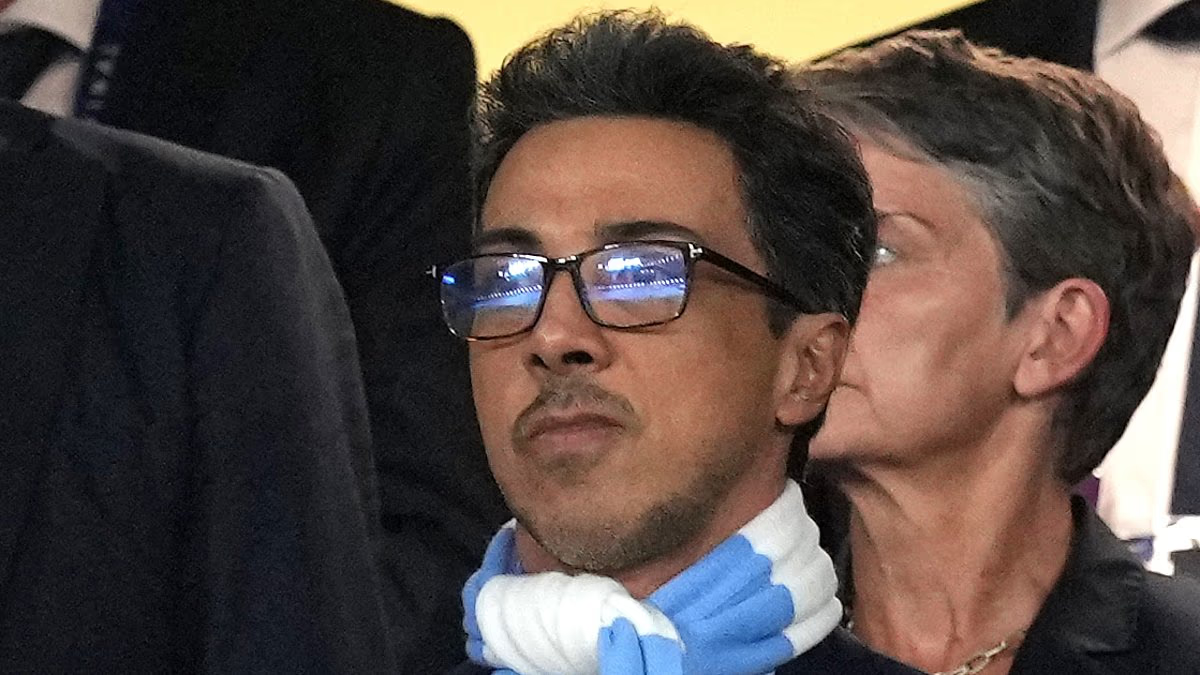
Manchester City chairman Khaldoon al Mubarak, right, responded with a defensive statement assuring supporters that the club would emerge unscathed
The conduct attributed to Abu Dhabi appears to make a mockery of those Premier League commitments, yet the owners still seem unwilling to acknowledge the contradiction. For years, they have portrayed financial sustainability rules as part of a “red cartel” designed to block City’s progress. The basic principle appears to have been lost: buying an English club means accepting English football’s rules. Anyone seeking unlimited spending has the option of creating a separate competition.
The full consequences of Friday’s finding that City breached the majority of the charges were only beginning to emerge. Supporters of Liverpool, Chelsea, Arsenal and Tottenham — clubs repeatedly pushed aside by City over the past decade — were left asking what might have happened if the competition had been played on an equal financial footing. Liverpool fans will no doubt make their feelings known when City visit Anfield in two weeks, but chants and banners cannot repair the damage they believe has been done.
The next stage could bring legal challenges from rival clubs, even if City are relegated and stripped of titles. English football needs a credible reset. That is why Sheikh Mansour and his representatives should be removed from the process, required to sell the club and told that they are no longer fit to run a team in this country. The process should begin urgently; their continued presence in the game should last no longer than necessary.


