Share this @internewscast.com

By Staff Report
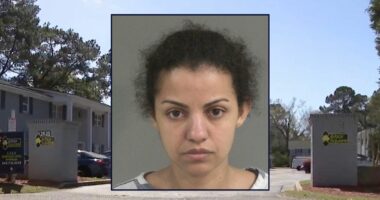
GAINESVILLE, Fla. – In a troubling incident that unfolded yesterday, 46-year-old Jomekia Lakresha Archer was taken into custody after allegedly brandishing a rifle at a group of neighbors, including children.
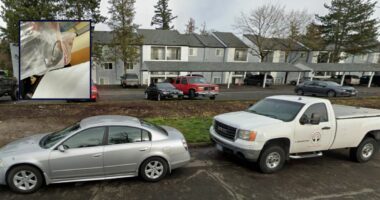
The Gainesville Police Department responded to a call at approximately 10:29 p.m. on March 14, in the Lincoln Estates neighborhood. According to the victims, Archer’s anger was sparked when a car was parked in front of her residence. Witnesses reported that she became irate, shouting and using profanity while demanding that the car be moved.
Eyewitnesses claim that Archer repeatedly threatened, “I got some for y’all,” before retreating into her home and emerging with a rifle. She allegedly held the weapon at her hip, directing it toward the neighbors, some of whom were children. Fearing for their safety, the victims began ushering the children indoors and one individual promptly contacted 911.
After briefly retreating inside, Archer allegedly reappeared, again pointing the rifle at the group. When confronted with the possibility of the police being called, she reportedly responded defiantly, “Call who you wanna call, I don’t give a [expletive].” She then returned inside her home and eventually emerged without the firearm.
Following her arrest and after being read her Miranda rights, Archer reportedly claimed she did not shout profanities at the neighbors and instead accused them of initiating the confrontation. She denied making any threats but admitted to retrieving what she described as a “BB gun” from her home. She insisted that she never aimed it at anyone, maintaining that it was pointed at the ground by her side.
Archer was also booked on a 2024 warrant for hosting a dogfight at a relative’s house. At least three people were arrested in 2024 on charges connected to the same incident, and Keith Gerard Miles is serving an 18-month prison sentence connected to the same incident.
Archer has been charged with six counts of aggravated assault with a deadly weapon and one count of possession of a firearm by a convicted felon. She has six felony convictions (non-violent) and six misdemeanor convictions (non-violent) and has an active warrant out of Putnam County for driving under the influence. Bail for the warrant is set at $30,000, and bail on the new charges will be set tomorrow.
Articles about arrests are based on reports from law enforcement agencies. The charges listed are taken from the arrest report and/or court records and are only accusations. All suspects are innocent until proven guilty in a court of law.