Share this @internewscast.com
While some people were building puzzles or baking sourdough to get through COVID-19 lockdowns, Mike Honey started tracking case numbers.
He told SBS News he wanted to have a good answer when his grandchildren asked him: “So, what did you do [during the pandemic]?”
Four years later, the data analyst still translates global COVID-19 data into charts that help the public understand the risks of the disease — from national case numbers to the rise of variant strains worldwide.
His work has popped up in everything from news reports to academic research.
And although case numbers are the lowest we’ve seen, epidemiologists told SBS News they still rely on Honey’s work to fill an information void where state departments no longer have the time or resources to share data.
A man in a white T-shirt is sitting near a beach.

Over the past four years, Mike Honey has dedicated numerous hours each week to collecting and disseminating crucial data regarding COVID-19.

Paul Griffin, an expert in infectious diseases and a clinical microbiologist at the University of Queensland, remarked, “The service he’s provided is immensely valuable.”

Remarkably, Honey undertakes this task voluntarily in his free time.

Soft-spoken and polite, Honey sat down with SBS News to talk about how he became scientists’ go-to for COVID-19 information.
He explained that being from Melbourne’s north-west suburbs meant he lived in one of the first places in Australia to be hit by lockdowns.
As an IT specialist stuck at home, he realised it was hard to get information about national case numbers.
“A lot of the states have a decent report that comes out … but they are just for that state. There’s nothing at the federal level,” Honey said.
So he built a spreadsheet that brought all the case numbers from across the country together in one spot.

Initially, he shared his findings on GitHub, a platform for open-source code, and eventually expanded his reach to various other online spaces.

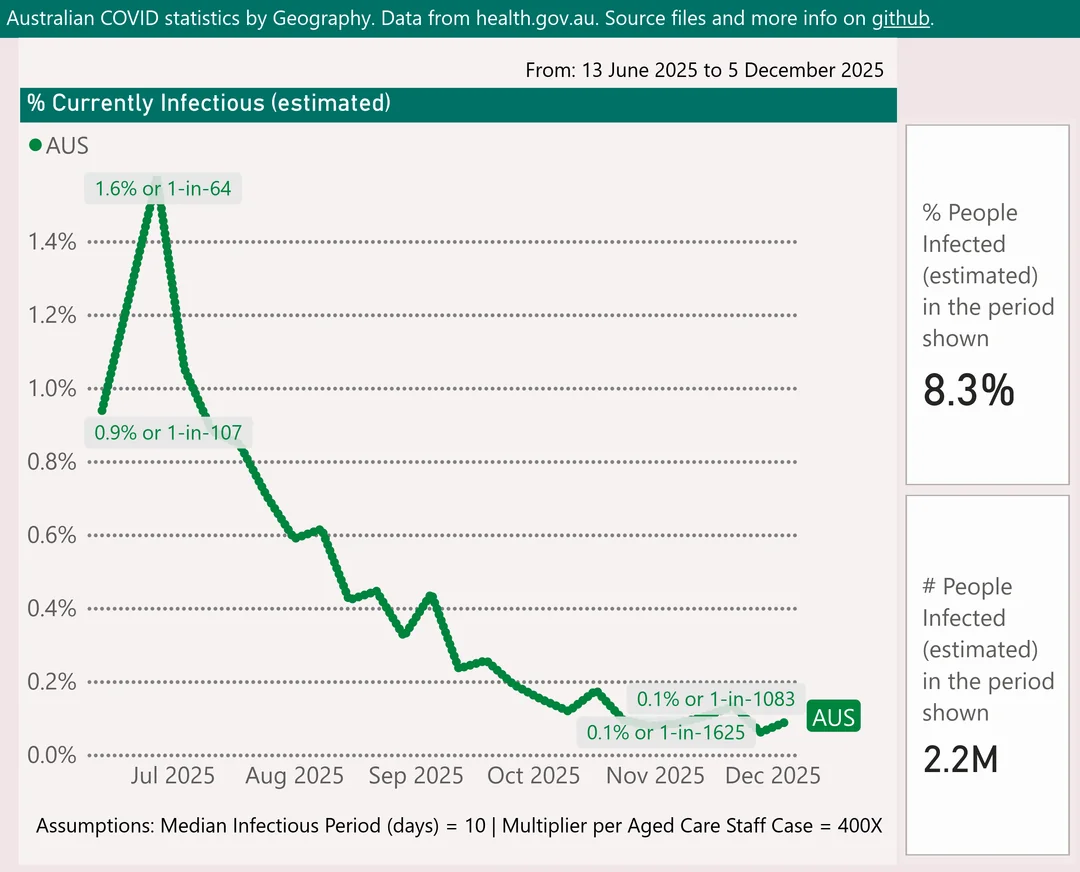
A line graph showing COVID-19 statistics.

The graph he developed illustrates the estimated current COVID-19 case numbers across the nation, using data from cases among aged care workers.

National case numbers aren’t the only ones he keeps track of. He also monitors variants, vaccine uptake, and aged care case numbers, and posts case charts for New Zealand, the United States, the United Kingdom and Canada.

It wasn’t long before epidemiologists started to take notice.

An ‘incredibly valuable service’

Adrian Esterman, professor of biostatistics and epidemiology at the University of South Australia, said during the pandemic he was asked to give talks to concerned community groups about variants.
He struggled to find enough detail from state health departments to satisfy his audience’s questions.

“Then I came across a Tweet from Mike that led to his GitHub site, which provided exactly the information I was looking for,” he said.

Honey’s variant tracker takes publicly available information on cases of people infected with COVID-19 mutations and brings it all together on a world map.
That way, it’s much easier to see which variants are growing and where, compared to pages of text on sites like the World Health Organization’s COVID-19 variants dashboard.
“I still give talks on COVID-19, and Mike’s is still the go-to website,” Esterman said.
Prominent American cardiologist Eric Topol, who founded the Scripps Research Translational Institute in California, told SBS News that Honey’s work is a “remarkable source” of information.
“His diligence, strive for accuracy, and thoughtful sharing of data have been a welcome and important contribution to the biomedical community.”
Griffin agrees, and said he still refers to Honey’s work “a few times a week, to be honest”.
He said that while case numbers are low, the data Honey shares still helps to answer important questions.

“Like how we manage our hospitals and healthcare systems, and counsel our individual patients so they have an understanding of the risk,” he said.

A legacy in medicine

Honey said his uncle’s legacy has inspired him to help out where he can.

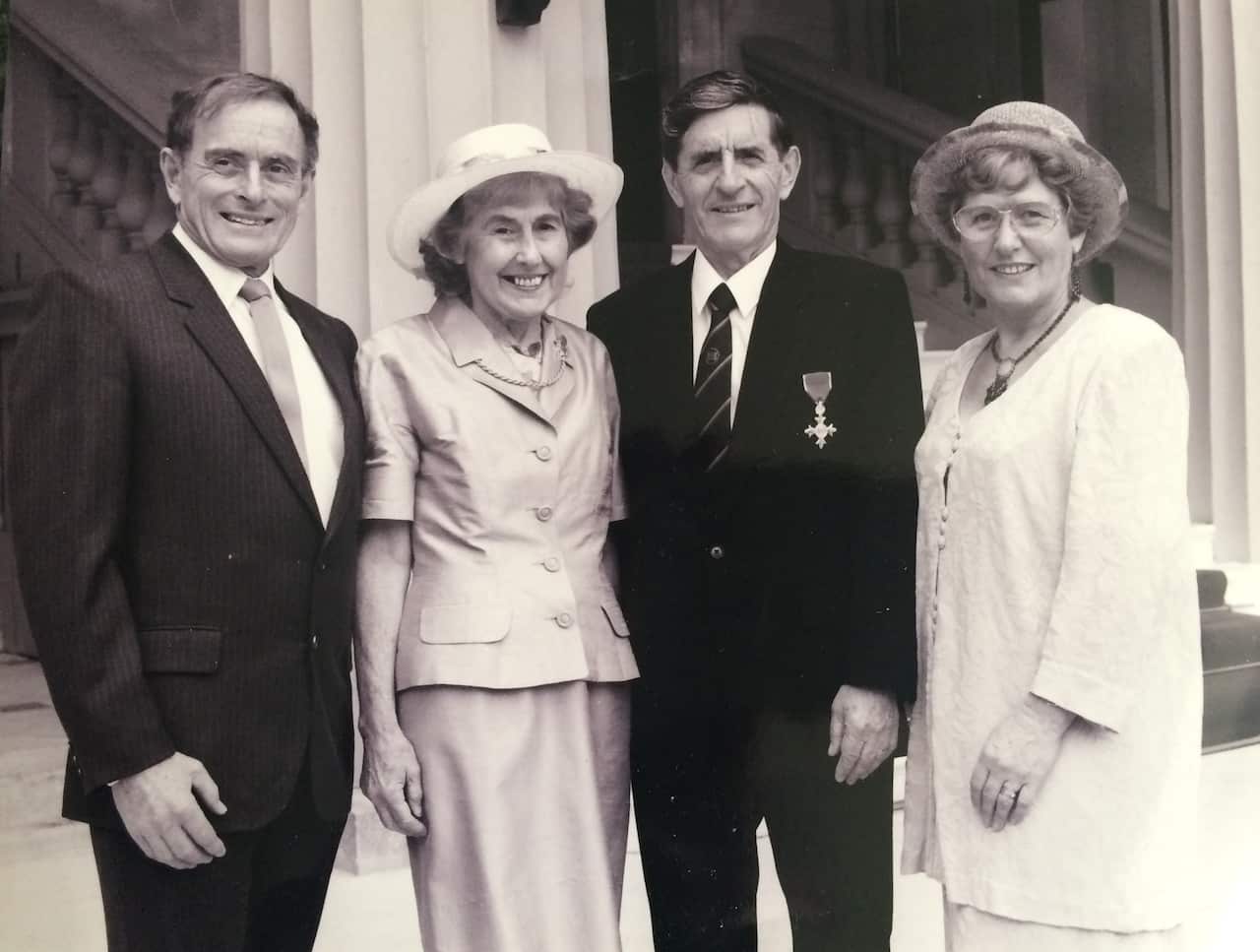
His late uncle, Dr Norman Honey, dedicated his life to treating leprosy patients and fighting the disease’s stigma. He worked in West Africa before moving to Hong Kong, where he served as chief medical officer.

A black and white photo of two couples in formal wear.

Norman Honey (centre-right) after receiving a Member of the British Empire from Queen Elizabeth in 1994 for his work treating leprosy patients. Source: Supplied / Mike Honey

Though much of the data is now gathered automatically, Honey said he still spends a few hours each week tracking COVID-19.

And while he’s taken a few nasty comments on social media here and there, he’s been surprised by the public’s overall response.
“There’s a lot of people that say they’re glad to see it, and they’re hanging on it,” he said.
But after four years, he admits he’s looking forward to the day he doesn’t have to post an update.
“It’s a little bit of a weight on my shoulders,” he said.
When asked if the government should pay him for his efforts, Honey laughed.
Then he quickly changed his mind.
“I’d probably prefer to keep it as my hobby.”

Share this @internewscast.com

You May Also Like
White House press secretary Karoline Leavitt lashed out at a journalist on Thursday (US time).

White House Official’s Explosive Rant: Inside the Fiery Clash with a Journalist

White House press secretary Karoline Leavitt has launched a tirade at a…
After a slow decline, Fletcher Jones announced to customers on its website the remainder of its outlets would close.

Renowned Australian Retailer Announces Closure

Fletcher Jones, an iconic Australian clothing brand, has announced the closure of…
Jarvis Cocker, right, and Mark Webber, from left, and Candida Doyle, of the band Pulp.

Pulp’s Dramatic U-Turn: Iconic British Band Rejoins Adelaide Festival Lineup

British band Pulp has backflipped on its decision to cancel its performance…
How much video gaming is too much? Study pinpoints health limit

Study Identifies Optimal Video Gaming Duration for Health Benefits

Video games might not rot your brain – but new evidence suggests…
The account known as the 'Bush Legend' has now been accused of 'digital blackface' after it came to light that the videos had actually been generated by artificial intelligence.

Viral ‘Wildlife Expert’ Exposed: The Shocking Truth Behind Misleading Australian Animal Videos

An Indigenous figure has captured the attention of hundreds of thousands on…

Newcastle Woman Faces Charges in Stabbing Incident

A woman is scheduled to appear in court today on charges related…

Faith Leaders Urge Reevaluation of Hate Speech Laws to Prevent Unintended Consequences

Influential religious leaders have urged the prime minister to halt sweeping hate…
Prime Minister Anthony Albanese's reforms will be voted on next week.

Federal Government to Split Hate Speech Legislation Following Withdrawal of Greens’ Backing

Prime Minister Anthony Albanese has announced that the federal government will strategically…
Harcourt on January 14, 2026.

Stunning Satellite Images Reveal Transformation of Towns Before and After Devastating Victorian Fires

Satellite images of bushfire-ravaged towns have captured the devastating extent of the…
Cars were swept away when the Cumberland River flooded near the Great Ocean Road in Victoria.

Unpredictable Forces: Understanding the Challenges of Forecasting Flash Floods in Victoria

The unpredictable nature of this weather phenomenon posed significant challenges for forecasters.…

Controversy Surrounds Labor’s Proposed Hate Speech Laws Amid Coalition Skepticism and Greens’ Opposition

Support for Labor’s hate speech laws appears to be on life support,…
Waves at some beaches are forecast to reach five metres in height.

Massive Waves Force Beach Closures: Coastal Areas Brace for Impact

Several beaches along the New South Wales coastline have been shut down…