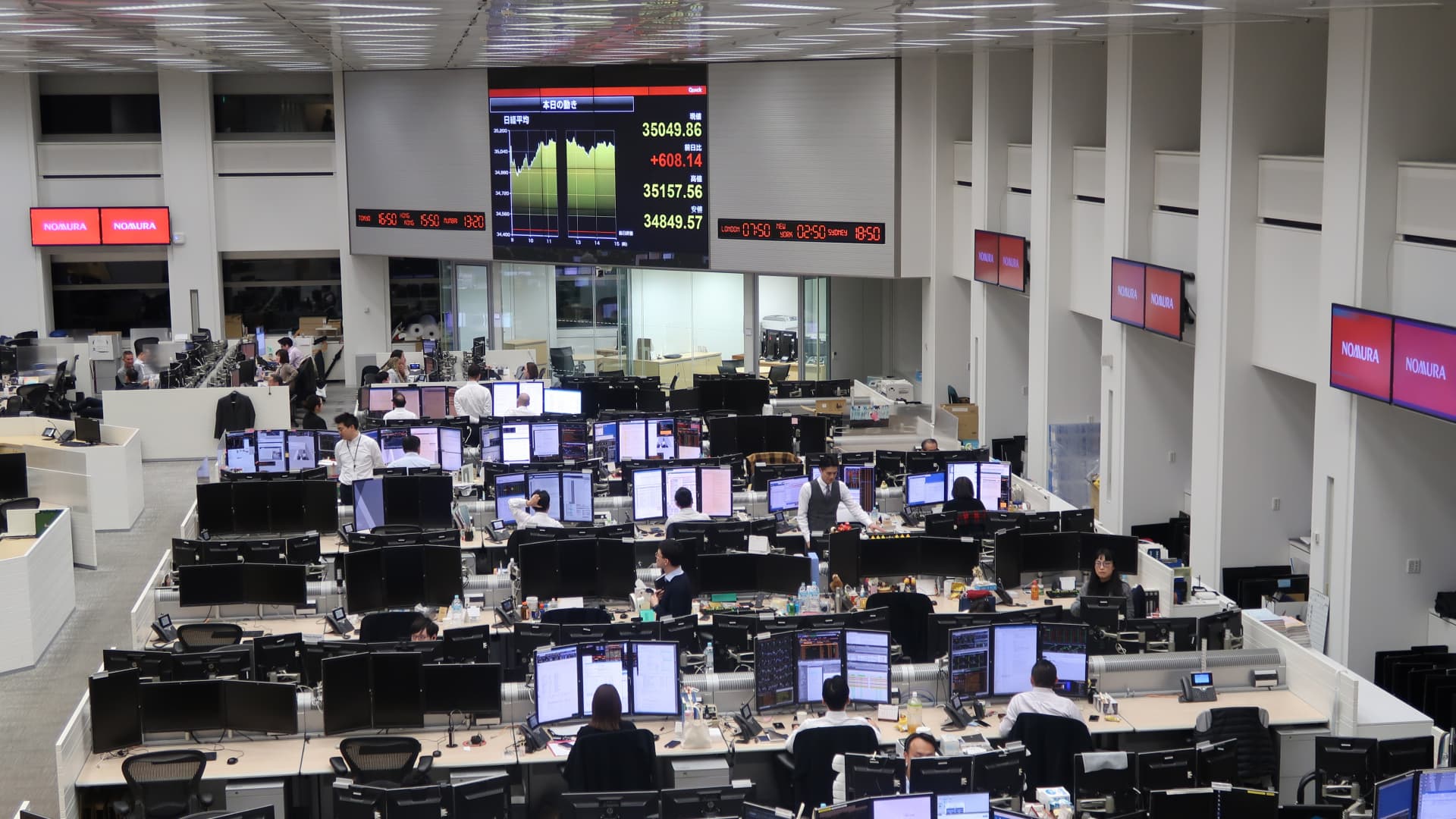

A monitor at the headquarters of Nomura Securities Co. in Tokyo, Japan, displayed the Nikkei 225 Stock Average on January 11, 2024.
Image Source: Bloomberg via Getty Images
On Monday, South Korean equities surged to a new peak, propelled by their most substantial monthly increase in April. This rise came amid investors evaluating the escalating tensions between Iran and the United States, alongside a U.S. initiative to resume shipping in the Strait of Hormuz.
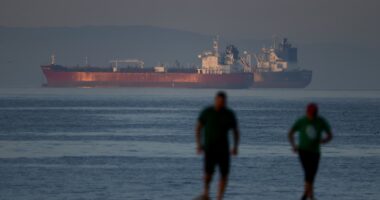
President Trump announced on Truth Social that the United States plans to “liberate” vessels trapped by the closure of the Strait of Hormuz, a situation ongoing since the Iran conflict began.
Termed “Project Freedom,” this operation is slated to commence on Monday, according to Middle Eastern time, and will focus on aiding civilian ships from countries not involved in the conflict to safely navigate the disputed passage and continue their activities uninterrupted.
The U.S. Central Command, following Trump’s declaration, stated that the military’s contribution to Project Freedom will consist of guided-missile destroyers, over 100 aircraft both land and sea-based, various unmanned systems across multiple domains, and 15,000 service personnel.
Oil prices fell following the announcement of “Project Freedom”. West Texas Intermediate futures for July delivery fell 0.26% to $101.68 per barrel as of 10:08 p.m. ET. International benchmark Brent crude futures was 0.13% lower at $108.03 per barrel.
The Kospi index rose 4.26%, while Hong Kong’s Hang Seng index gained 1.8%. Australia’s S&P/ASX 200 fell 0.28%.
Markets in Japan and China are closed for a public holiday.