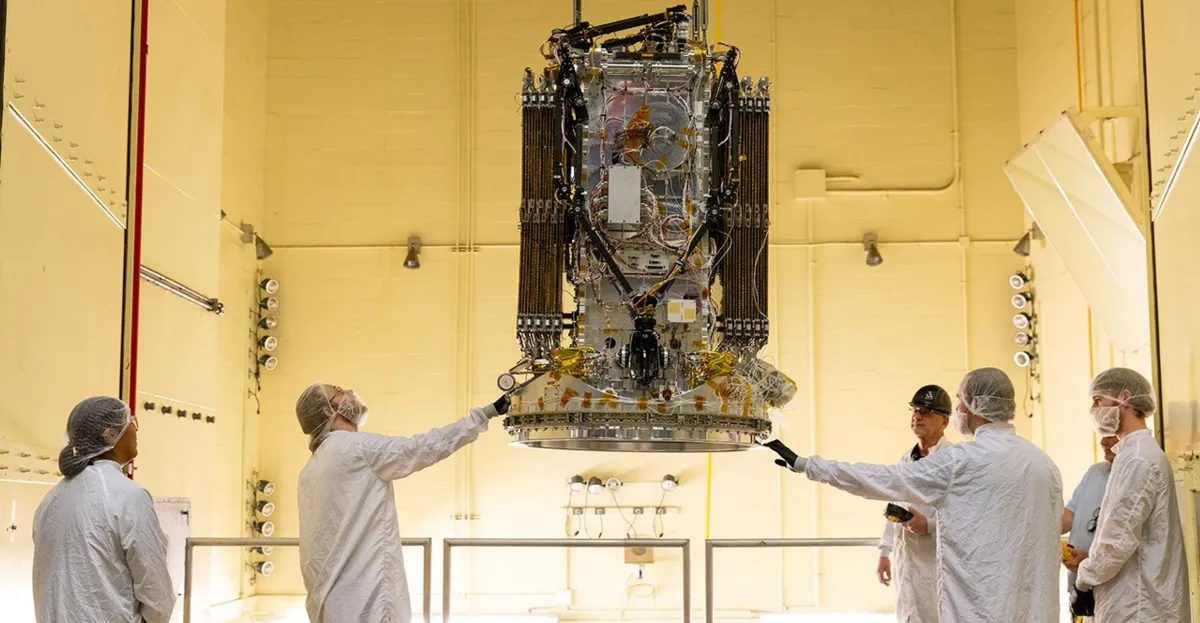

NASA’s Swift Observatory has been watching the universe since its launch in 2004, but its time in orbit may be running short. Recent solar storms have dragged the spacecraft into a lower orbit, raising the risk that it could reenter Earth’s atmosphere and burn up as early as this year. In an effort to prevent that, NASA has turned to Katalyst Space Technologies. The company’s Link spacecraft launched Friday on a mission to rendezvous with Swift, which has no propulsion system of its own, and push it back toward its original orbit. Swift is currently flying about 224 miles above Earth, and Link is designed to raise that altitude by roughly 150 miles.
The rescue attempt is technically demanding: Link will use a three-armed spacecraft design to lift the observatory higher into orbit. What makes the mission especially notable, however, is the pace at which it came together. NASA asked Katalyst to move quickly because Swift could drop too low to recover by October. After nine months of work and a $30 million effort, a rescue mission is now underway for the $500 million observatory.


