
Parents often seek one key feature from AI: the ability to effortlessly transfer details like soccer schedules or “spirit week” themes from an email or a disorganized flyer directly onto their calendars. For iPhone users, there’s promising news—Siri’s latest update now makes this wish a reality.
Following an initial rollout that was less than smooth, Apple is giving Siri another chance with its advanced AI capabilities. The enhanced Siri can now engage in discussions about why your roses might be ailing, compile a shopping list for your next hardware store visit, and remind you to refresh your garden with compost. By integrating data from your emails and calendar, Siri provides insightful answers to queries such as, “When should I head to the airport?” Most impressively, it can seamlessly add events from your emails to your calendar. I put these features to the test, and indeed, Siri’s AI has arrived with tangible improvements.
However, compared to other AI assistants available in 2026, Siri’s offerings are fairly standard. Take Gemini on Android, for example, which has been effortlessly adding multiple events from screenshots to calendars for over a year. It’s been diagnosing plant issues and setting up maintenance alerts for quite some time. Given that Siri’s new capabilities are based on Gemini models, it’s understandable why Siri’s current AI feels reminiscent of Gemini’s earlier iterations from 2025.
Yet, Siri AI brings its unique touch. Apple utilizes proprietary technology both on the device and in the cloud, allowing Siri to access data from sources like emails and messages. This data is indexed for Siri to draw upon when necessary. If a prompt requires more than local processing, it’s sent to Apple’s Private Cloud Compute, carrying only essential personal information. In contrast, Gemini relies on user consent to access Gmail or calendar data directly when needed.
Siri AI’s effectiveness largely hinges on its ability to comprehend context, and so far, it’s proving adept. For instance, when I asked about returning rented camera equipment used for WWDC, Siri pinpointed the relevant details from my calendar and an email, confirming the return date as Friday. Similarly, instructing Siri to “add these events to my calendar” consistently prompts it to reference on-screen information. So far, the results are promising.
In terms of security, Siri seems to have robust safeguards, refusing to participate in questionable activities with a straightforward, “I can’t help you with that.” As a conversational partner, Siri tends to be more straightforward compared to Gemini. When I inquired about wilting flowers, both provided detailed explanations, but Gemini opened with empathy, noting the frustration, while Siri cut straight to diagnosing the problem.
The new Siri handled my follow-up requests well, too. I asked it to recommend a garden center “near home” and it came up with a good suggestion. It also created a new reminder list with some checklist items for my garden rehab project and added a calendar event, all from a single prompt. Pretty basic stuff, but this is Siri. The fact that it works at all is a step forward that’s been years in the making.
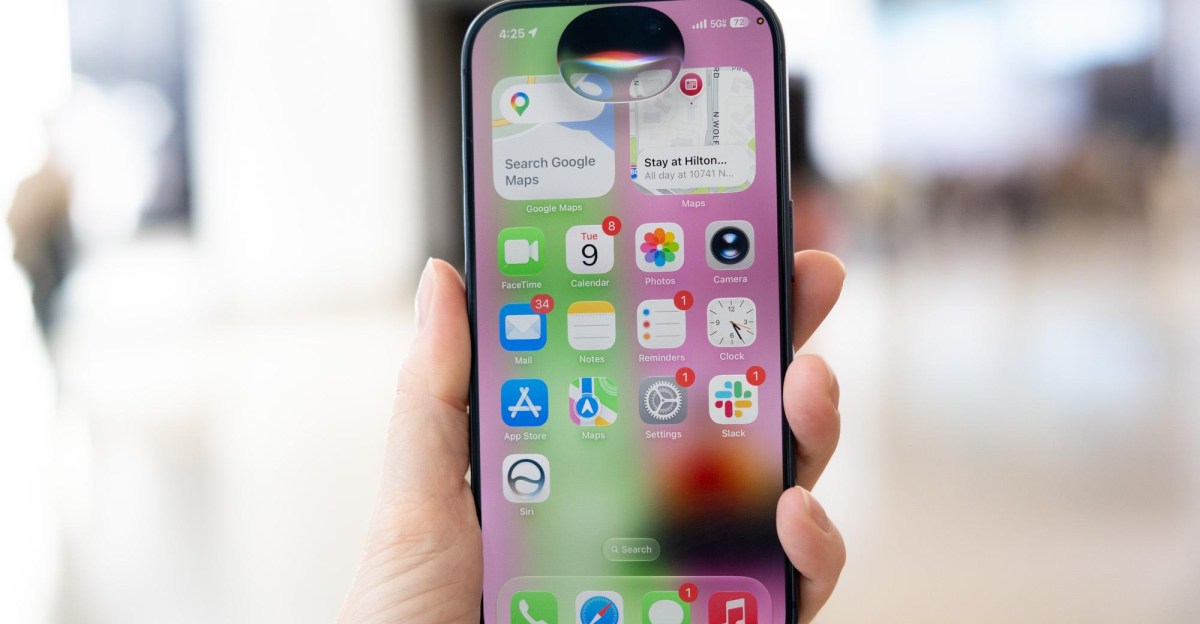
New Siri pops up in a lot of places on the iPhone. I’ve gotten into the habit of swiping down on the homescreen and using search to get to apps, and every time I do there’s a big prompt to “search or ask” with a glowing, blinking cursor. Long pressing the wake button summons Siri from the Dynamic Island now, too, rather than presenting it as a glowing border around the screen. The changes all add up to a subtle feeling that you’re never very far away from Siri.
The changes all add up to a subtle feeling that you’re never very far away from Siri
This iteration of Siri feels like the AI assistant you’d build if you knew you couldn’t screw it up. It supports a pretty basic set of features — it’s not out here DoorDashing your burritos for you — but it actually does what’s advertised. For the company that made big promises of Siri two years ago that never materialized, that’s a big deal. “It works” and “It will actually ship to customers” are the two targets that Apple couldn’t miss here. It’s only in a developer beta now, but it’s realer than the first AI Siri we were shown at WWDC ever was. Apple needs this version of Siri to earn back trust. And based on what I’ve seen so far, this looks like a small step toward getting that trust back.
Photography by Allison Johnson / The Verge


