
Share this @internewscast.com

A dramatic rescue unfolded in New Zealand’s rugged wilderness when a hiker, who had fallen from a 55-meter (180-foot) waterfall, was airlifted to safety, leaving behind her dog. The determined efforts of a compassionate helicopter pilot, spurred by a generous fundraiser, eventually led to the reunion of the injured woman with her beloved border collie, Molly.
About a week prior to the reunion, an emergency helicopter crew located the woman, who had sustained bruises and lacerations, at a precarious location on the waterfall’s rocky terrain, situated on the South Island’s West Coast. Although she was rescued on March 24, the team was unable to retrieve her dog during the operation.
After days of being missing, Molly was finally discovered on Tuesday, appearing exhausted and hungry. She was found mere meters from where her owner had endured the fall, a testament to the dog’s resilience.
“I reached out to her while she was in the hospital and offered to search for Molly,” explained Matt Newton, who owns and operates Precision Helicopters New Zealand. Based near Hokitika Gorge, close to the Arahura River where Molly vanished, Newton made several attempts to locate the dog, initially to no avail.
Undeterred, Newton and his family initiated a fundraising campaign to support further search efforts, which included additional flying hours and advanced search technology. Their appeal resonated widely, with individuals contributing over 11,000 New Zealand dollars (approximately $6,300) to aid in the mission.
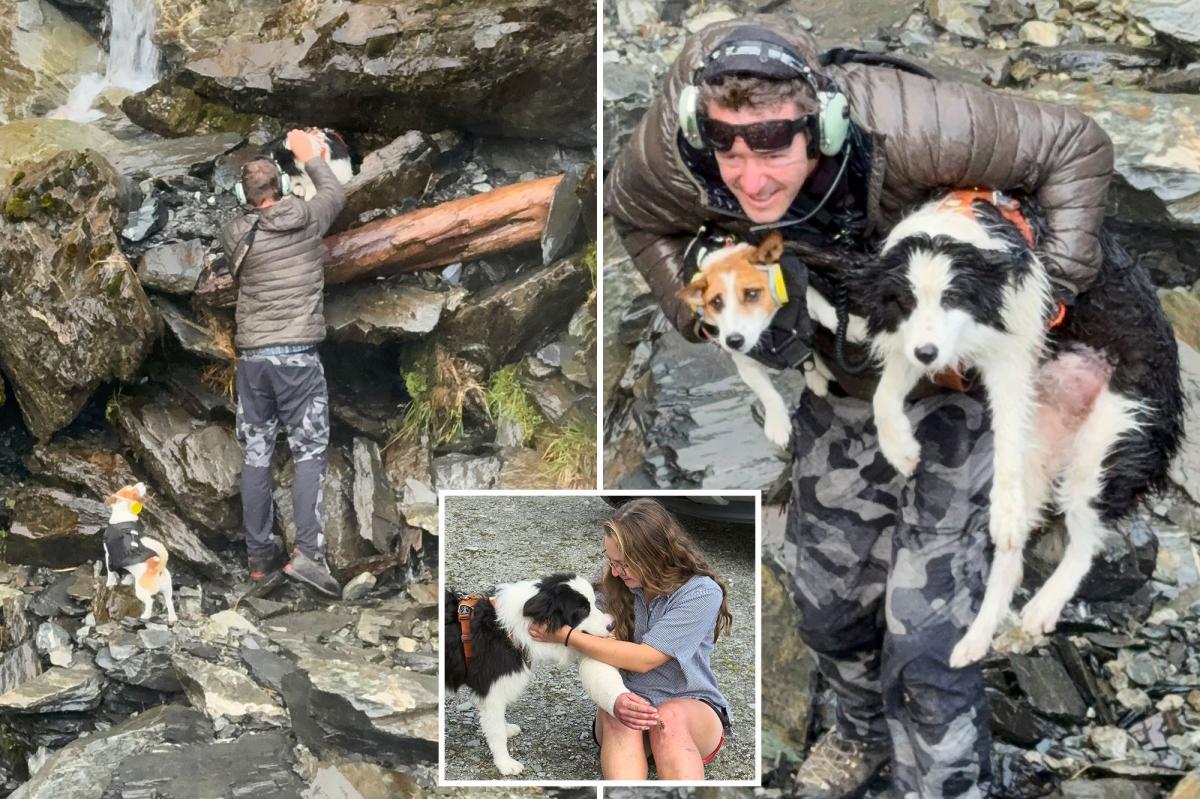
With the funds secured, Newton embarked on another aerial search on Tuesday. Equipped with thermal imaging technology, he was joined by a veterinary nurse, volunteer searchers, and a dog named Bingo. Their dedication paid off, leading to the long-awaited rescue of Molly.
“We struck jackpot within about an hour,” he said. “As we made our way up the river, we could see the dog in the thermal and then we could visually see it.”
There had been no sign of Molly at the waterfall when Newton previously searched the spot, he said. It wasn’t clear if the dog had also fallen from the waterfall or if she had eventually made her way to the spot where her injured owner landed.
The helicopter dropped low enough for a volunteer to disembark with the rescue dog Bingo to help coax Molly to safety and keep her calm.
Newton thought the dog had survived by eating feral animals during her week in the wilderness.
“She knew what we were up to, I think,” he said. “She behaved real well. She didn’t run away and she was pleased to be rescued.”
The dog was in “surprisingly good condition,” the pilot said. He sent word back to the helicopter base, where other volunteers waited to take turns in the search. “Instead we just had a big barbecue and all had a cuddle with Molly.”
Hours after the dog’s rescue, her owner, still battered from her fall, arrived for a tearful reunion.
“I think that’ll speed up her healing process somewhat,” Newton said. “Having your dog back, that’s for sure.”