
Share this @internewscast.com
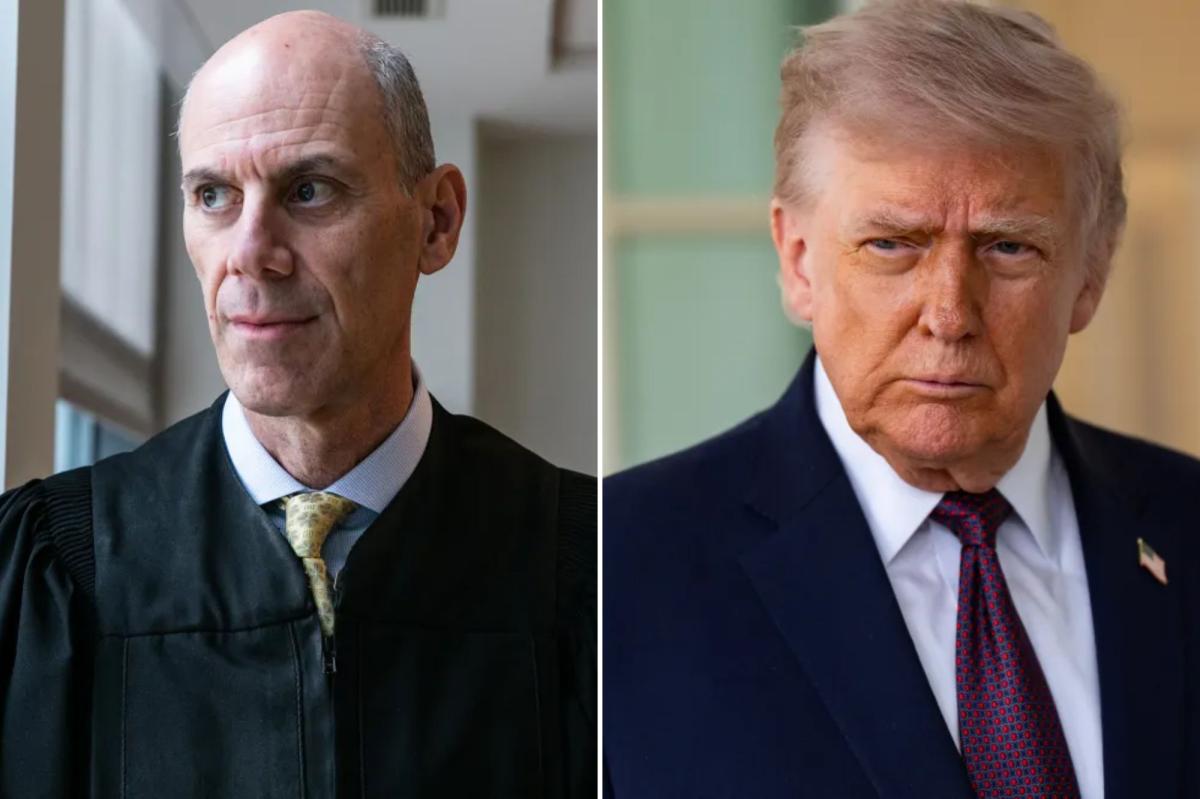
A split decision from an appeals court panel on Tuesday instructed District Judge James Boasberg to halt a contempt investigation involving Trump administration officials connected to deportation flights. The court deemed that the judge had overreached his authority by initiating the criminal probe.
In a 2-1 decision, the DC Circuit Court of Appeals concluded that Judge Boasberg, appointed during the Obama administration, had improperly pursued contempt charges against former Homeland Security Secretary Kristi Noem and other high-ranking officials. These charges were linked to the deportation of several hundred Venezuelan migrants to El Salvador in March.
Judge Boasberg had aimed to assess whether officials from the Trump administration had knowingly ignored his emergency order, which sought to block the deportation flights.

Judge Neomi Rao, appointed by President Trump, voiced the majority opinion, stating, “The district court aims to delve into high-level Executive Branch decisions concerning national security and diplomatic issues. Such actions represent a clear misuse of judicial discretion.”
Rao criticized Boasberg’s contempt investigation as excessively “intrusive” and described it as a “legal dead end,” noting that the judge’s initial order did not mention transferring custody of the Venezuelan migrants to authorities in El Salvador.
Rao further argued, “In our constitutional government framework, criminal accountability cannot be based on a district court judge’s unstated intentions or retrospective claims.”
Judge J. Michelle Childs, an appointee of former President Joe Biden, authored a blistering 80-page dissent.
“Contempt of court is a public offense, and the fate of our democratic republic will depend on whether we treat it as such,” Childs wrote.
“Without the contempt power, the rule of law is an illusion, a theory that stands upon shifting sands,” she added.
In siding with the Trump administration, the majority “stymied the district court’s inherent and statutory powers and done so in a way that will affect not only these contempt proceedings but will also echo in future proceedings against all litigants,” Childs argued.
“Now, any litigant can argue, based on their preferred interpretation of a court’s order, that they did not commit contempt before contempt findings are even made.”

Boasberg has suggested the Trump administration may have rushed to deport suspected Tren de Aragua gang members to El Salvador under the 1798 Alien Enemies Act in defiance of his March 15, 2025 court order. The judge maintains that the Trump administration’s responses to his questions about the deportation flights have been unsatisfactory.
The Justice Department filed a misconduct complaint against Boasberg last year, accusing him of making improper public comments about the president and his administration.
Trump has further demanded that Boasberg be impeached over his handling of several cases related to his second-term policies.
The White House on Tuesday appeared vindicated by the appeals court’s ruling.
“We have long known that Judge Boasberg is a far-left judicial activist trying to undermine the President’s lawful authority, this is just further proof,” White House spokeswoman Abigail Jackson told The Post.
“No matter how many unelected, radical left-wing judges attempt to impede the American people’s agenda, President Trump will not be deterred and justice will ultimately prevail.”