
Share this @internewscast.com

Downsview Airport, once a vital airfield during the Second World War, is on the cusp of a dramatic transformation as it embraces a new chapter in its storied history. Located in northwest Toronto, Canada, this site, which ceased operations in 2024, originally opened its doors in 1929, serving as a pivotal base for the Royal Canadian Air Force.
From Aircraft Testing Site to a Planned City Development

Following its military tenure, Downsview found a second life as a testing ground for Bombardier Aviation’s aircraft. Today, the property’s ownership lies with Northcrest Developments, who decided to close the airport in 2024 to pave the way for a visionary project. Their ambitious blueprint aims to reshape the area into a vibrant metropolis valued at over £16 billion ($21 billion).

According to CNN, construction is slated to commence this year, following the city council’s approval of the project in May 2024. The planned community, sprawling across 370 acres, is designed to accommodate 83,500 residents. Envisioned as a network of seven distinct neighborhoods, the development—dubbed ‘YZD’—is projected to generate 41,500 jobs. With an estimated cost of $30 billion Canadian dollars (£16 billion), this project marks a significant investment in Toronto’s urban landscape.
Integrating the Airport’s History Into the New Development

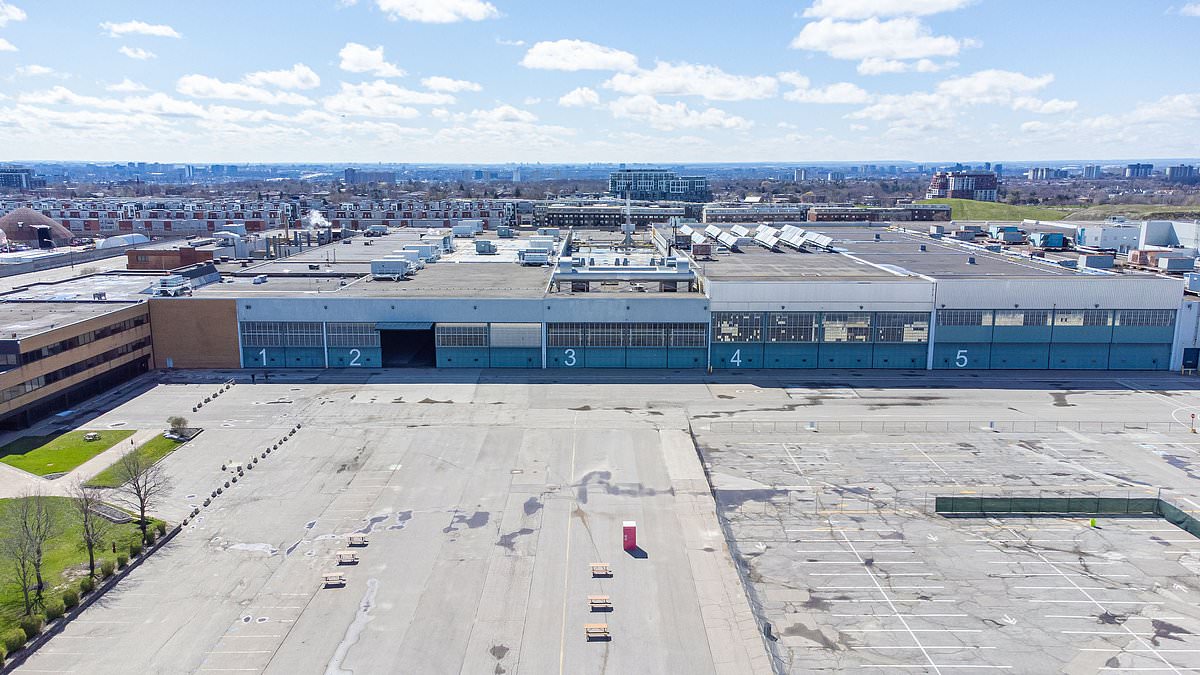
Downsview Airport won’t be completely erased from the site and will instead become a focal point for the city. Northcrest is preserving 11 airplane hangars and more than a mile of runway to give its first neighbourhood a unique feel. The runway will sit as a park used by pedestrians and connect the seven neighbourhoods. CEO of Northcrest Developments Derek Goring told CNN the site’s history as well as the new community will be brought together while also ‘respecting and celebrating the aerospace legacy of the site’.

The developer’s website reads, ‘A chance like this to build a city within a city comes along once in a generation. ‘We’ll ensure that it changes forever what it means to live in Toronto and what true community brings to big city life.’ Plans for the city include making use of what already sits on the site. Derek explained: ‘There’s a lot of embedded carbon in the existing buildings and rather than tearing them down and building everything new, there’s a big carbon benefit to retaining those buildings.’ This includes old hangars being used as commercial buildings, amongst other things.