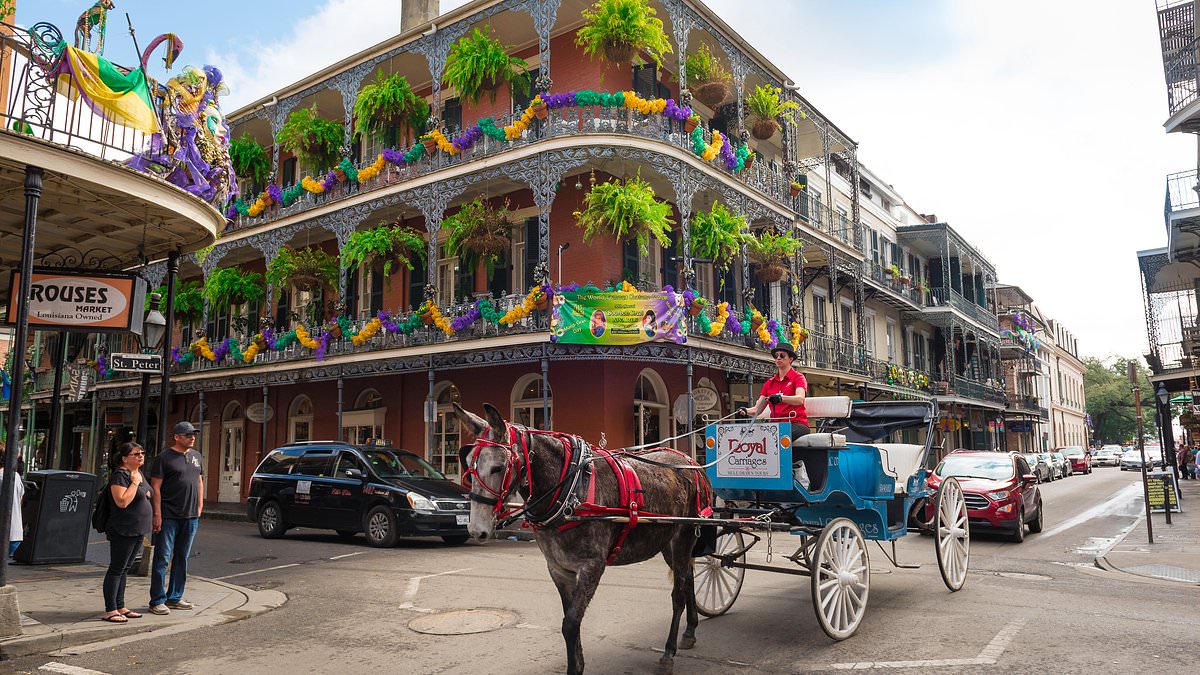

A cherished city in Louisiana faces the grim prospect of being submerged within this century, prompting experts to advise residents to consider relocation sooner rather than later. New Orleans, largely positioned below sea level, has long been vulnerable to threats from rising seas. However, new findings suggest that coastal Louisiana could experience a sea level increase of 10 to 23 feet. This would devastate the wetlands that currently protect the city from hurricanes, potentially repositioning the coastline as much as 62 miles inland, according to research published in Nature Sustainability. The study’s authors describe coastal Louisiana as a “canary in the coal mine” when it comes to climate change impacts.
Louisiana’s geological past
The researchers noted that the region has reached a “point of no return,” suggesting it could be encircled by the Gulf of Mexico by the century’s end. By examining Louisiana’s geological history, scientists have found evidence of an ancient coastline 30 miles north of New Orleans, dating back 125,000 years. During that period, Earth had similar temperatures to today, but sea levels were at least 10 feet higher. This discovery implies that current warming trends could significantly alter Louisiana’s coastal landscape.
Rising Tides Ahead
Co-author Torbjörn Törnqvist remarked to CNN that it is “very likely” sea levels will rise to such heights in the future. Currently, Louisiana’s wetlands serve as a vital defense against storm surges; however, they are rapidly vanishing due to land drainage for urban development and canal dredging for oil and gas industries. The southern part of the state has already witnessed the loss of approximately 2,000 square miles of wetlands, with rising seas expected to exacerbate the situation. To avert a future catastrophe, experts emphasize the urgent need for relocation strategies for the city.
Co-author Brianna Castro (pictured) told CNN that residents have been leaving the city for years. Since Hurricane Katrina devastated Louisiana in 2005 and killed about 1,400 people, the city’s population has dropped a staggering 25 percent. New Orleans lost 39,000 residents between 2020 and 2024, making it the fastest-shrinking metro area in the United States, according to Census data. Castro called the decline ‘pulse-like,’ saying each major storm or disaster drives many people to leave the city.
But relocation isn’t a simple solution, as the cost of living has increased and residents don’t want to leave their community and culture. Tornqvist also says the idea isn’t really on policymakers’ minds right now, but experts are optimistic that New Orleans can be rebuilt on safer land without losing its culture. ‘You don’t have to lose the spirit of New Orleans,’ Castro said of relocation. Tornqvist and Castro emphasize that their paper is not all negative, adding that planned relocation could help the city lead in sustainable development and coastal restoration.


