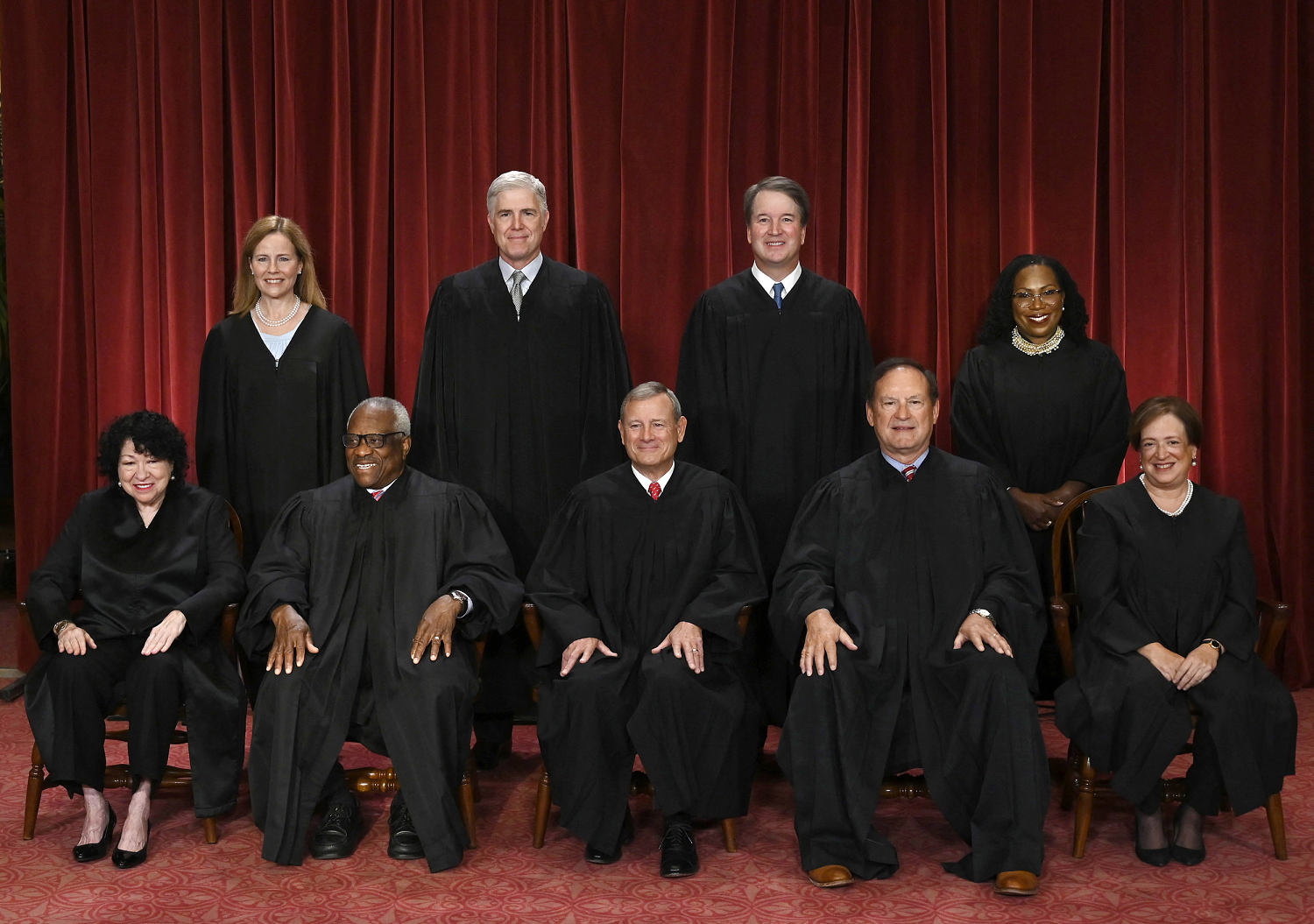
WASHINGTON — A 40-year-old Supreme Court precedent that over the years has become a bugbear on the right because it is viewed as bolstering the power of federal agencies came under tough scrutiny on Wednesday as the current justices considered whether to overturn it.
The court, which has a 6-3 conservative majority skeptical of broad assertions of federal agency authority, is hearing two related cases involving a fisheries regulation that call into question whether the 1984 ruling in Chevron v. Natural Resources Defense Council should be consigned to history.
Based on the first of the two oral arguments on Wednesday, some conservative members of the court appeared to be leaning toward overturning the Chevron precedent, although it is unclear if they have a clear majority to do so.
The court could also take a different approach and place new limits on when lower court judges can defer to agencies without overturning Chevron.
Ironically, at the time it was decided, Chevron was a win for the deregulatory efforts of the Reagan administration, with the court ruling that judges should defer to federal agencies in interpreting the law when the language of a statute is ambiguous.
The ruling allowed the Environmental Protection Agency to move forward with a Clean Air Act regulation that was favorable to polluting facilities, much to the displeasure of environmental groups that had wanted the court to give the agency less leeway.
During that period, the EPA was led by Anne Gorsuch, the mother of conservative Justice Neil Gorsuch, although she had left the post following a scandal over the agency’s management of pollution cleanups by the time the case was argued. Justice Gorsuch has been an outspoken critic of the Chevron ruling.
Gorsuch on Wednesday questioned why a judge who thinks the agency’s interpretation of the law is wrong would “abdicate that responsibility and say, automatically, whatever the agency says wins.”
Justice Brett Kavanaugh, another conservative, asked why the Chevron precedent should get the normal respect that longstanding rulings do, questioning the precedent on the grounds that it does not promote stability in the law because it allows agencies to constantly change positions depending on who is in charge.
“The reality of how this works is Chevron itself ushers in shocks to the system ever four or eight years when a new administration comes in,” he said.
Liberal justices strongly defended the status quo, with Justice Elena Kagan giving practical examples of when it might be better for courts to defer to an agency’s expertise, such as whether a cholesterol-lowering product should be classified as a dietary supplement or a drug.
“Sometimes law runs out. Sometimes there’s a gap. Sometimes there’s a genuine ambiguity,” she said.
Justice Ketanji Brown Jackson, another liberal, made a similar point, saying Chevron helps “courts stay away from policymaking.”
How the court rules is likely to rest on how Chief Justice John Roberts and Justice Amy Coney Barrett vote. Both are members of the conservative majority but did not appear based on their questions to be as eager to overturn Chevron as their colleagues.
Barrett expressed concerns about the “disruptive consequences” of overturning the precedent.
In practice, the Chevron ruling initially meant that both Democratic and Republican presidents could take advantage of the flexibility it gave to agencies in implementing new regulations on a wide range of issues.
Decades later, with business interests and conservatives more hostile than ever to what they call the “administrative state,” the precedent came to be seen at least on the right as being more beneficial to progressives, who want to make aggressive use of federal agency power, than it is to conservatives.
“Really, the mission on the other side is to make it very, very hard to pass laws that create effective programs that meet modern problems. The real goal is [to] diminish the power of the federal government,” said David Doniger, the environmental lawyer who argued and lost the 1984 case.
Environmental groups and others on the left hope to keep the ruling in place so agencies can tackle difficult issues like climate change, especially in the absence of Congress’ passing major legislation itself.
Jonathan Adler, a professor at Case Western Reserve University School of Law, said there were always disagreements among lawyers and academics over how courts should apply the Chevron ruling.
“This has been bubbling around for a while, but certainly on the right there is a concern that … agencies are not so much faithfully executing Congress’s instructions as they are trying to figure out ways of doing what they want to do,” he said.
But, he added, “the question is whether you need to overturn Chevron to arrest that dynamic.”
The Supreme Court has already addressed the issue of agencies’ exerting broad power without clear congressional instructions from another angle in recent rulings that struck down President Joe Biden’s federal student loan debt relief plan, blocked his Covid vaccination or test requirement for larger businesses and curbed the EPA’s authority to limit carbon emissions from power plants.
Those cases did not rely on the Chevron analysis but instead said simply that on issues of broad national impact, there needs to be an explicit authorization from Congress, an approach known as the “major questions doctrine.”
The cases being argued Wednesday involve a challenge to a less far-reaching government regulation that would require fishing vessels to help fund the collection of scientific data to assist with fishery conservation and management.
The court took up appeals brought by operators of fishing vessels active in the herring fishery off the Atlantic coast, which challenged the 2020 rule applying to New England fisheries. Lower courts in both cases ruled for the federal government.
The challengers say the National Marine Fisheries Service, the federal body that oversees ocean resources, did not have authority to issue the regulation under the relevant law, the 1976 Magnuson-Stevens Fishery Conservation and Management Act.
The rule implements a monitoring program that vessel operators are required to fund. The challengers assert that operators would have to pay up to $710 a day at certain times for independent observers to board their vessels and monitor their operations. The cost would be a significant burden on small owner-operators, the challengers say.
The fisheries dispute is one of several in the current court term in which the justices are considering attacks on federal agency power led by business interests and the conservative legal establishment.
The makeup of the court itself reflects another front in the war, with the Trump administration having specifically selected judicial nominees in part based on their hostility to the federal bureaucracy. The Supreme Court’s conservative majority includes three Trump appointees: Gorsuch, Kavanaugh and Barrett.


