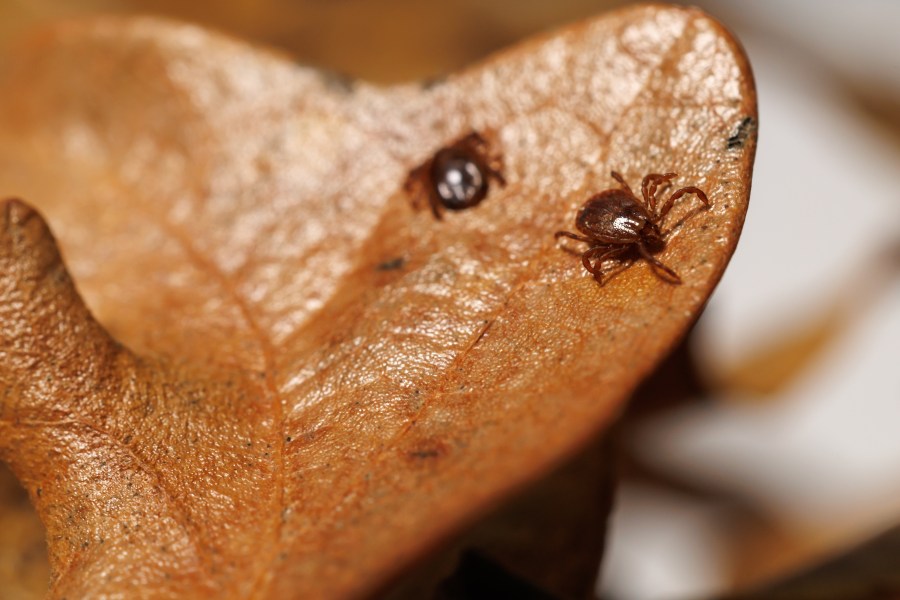

STILLWATER, Okla. (KFOR) A heads up for cattle producers: there’s a deadly tick in the United States, and researchers at Oklahoma State University are concerned.
“These ticks can be so high on a single cow that they can actually result in so much blood loss that the animal can die from that,” Dr. Jonathan Cammack, Assistant Professor at OSU and State Extension Specialist for Livestock, Entomology, and Parasitology, told affiliate KFOR.
Dr. Cammack said the Asian Longhorned Tick, also known ALT, is native to East Asia. It was first seen in the U.S. a decade ago and has since been detected in more than a dozen states: Arkansas, Connecticut, Delaware, Illinois, Indiana, Kansas, Kentucky, Maryland, Massachusetts, Missouri, New Jersey, New York, North Carolina, Ohio, Pennsylvania, Rhode Island, South Carolina, Tennessee, Virginia, and West Virginia.
It was discovered in Oklahoma last year on cattle in Craig County.
“It’s not going to have that bright white spot on it like a lone star [tick]. And they’re also going to be very small, about half the size of the normal tick that we’re usually expecting to see at this time of year,” said Dr. Cammack.
They’re also concerned with how fast the ticks can reproduce.
“They can reproduce asexually, so they don’t have that added challenge of locating a mate in the environment,” said Dr. Cammack. That means a female can lay up to 2,500 eggs on one animal, which can then consume enough blood to be deadly.

Now, they’re hoping research can help with ideas to slow or stop the spread.
“There’s a project going on at the vet school where they’re collecting ticks that are suspected to be Asian Longhorned Ticks, and then they’re testing them for the presence of this pathogen,” said Dr. Cammack. The pathogen is the Theileria orientalis Ikeda genotype, which can be detrimental to cattle.
This year, the team is looking for new cases of the tick, and they hope Oklahoma ranchers will help them with surveillance. Dr. Cammack recommends that animals are checked regularly maybe not daily, but more than once a year for the tick.
If you see it on your cattle, it’s recommended that you call your local veterinarian. If you live in an area where the tick has become established, there may be other steps you’re advised to take.