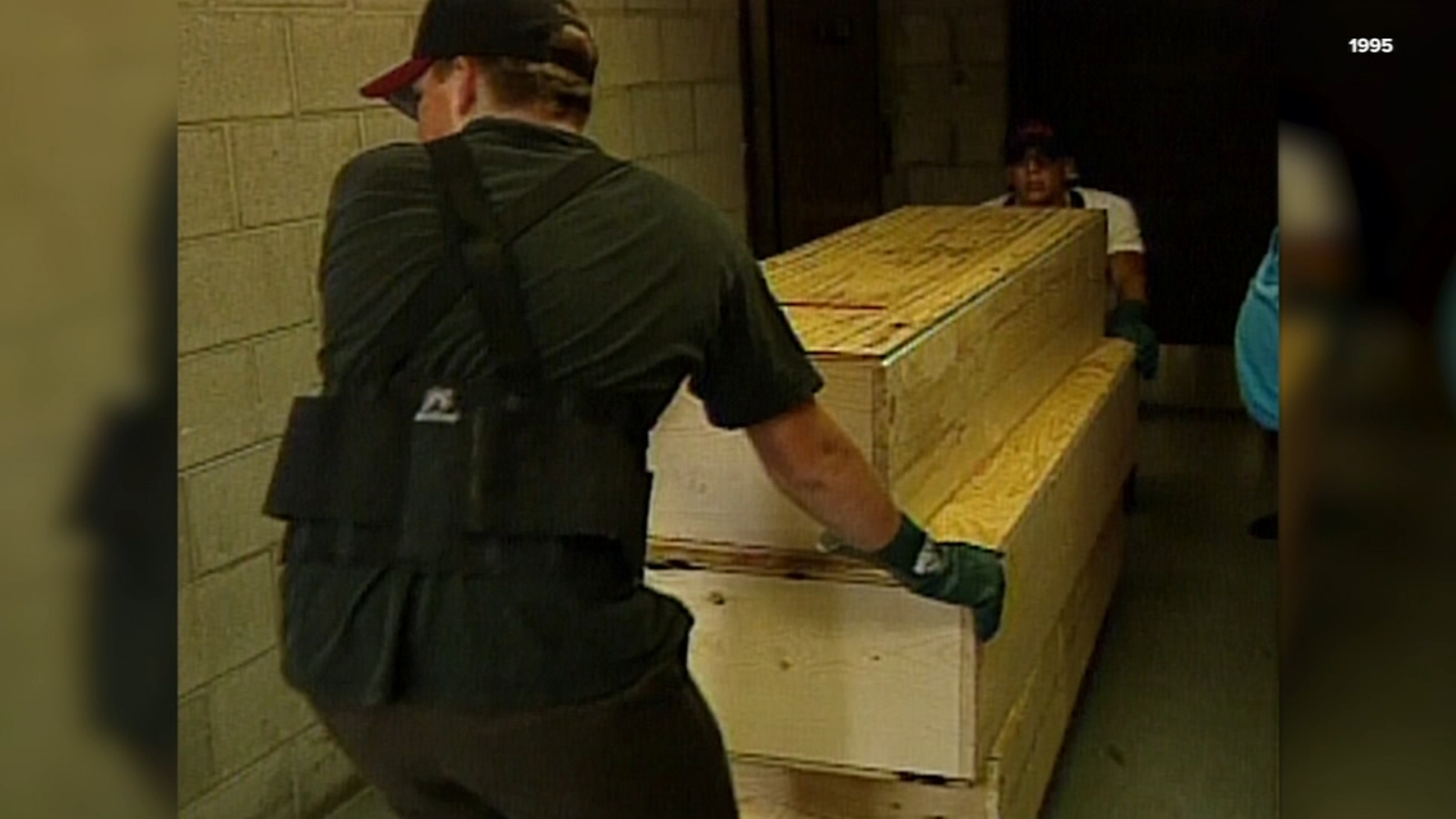

CHICAGO (WLS) — Thirty miles outside of Chicago, you will find a mass grave of 41 bodies in simple, unmarked pine boxes.
The victims were individuals who were impoverished, elderly, or lived alone. They were all interred at Homewood Memorial Garden Cemetery, and tragically, their remains have remained unclaimed.
ABC7 Chicago is now streaming 24/7. Click here to watch
One pastor volunteered his time to give the forgotten souls a proper burial some 30 years ago.
For the past three decades, the city of Chicago has invested substantial time and money into ensuring that their murderer can no longer wreak havoc.
“I can’t let an event like that happen again, at least not while I’m responsible. I am committed to doing everything possible to prevent it from occurring,” stated Kaila Lariviere from Chicago’s Office of Emergency Management & Communications.
Extreme temperatures during the summer of 1995 caught Chicago off guard.
A relentless heat wave settled over the city, and with no clear emergency plan, the response fell dangerously short. More than 700 people died.
On Monday, ABC7 looked back at the crisis that exposed deep flaws in the city’s emergency systems and how the cost of that unpreparedness reshaped Chicago forever.
ABC7’s very own AccuWeather Meteorologist Tracy Butler was here when temperatures hit record triple-digit highs in July 1995.
“The consistency of that heat, day and night. No relief. And at the time, no access to things like cooling centers,” Butler said.
No one anticipated the aftermath. Even the mayor got it wrong.
“It’s very hot. We broke all records. We all have our little problems. But let’s not blow it out of proportion,” said then-Mayor Richard M. Daley.
“We need neighbors going next door, homeowners going to another homeowner, apartment dwellers going to another apartment dwellers where they know there are senior citizens living within their complex,” Daley said.
Over a five-day period, a deadly heat wave claimed the lives of at least 739 people. The was death toll so high that calls for help overwhelmed first responders, collapsing the city’s emergency response system.
“What I would imagine in that point in time when the heat was really coming, it was like a lackadaisical attitude. People are like ‘Oh, it’s summer. I’m excited, it’s going to be hot.’ It’s almost like it caught everyone off guard about two days in,” Lariviere said.
Back then, many Chicagoans did not have air conditioning. In most cases, it was just too expensive. Some feared opening their windows due to crime, so there was no ventilation.
“This hits hardest. Elderly people who are living in unairconditioned places, and many of them have preexisting heart disease, either hardening of the arteries or high blood pressure,” a health official said at the time.
Kids resorted to opening fire hydrants to stay cool in sweltering 120-degree heat indices.
ComEd’s energy grid struggled under the demand.
“It’s very frustrating, and when the temperature is hot and you don’t have a fan or you can’t even plug in your window air conditioner or anything, or have anything cold in the refrigerator, at least, you have a tendency to be very angry,” one person said.
And the morgues did not have enough room for the dead.
READ MORE | 30 years later: Organizers remember 1995 heat wave victims, advocate for vulnerable Chicagoans
“We have bodies on the floor; we have no room whatsoever,” one man said at the time.
Sons and daughters and mothers and fathers died in silence, unnoticed for days. Many who did survive the heat emergency had neighbors or loved ones to thank.
“When I did come to my senses, they said my temperature was 108,” one survivor said. “Somebody cared. She cared.”
Thirty years later, technology has improved, many more homes now have AC, and Chicago emergency response systems are interconnected through the OEMC.
“In the event that this room need to be activated. It means we’re hitting trigger point,” Lariviere said. “In times of real emergency, we’re hoping to have this room open in couple of hours.”
The 1995 heat wave changed the way Chicago, and cities across the country, prepare for extreme weather.
ComEd, among many other agencies, instituted changes.
“We have smart sub-stations that have automation that when they see those low fluctuations, it’s able to respond instantly, where we can reduce impacting any of our customers,” said Nichole Owens with ComEd.
But with climate change bringing longer, hotter summers, experts say the work is not over.
Copyright © 2025 WLS-TV. All Rights Reserved.