
Share this @internewscast.com
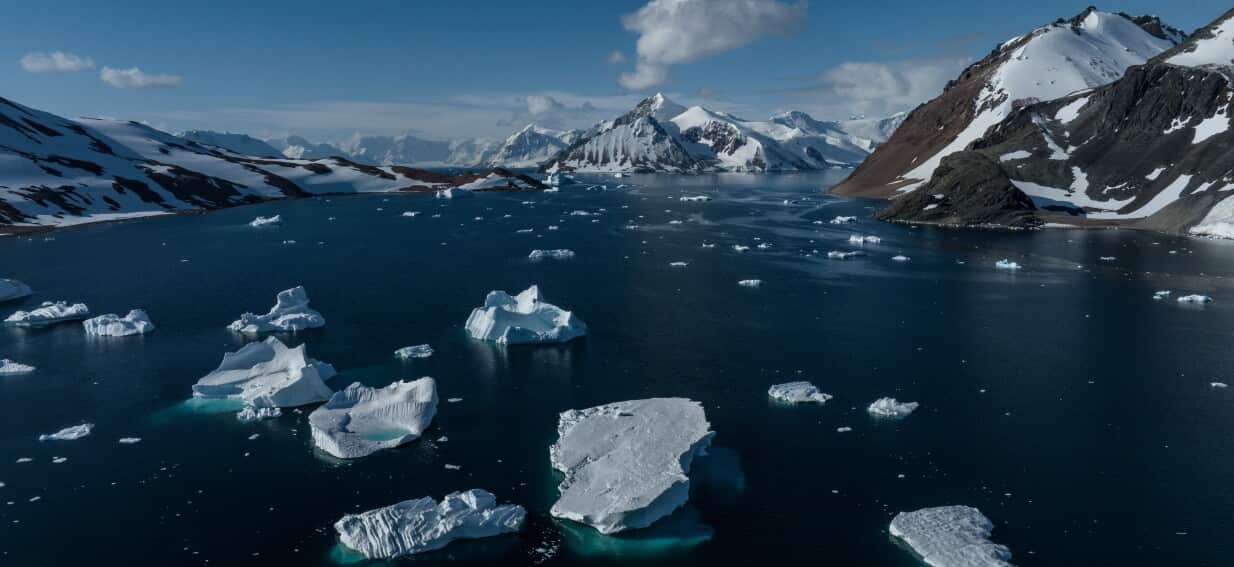
Ongoing loss of Antarctic sea ice could result in amplified warming in Australia and the rest of the southern hemisphere as scientists warn the icy continent is at risk of “abrupt and potentially irreversible changes”.
Regional temperatures above global averages are among possible “knock-on effects” from disappearing sea ice and other interlocking changes researchers have observed across the frozen landscape.
The study published in the Nature journal by Australian universities and research centres also warns of sea level rise and the growing risk of emperor penguin extinction.
Antarctica’s ice, oceans and ecosystems are already experiencing rapid change, said Nerilie Abram, lead author of the study completed during her time at the Australian National University.
“This is set to worsen with every fraction of a degree of global warming,” she said.
Fresh warnings of climate consequences come as the due date for Australia’s 2035 emissions reduction target fast approaches, with environmental groups among those calling for ambition.
Pressure is also on the federal government to release its delayed national climate risk assessment, rumoured to include troubling details about the severity and scale of climate impacts.
Abram, now chief scientist at the Australian Antarctic Division, wanted to better understand how Antarctica’s environmental changes were interacting by pulling together data on sea ice coverage, ocean circulation and other indicators.
Abram said there was evidence of the southern continent changing faster than the gradual shifts expected due to global warming.
“These types of abrupt changes can happen where you have processes that mean that once you start a change in motion, then there’s self-amplifying feedbacks that then continue to worsen,” she told the Australian Associated Press.
“That, even if you’re not worsening the climate change that started it in the first place, that can set in train changes that once they’re started become essentially unstoppable.”
“Remarkable” loss of sea ice over the past decade fit the characterisation of abrupt change, she said.
As a white surface capable of reflecting energy from the sun back into space, reduced ice coverage means more dark surface to absorb heat that has the potential to amplify climate warming in the Antarctic region and other parts of the southern hemisphere.
The Antarctic overturning circulation is also at risk of collapse, further posing a threat to wildlife reliant on the nutrients transported from the deep to the surface.
Better known already are threats to ice sheets and shelves, with the West Antarctic Ice Sheet at risk of collapse at around 2C of global warming.
If it does crumble, sea levels would rise by more than three metres, causing “catastrophic consequences for generations to come”.
Abrams said the shrinking sea ice coverage, as well as the slowdown in deep circulation in the Southern Ocean, were “showing worrying signs of being more susceptible to a warming climate than previously thought”.
“And where we can compare the comparable features between the southern hemisphere and the northern hemisphere, we’re often seeing that the southern hemisphere might actually be more prone to this tipping-point behaviour.”