
Traveling to space is brutal on the body.
Space travel can lead to a loss of bone density, swelling of brain and eye nerves, and changes in gene expression for astronauts. Research indicates that being in space accelerates the aging process.
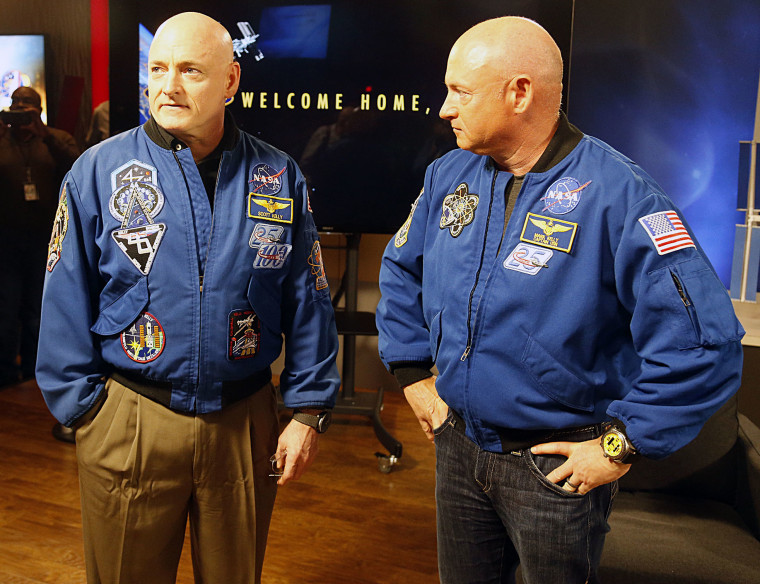
NASA’s groundbreaking study of twin astronauts Mark and Scott Kelly monitored aging markers in both siblings, with Mark staying on Earth while Scott spent 340 days aboard the International Space Station.
According to a major 2019 “twins study” featured in the journal Science, several alterations to Scott’s body, such as DNA damage, decreased cognitive abilities, and the shortening of chromosome-protecting telomeres, persisted for half a year post-mission.
A recent study published on Thursday in the journal Cell Stem Cell has unveiled a new finding—stem cells also display signs of accelerated aging due to the stress experienced during space missions.
Dr. Catriona Jamieson, director of the Sanford Stem Cell Institute at the University of California, San Diego, and a leading author of this study, stated that stem cells age “ten times faster in space than on Earth.”
Stem cells have the unique ability to evolve into different tissue types. The accelerated aging of these cells is concerning because it might impair the body’s natural capacity for tissue and organ repair, potentially causing chronic, age-associated issues such as cancer, neurodegenerative diseases, and cardiovascular problems.
The new study comes at a time when interest in spaceflight is ramping up. Governments are planning long-duration missions to the moon, and private companies are launching consumers and celebrities into space. Understanding the health risks involved is important to making space travel safer. And the acceleration of aging in cells could also help researchers better understand how biological processes are playing out, more slowly, here on Earth.
The researchers collected stem cells from bone marrow donated by people who underwent hip replacement surgery. The cells were housed inside “nanobioreactors,” which are essentially small, transparent blood bags no bigger than an iPhone where biological processes could take place. The nanobioreactors were placed inside a box built to monitor the cells called a CubeLab.
Each patient sample was divvied up into two CubeLabs, one that was destined for space, while the other stayed on Earth.
The space-bound packages were launched during four commercial resupply missions by SpaceX to the International Space Station. In total, the samples spent 32 to 45 days on SpaceX’s spacecrafts, giving the cells more than a month in microgravity, or weightlessness experienced in orbit. The researchers used the cells in the CubeLab setups on the ground for comparison.
The CubeLab monitored the cells during their travels and terrestrial stays, taking images of them each day through a microscope. Once the space-faring stem cells returned to Earth, the researchers compared those samples with their “ground controls” by sequencing their genomes and performing other tests.