
Researchers might be advancing towards a novel treatment that can correct faulty genes responsible for brain conditions like autism and epilepsy.
This potential breakthrough targets around one million people globally affected by SYNGAP1-related disorder (SRD). These disorders hinder normal brain development, potentially causing intellectual disabilities, epilepsy, movement issues, impulsive actions, and autism-related symptoms.
In most cases, the conditions are caused when someone only has one functional copy of the SYNGAP1 gene instead of the usual two.
Now, scientists in Washington state say they have found a way to repair the damaged gene and potentially help patients function better in daily life.
In a recent experiment, scientists treated young mice with a brain condition using a modified cold virus containing a healthy SYNGAP1 gene.
The virus effectively introduced the gene into the mice’s brain cells, resulting in significant behavioral improvements after two weeks. These improvements included the near-complete elimination of epilepsy, which is characterized by repeated, unexplained seizures, and a decrease in hyperactivity and risky behavior.
Additionally, the mice showed significant normalization in their brain’s electrical activity, moving from abnormal patterns to ones more typical of normal brain function.
Dr. Boaz Levy, a biochemist from the Allen Institute for Brain Science and the study’s lead author, remarked: ‘[This study] marks an essential advancement in the field, offering hope to those afflicted with these severe neurological disorders.’

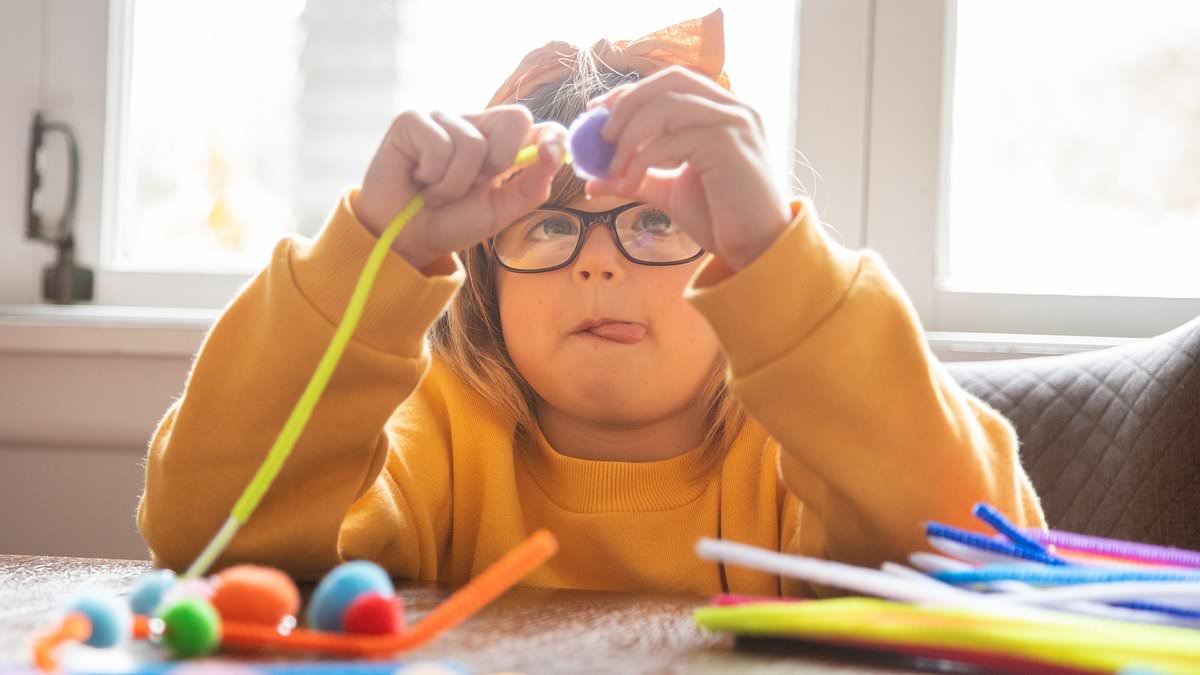
Scientists say they have found a potential new therapy for a brain disorder that can cause autism symptoms in children (stock image)
He added: ‘Gene supplementation is providing a functional new copy of a defective gene, a strategy that has great potential for correcting diseases where a gene is completely missing or where a single copy of a gene is lost.
‘This [study] provides a clear demonstration that SYNGAP1-related disorders can be treated with a neuron-specific gene supplementation strategy.’
The research is in the early stages and was only carried out in mice, with researchers saying clinical trials still need to be done in humans to confirm that the therapy works.
But scientists heralded the results as a positive step towards developing a treatment for the condition. It was particularly notable that the study was successful in juvenile mice, which is around the same age at which humans are diagnosed with SRDs and could, therefore, receive treatment.
About 1,500 Americans have been diagnosed with a SYNGAP1-related brain disorder, activists say, although estimates suggest many cases have been missed.
Not all autism and epilepsy cases are caused by SYNGAP1-related disorders, although patients with SRDs may be diagnosed with these conditions.
The disorders are considered to be a spectrum because the faulty genes often do not affect the brain in exactly the same way or to the same level of severity.
There is currently no specific treatment or cure for the condition, but doctors say they can help patients to manage symptoms using antiseizure medications or implanting devices into the body that can help to control nerve activity.
About one to two percent of all intellectual disability cases, including autism spectrum disorder and epilepsy, are estimated to be caused by SRD.

In the therapy, a healthy copy of the faulty gene is delivered to brain cells by an adenovirus, or cold virus. It was successful at improving symptoms in juvenile mice
About one in 31 children in the US has autism, a surge on the one in 150 estimated to have the condition in 2000.
Some research has suggested that about 80 percent of autism cases are linked to inherited genetic mutations.
But Robert F Kennedy Jr, the Health and Human Services Secretary, is among those who have argued that the surge in cases cannot be blamed on genetics alone and is likely also down to unidentified environmental factors.
About 470,000 children in the US have epilepsy, with experts also suggesting that the condition is caused by both genetic and lifestyle factors.
Epilepsy is a common symptom in patients with SYNGAP1-related brain disorders, with more than 80 percent of sufferers also diagnosed with this condition.
For the research, published in the journal Molecular Therapy, scientists injected the altered adenoviruses into the mice’s cerebral ventricles, the fluid-filled cavities in the center of the organ.
The injection was carried out by inserting a needle past the eye and into the brain.

Shown above is Dr Boaz Levy, left, who led the research, and associate investigator Dr Rong Guo and scientist Dr Meagan Quinlan

The above is the cross section of the brain of a mouse in the study. The highlighted areas represent locations where the adenovirus delivered the treatment to the brain
One to two weeks later the rodents were put through a battery of tests to measure the impact of the therapy.
Tests included tracking the movements of mice in a 7.8inch by 7.8inch arena, to check for erratic behavior, and placing them in an elevated maze and monitoring their behavior to estimate anxiety and risk-taking behavior.
The team concluded: ‘Our findings provide the first evidence that… gene therapy can restore SYNGAP1 function and reverse key [symptoms], supporting its potential as a transformative therapeutic for patients.’