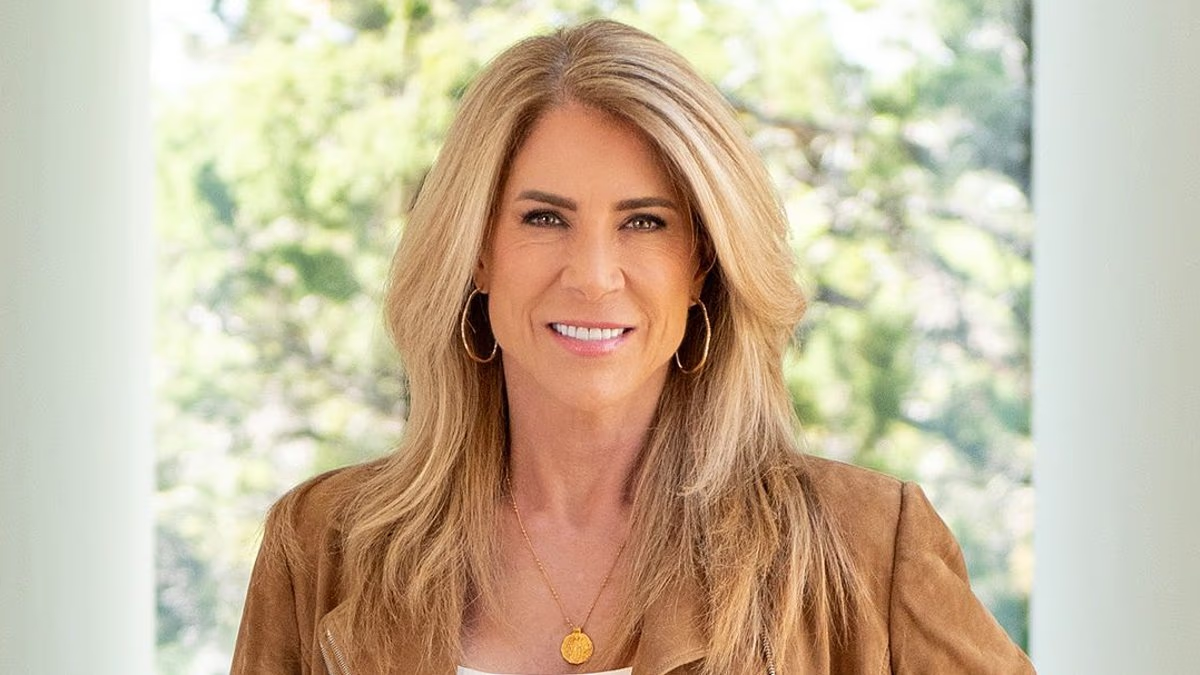

I’ve spent most of my life prioritizing my health. Yet at 57, I couldn’t twist open a jar of marinara sauce.
I tried three times. When my husband opened it effortlessly, I took notice.
I’d been strong throughout my adult life, and I knew researchers consider grip strength a useful marker of health and longevity as we age. That small failure suddenly felt significant.
I saw it as a wake-up call: not on my watch.
Now I’m in my sixties, and I feel better than ever. I’m stronger than I was in my twenties, with more energy and confidence, too. I haven’t followed a diet in years.
After more than 40 years working in nutrition and fitness, here’s what I wish someone had told me at the beginning: getting older doesn’t mean you have to stop getting stronger.
An early lesson
When I was 16, being thin was everything in the modeling industry. An agency discovered me and advised me to lose 20 pounds from my already lean frame so I would be more ‘marketable’. I followed that advice into obsession, severely restricting my food and spending hours doing cardio.

Now in her sixties, JJ says she feels better than ever — and hasn’t dieted in years

Her wake-up call came when she couldn’t open a jar, while her husband Tim popped it open with ease
The number on the scale fell, of course. But so did my muscle, energy and self-belief. I was hungry, drained and ashamed. I remember looking at my reflection and realizing that I felt weaker, not healthier.
Like many women, I had absorbed the message that becoming smaller would make us more attractive, successful and happy. I was pursuing those goals by shrinking myself in every sense.
Eventually, I began asking a different question. Rather than spending each day calculating how little I could eat and still function, I asked myself: ‘How strong can I become?’
That shift changed the direction of my life.
What the scale can’t tell you
At 39, I had my first DEXA scan, which measures body fat, lean mass and bone density. At 58, I had another. The results were almost unchanged: the same body fat, lean mass and weight.
But I wanted to be in the best shape of my life by my 60th birthday. I also knew there was room to improve — remember the jar? — so I got to work.
Over the following year, I reduced my body fat by another four percentage points and lost roughly 12 pounds, most of it fat. I’ll explain how shortly.
When I met my husband Tim, he had just turned 50. He looked fit, ran every day and had maintained the same weight throughout adulthood. His scan showed 25 percent body fat at 177 pounds.
He raised his protein intake, began resistance training five days a week and increased his sleep from five or six hours to eight. His weight fell by just three pounds.
Yet his body fat dropped from 25 percent to 10 percent. He lost 27 pounds of fat and gained 24 pounds of lean mass. The scale barely changed, but his body became dramatically stronger.

Virgin and her husband now make protein a central part of their diets

Virgin adopted a new fitness plan to reach the best shape of her life by 60
Don’t let the bathroom scale be your only measure of progress. If a DEXA scan isn’t available, a body-composition scale can help identify trends. It estimates not only your weight, but how much comes from fat and lean mass — information a traditional scale cannot provide.
Muscle loss is sneaky
Beginning around age 30, we lose an estimated three to five percent of our muscle mass each decade. That decline may accelerate after 60, particularly when we are inactive or fail to eat enough protein.
The medical term is sarcopenia, and estimates suggest it affects five to 13 percent of people in their 60s.
Menopause can alter body composition as well. Many women notice fat shifting to different areas, which may explain why their favorite jeans no longer fasten even when their diet and activity habits have not changed.
I believe many changes we attribute entirely to aging are also linked to inactivity, inadequate protein and poor sleep. Aging and hormonal shifts are real, and our bodies inevitably change. Still, we have more influence than we are often led to believe.
Muscle matters for several reasons. It absorbs blood sugar after meals like a sponge and uses energy even while you are resting. It helps you rise from a chair, climb stairs with groceries and lower yourself to the floor before standing again.
DISCOVER MORE: Manchester United Stars React Awkwardly to ‘Lap of Dishonour’ Footage
When muscle disappears, blood-sugar control, energy and independence can all suffer.
What I did, and still do now
I make protein the starting point of every meal. My target is at least 30g per meal and between 0.7g and 1g per day for every pound of my goal weight.
That exceeds the RDA, or official minimum recommendation. In my view, the RDA is about getting by, not thriving. As we age, muscles become less responsive to protein — a phenomenon known as anabolic resistance — so we may need more protein to trigger the same growth signal.

She now performs resistance training three times each week

Virgin says the encouraging news is that muscle can be built at any age
I also do resistance training at least three days a week, working each major body part two or three times. I choose weights that make the final repetitions challenging.
My workouts center on functional, compound movements such as squats, deadlifts, presses and rows. I rarely isolate my biceps or triceps because pushing and pulling exercises already engage them. As I grow stronger, I gradually increase the weight.
The encouraging news is that muscle can be built at any age. Begin with light weights and master your technique before progressing. And here’s one fear you can set aside: you will not become bulky by accident. Significant muscle growth requires consistent, intentional effort. What you will gain is strength.
Daily movement matters, too. You can exercise regularly and still spend most of the day sitting, and a sedentary lifestyle quickly undermines muscle.
My longtime client Lisa assumed she was active because she lifted weights and did high-intensity interval training. But when she began tracking her steps, she found she averaged just 3,000 on days she went to the gym.
She now walks 8,000 to 12,000 steps a day — 8,000 is my own minimum — and has seen improvements in both her energy and body composition.
Sleep is another nonnegotiable. I protect seven to nine hours every night because muscle is built during recovery.
After Tim improved his diet, exercise routine and sleep, his cravings for sugar disappeared and he lost abdominal fat.
The diet trap
If you’ve spent years pursuing weight loss, consider changing the goal: stop obsessing over the scale and concentrate on rebuilding muscle.

Movement matters because it is possible to exercise and still move too little. Sedentary habits can quickly erode muscle, she says

Sleep is nonnegotiable for her: ‘I get seven to nine hours every night. Muscle gets built while you recover’
I’ve watched too many intelligent, determined women endure years of restrictive dieting. They force themselves through crash plans, lose 15 pounds and then regain it within months — often adding five more.
By the time they came to me, they were exhausted and afraid to eat anything more substantial than a salad.
Rapid weight loss can include muscle loss, which is one of the major drawbacks of fad diets. Some research suggests the same may occur with GLP-1 medications.
To be clear, I am not opposed to GLP-1s. They can be useful tools, and the decision to take them should be made with your doctor. Whatever path you choose, protect your muscle through protein, resistance training, regular movement and sufficient sleep.
A bigger life
My friend Dr Sandi Scheinbaum spent decades trying one diet trend after another while logging countless hours of aerobics. She was perpetually hungry and exhausted.
At 70, she stopped trying to make herself smaller and began working toward greater strength. She started eating 100g of protein daily and lifting heavy weights.
Today, she has more muscle, less body fat and enough strength to complete 100 push-ups before breakfast.
I often think about that jar. It was an ordinary moment, but it made me determined to preserve the things I never want to lose: traveling, carrying my own bags and standing up from the floor without assistance.
I’m in my sixties, and I’m not getting smaller. I’m still building — and that feels incredibly good.
The Metabolism Fix: Restore Your Body’s Ability to Build Muscle & Lose Fat Fast by JJ Virgin is published by Gallery Books, an imprint of Simon & Schuster, on December 29.
MUST READ: Federal Agents Search Ilhan Omar’s Trash for DNA in ‘Dumpster-Diving’ Probe


