
Ferrari has decided to reduce the number of cars it sells in the UK, as affluent customers are increasingly put off by Labour’s new tax policies.
The government’s fiscal measures, led by Chancellor Rachel Reeves, have come under fire for potentially driving out the ultra-wealthy. The abolition of the non-dom status and a 40% inheritance tax on global assets for foreigners residing in the UK for over a decade are at the heart of these concerns.
About six months ago, Ferrari started to “significantly limit” the shipment of cars to the UK. This decision aims to curb the declining value of second-hand models.
A sharp decrease in the prices of pre-owned vehicles could harm the luxury brand’s reputation. Customers are also hesitant to invest in new cars if resale values are expected to be unfavorable.
Ferrari’s actions highlight the tangible effects of Labour’s tax adjustments on the luxury market.
These policies have already been linked to an outflow of wealthy business figures, including Revolut’s Nikolay Storonsky, who has recently relocated his residency from the UK to the United Arab Emirates.
‘Some people are getting out of that country for tax reasons,’ Ferrari chief executive Benedetto Vigna told the Financial Times.
The Italian has also acknowledged to investors that ‘a lot of people’ had left the UK.
However, he accepted that tax changes were not the only reason for the declining value of second-hand Ferraris, with ‘other factors’ also at play.
In other countries, the value of second-hand Ferraris has been hit by a trend towards personalising models to fit the tastes of their owners.
According to Auto Trader, the residual value of a Ferrari Purosangue reduced by 12.2 per cent between January and October, while the SF90 Stradale dipped 6.6 per cent. Prices have since begun to stabilise.

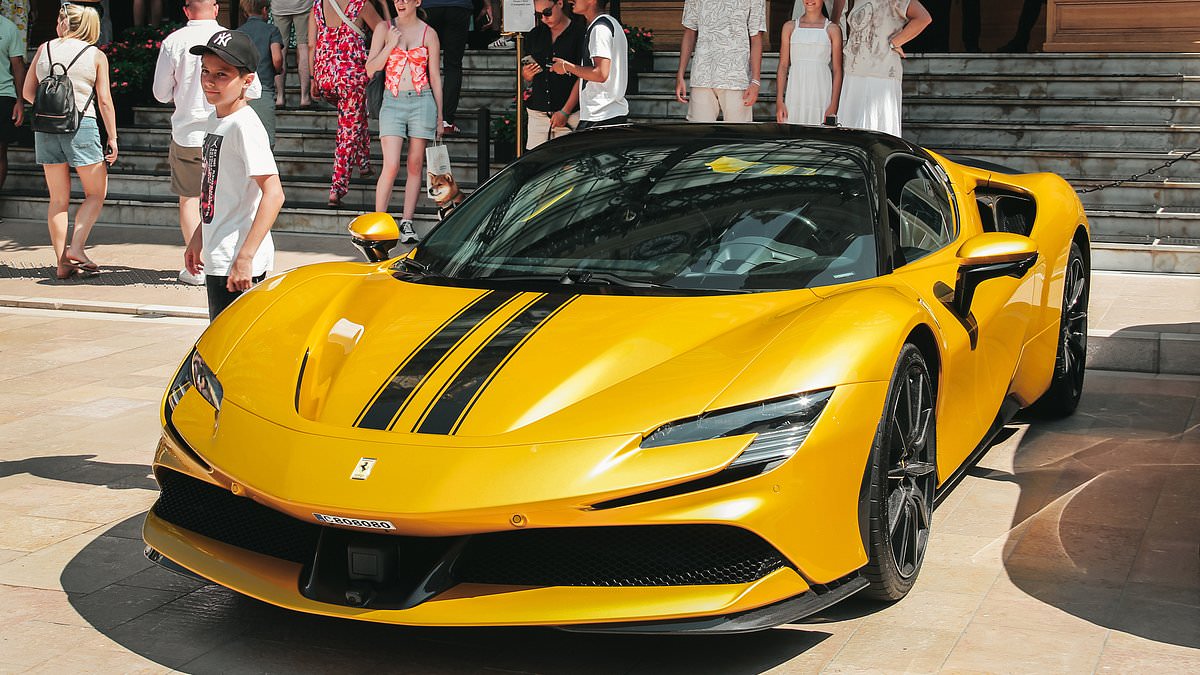
A luxury Ferrari SF90 Spider pictured in Monaco – a popular option for non-doms leaving the UK
Mr Storonsky, who co-founded Revolut before growing it into the UK’s biggest start up worth £56bbn, is only the latest of a string of billionaires to leave Britain in the wake of Labour’s tax raids.
They include Nassef Sawiris, the Egyptian co-owner of Aston Villa FC, who has shifted his tax residency to Italy – according to legal documents revealed in April.
Brothers Ian and Richard Livingstone, who oversee a £9billion property empire in the UK and abroad, an online casino and plush Monte Carlo hotel, have quit Britain for Monaco.
Another billionaire developer, Malawi-born Asif Aziz – owner of the former London Trocadero on Piccadilly Circus – moved his tax residency to Abu Dhabi at the end of last year.
Several billionaires have been open about their reasons for leaving, with Nassef Sawiris blaming Labour’s inheritance tax clampdown and a ‘decade of incompetence’ under the Tories.
Britain’s ninth richest billionaire, John Fredriksen, declared in the summer that Britain had ‘gone to hell’ and ‘become like Norway’.
The Norwegian had previously run his private firm, Seatankers Management, from an office in Sloane Square.
But he told newspaper E24 that the UK had become a worse place to do business.
‘It’s starting to remind me more and more of Norway,’ he said. ‘Britain has gone to hell, like Norway.
‘People should get up and work even more, and go to the office instead of having a home office.’
Labour donor Laskhmi Mittal was reported in March as telling friends that he would probably leave the UK.
The Indian-born businessman is also the owner of property on London’s exclusive Kensington Palace Gardens, which has been dubbed ‘billionaire’s row’.
He bought what was then the world’s most expensive home for £67million in 2004.
Ms Reeves abolished the non-dom tax status in April in a policy previously announced by her Tory predecessor, Jeremy Hunt.

Revolut founder Nikolay Storonsky – pictured with Rachel Reeves at the opening of Revolut’s new London HQ in September – has changed his tax residency to the UAE. A person familiar with the situation said he retains a home in the UK and will be here frequently for work
Mr Hunt estimated that scrapping the regime would raise about £2.7billion for the Treasury by 2028-29.
Even so, campaigners insist HRMC will suffer in the long-term if some of Britain’s biggest taxpayers are driven out.
Leslie MacLeod-Miller runs Foreign Investors for Britain (FIFB), a lobby group set up after the July general election.
He told the Mail: ‘Wealth is already shifting to countries like Italy, Dubai, and Switzerland.
‘The government needs to show bold leadership and implement a bold policy change before Britain’s ‘golden geese’ take their ‘golden eggs’ abroad to other countries that are actively courting them.
‘The Office for Budget Responsibility warned this July that continued reliance on this small population of top taxpayers represents a growing fiscal risk.’
It comes amid fears Ms Reeves could use next month’s Budget to reveal a wealth tax.
Analysis by wealth manager Rathbones suggested that the tax – advocated by left-wing Labour MPs and campaigners – could prompt a £100 billion exodus of assets from the UK economy
Rathbones said high-earning professional clients were already fleeing to low-tax locations such as Dubai and Singapore as changes to the non-dom tax regime bite.
Oliver Jones, head of asset allocation at Rathbones, said: ‘There is clear evidence that a recurring wealth tax would be economically damaging to the UK.’
Speculation over a series of possible tax changes is growing as the Chancellor looks to repair an estimated £30 billion black hole in next month’s Budget. She has previously ruled out a wealth tax.
The report found that the complexities of setting up such a tax would cost the government £600 million, with ongoing administrative costs estimated at £700 million or more.
That is because taxing wealth would mean totting up the value of ‘complex and illiquid’ assets – including private businesses, art, and intellectual property for thousands of people – each year.
And the analysis suggested that many would respond by relocating or switching their wealth into assets that may attract lower tax or be exempt from it.
Rathbones pointed to a study of the impact of wealth taxes which found that, at a rate of 1 per cent, it would result in the overall taxable base of assets shrinking by between 7 per cent and 17 per cent.
‘That’s a very large distortion – equivalent to at least £100bn shifting outside the UK or into less productive assets,’ the analysis found.
That could be even greater if – as campaigners are demanding – a 2 per cent tax is imposed on net assets above £10 million.
Since the 1990s, the number of countries levying wealth taxes has fallen from 12 to three – with just Spain, Norway and Switzerland currently implementing them.
Only Switzerland raises ‘significant revenue’ from them though its entire tax system is structured differently with low taxes on income, dividends and inheritance, Rathbones said.


