

You might want to reach for a few extra pieces of your go-to pub snack.
Fresh research indicates that a common, everyday food may significantly enhance cerebral blood flow—a crucial function that diminishes as we age.
According to the study, this improvement not only enhanced memory but also bolstered heart health among participants.
Scientists at Maastricht University in the Netherlands enlisted 31 healthy individuals aged 60 to 75 for a 16-week program. Participants were instructed to consume 60 grams of unsalted, skin-roasted peanuts daily.
This amount, equivalent to about two servings, had to be integrated into their usual diet. They were cautioned against crushing or heating the peanuts to preserve their nutritional integrity.
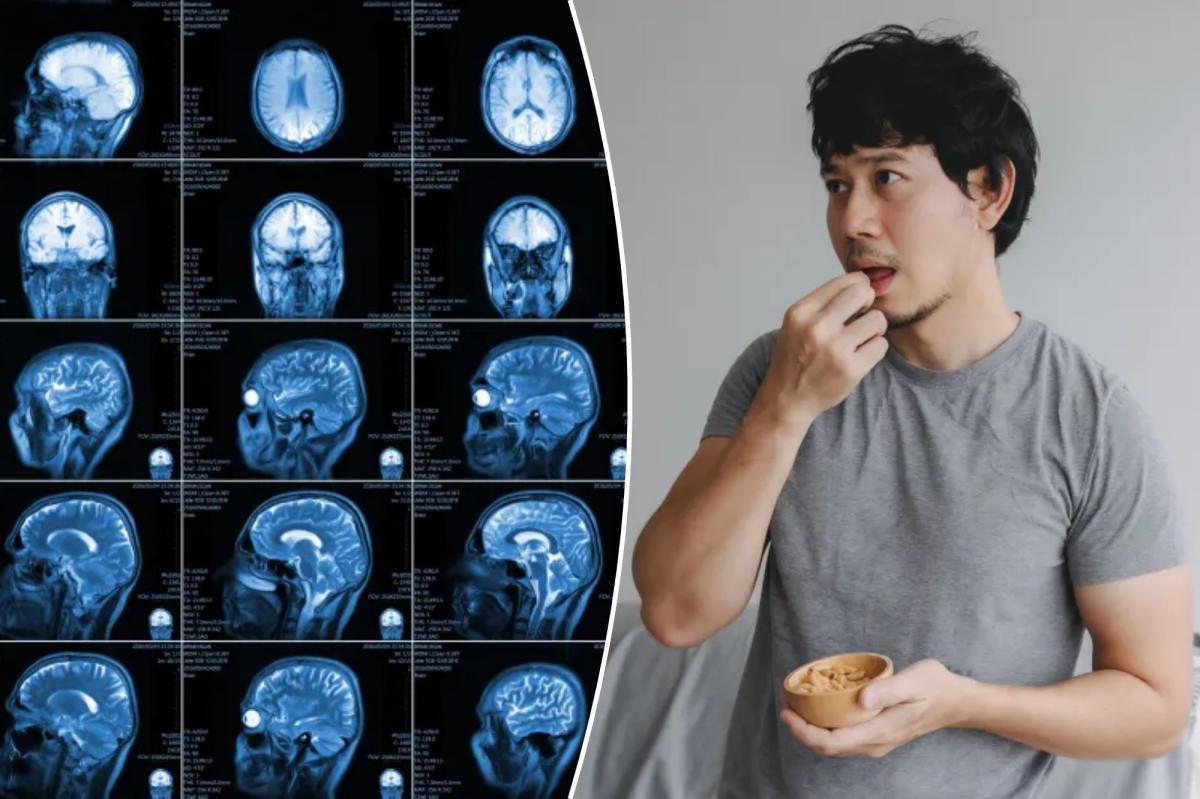
Throughout the study, evaluations took place at the beginning, halfway mark, and conclusion. Each session measured blood pressure and body composition, and the final phase included cognitive assessments and advanced imaging to observe cerebral blood flow.
By the end of the study, the brain-boosting benefits were clear. Imaging tests showed a significant improvement in brain vascular responsiveness, or the ability of their blood vessels to widen and constrict to regulate blood flow.
After 16 weeks of peanut consumption, participants’ global cerebral blood flow (CBF) increased by 3.6% compared with the control period.
“CBF is an important physiological marker of brain vascular function and refers to the amount of blood that flows through the brain, delivering oxygen and nutrients that are essential for maintaining brain health,” Dr. Peter Joris, the study’s author, said in a statement.
A low CBF is associated with cognitive decline and can affect specific functions like attention, psychomotor speed and memory.
When Joris and his colleagues examined the participants’ brain gray matter, home to the cell bodies of the brain’s neurons, they found blood flow had increased by 4.5%.
The frontal lobes experienced a 6.6% boost, while the temporal lobes rose 4.9%. These regions play key roles in memory, language, decision-making and emotional control.
These vascular perks translated into better recall. During a memory test, people who ate the peanuts recognized more words from a list they’d seen 20 minutes earlier compared to the control period.
“For the first time, we demonstrated that peanut intake improved brain vascular function in healthy older adults,” Joris said.
It’s an encouraging finding at a time when dementia is on the rise. More than 6 million Americans — about 10% of adults 65 and older — live with the memory-robbing disease, which claims over 100,000 lives each year. Experts expect that number to double by 2060.
“Our results suggest that eating unsalted, skin-roasted peanuts every day can support brain health as we age,” Joris told Psypost.
While memory improved, executive function and psychomotor speed didn’t shift significantly — at least not in this small group.
Scientists have some theories as to why peanuts worked: They’re high in L-arginine, unsaturated fats and polyphenols, which are all good for vascular health. Peanut skin also has dietary fiber and antioxidants.
Notably, the benefits didn’t stop at the brain. Participants’ systolic blood pressure also dropped by an average of 5 mmHg, and their pulse pressure fell by 4 mmHg.
These reductions are significant, since elevated blood pressure damages small blood vessels in the brain and heart, increasing the risk of both cardiovascular disease and cognitive decline.
In fact, studies suggest that people with uncontrolled high blood pressure in midlife face a 49% higher risk of developing dementia down the line.
And, surprisingly, despite adding 340 calories a day, the participants largely didn’t gain weight while eating the peanuts.
Next, Joris and his team plan to test whether other peanut products, such as peanut butter, provide similar benefits, and if smaller amounts could be just as effective.