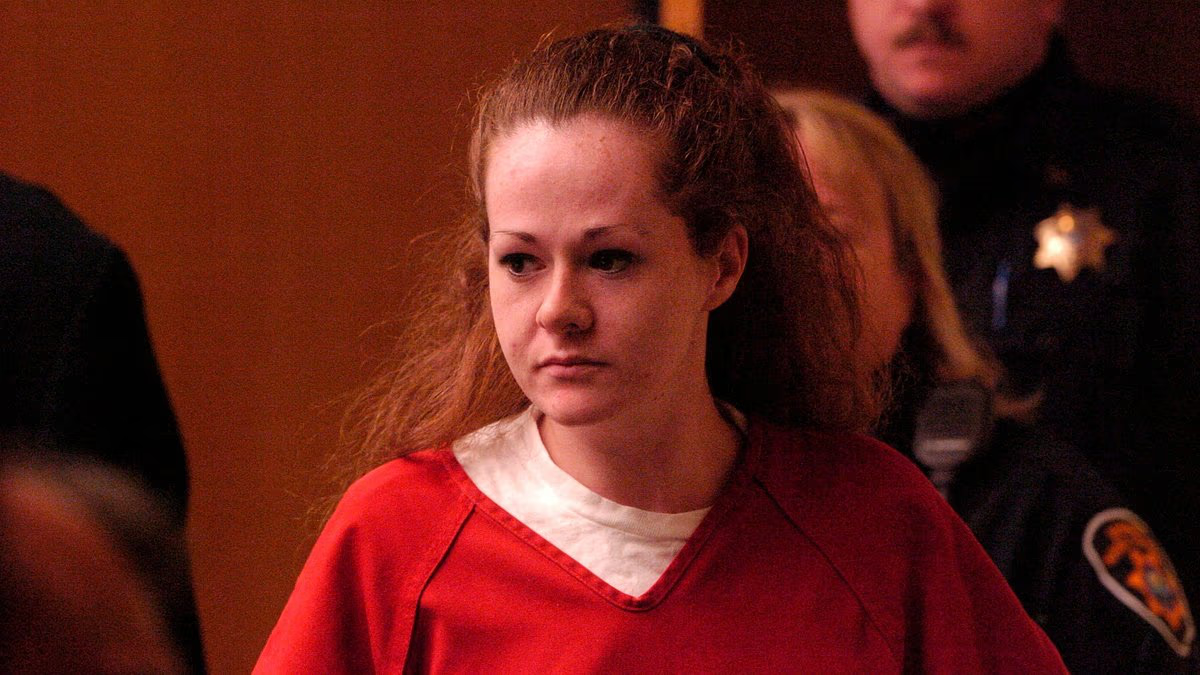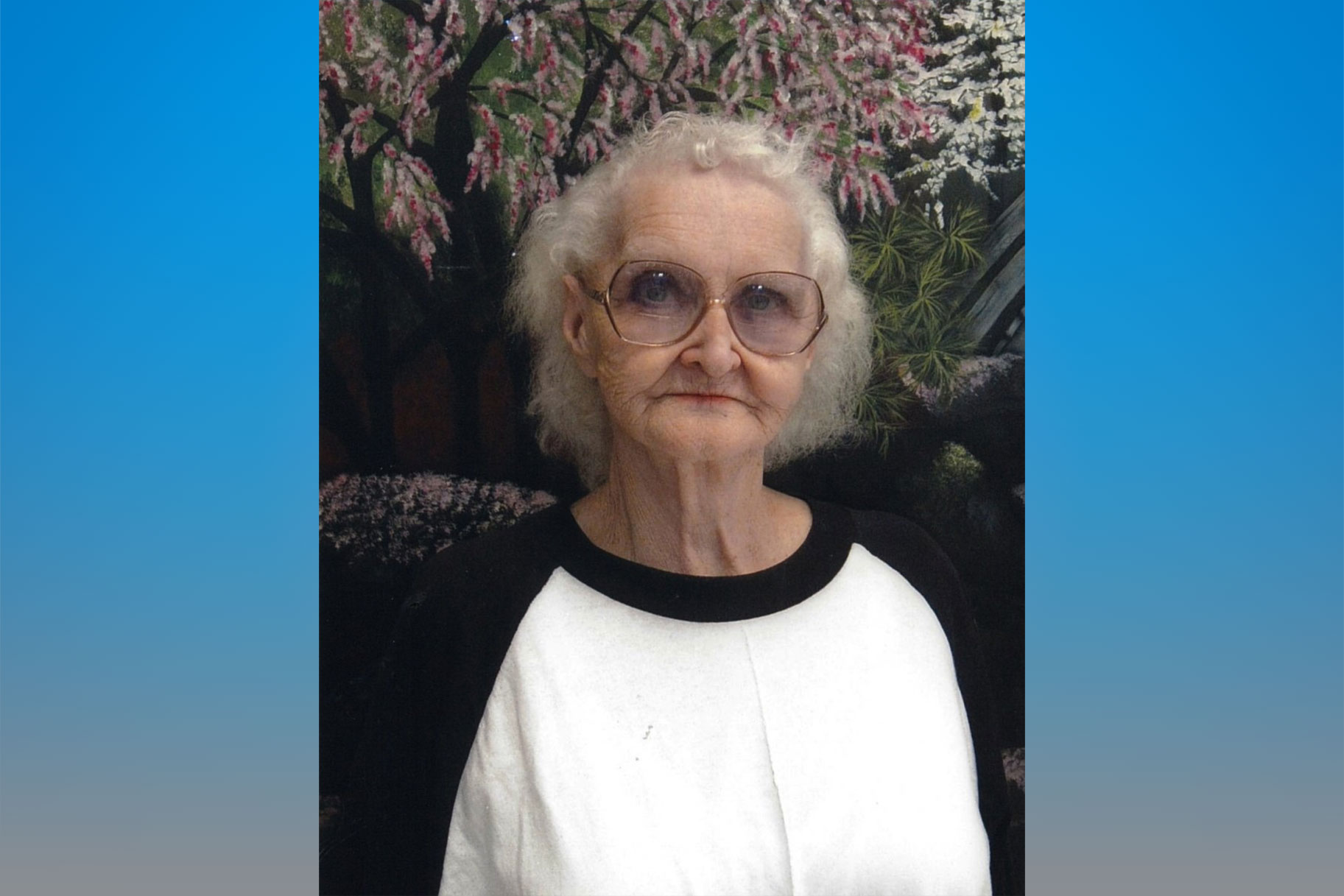

Behind her kindly exterior, California landlady Dorothea Puente concealed a chilling history of lethal deceit.
The forthcoming episode of Killer Grannies, scheduled for Sunday at 8 p.m. ET, delves into the sinister discoveries that authorities unearthed at her Sacramento residence.
How Dorothea Puente ended up on police radar
In 1988, Puente, who was then 59 years old, was recognized for operating a boarding house in Sacramento. She had garnered a reputation for her willingness to assist the more vulnerable members of the community.
“She appeared to be a grandmotherly figure,” remarked Rosie Gaytan, a former reporter for Channel 10. “She was notably generous, offering scholarships to young people and support to the elderly.”
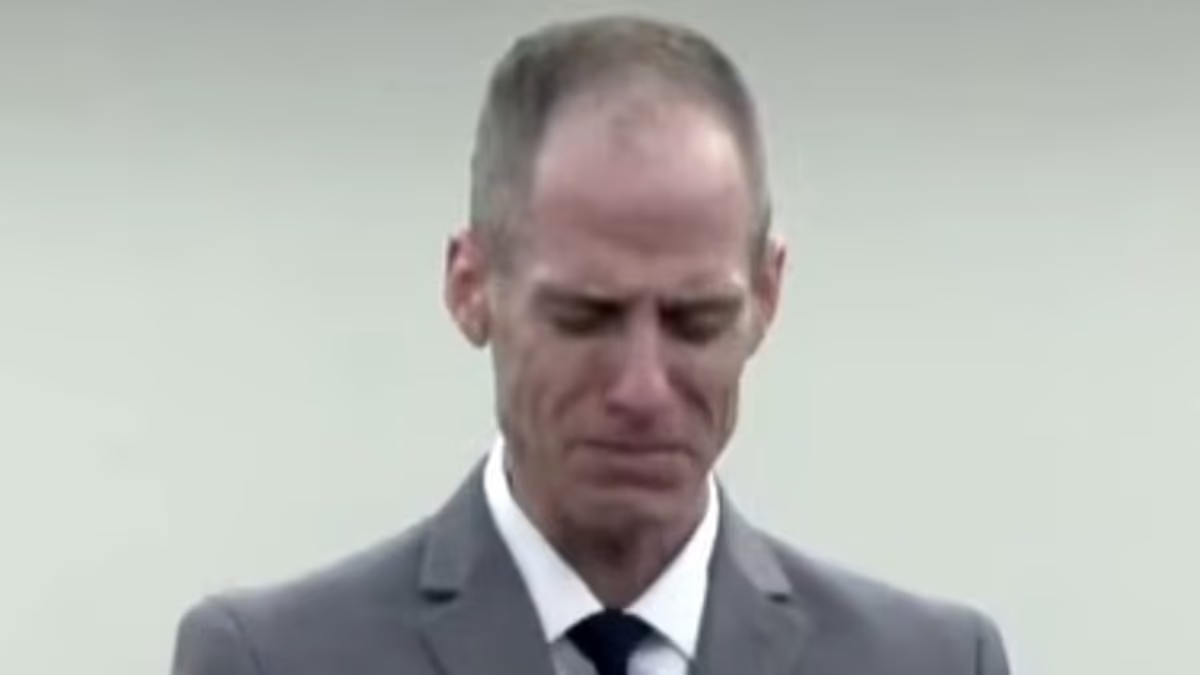
Among her tenants was Alvaro “Bert” Montoya, a 52-year-old from Costa Rica known to have a mental disability. “It rendered him somewhat childlike,” explained John Cabrera, a former detective with the Sacramento Police Department.
When Montoya was reported missing, Puente assured the police that he had simply left of his own accord, a narrative that was supported by other residents of the boarding house.
But as investigators were preparing to the leave the residence, one tenant confessed that Puente had forced them to lie, as revealed in Killer Grannies.
Dorothea Puente’s checkered past
Detectives probed deeper, and found that Puente—born in Redlands, California in 1929—had a criminal past.
“She got five years in state prison,” said Cabrera. “She was charged with putting stupefying drugs in her friends’ drinks and picking their pockets.”
The detective determined that Puente was in violation of her parole on a federal level, which gave him grounds to do a search of her boarding house and property.
Inside, they found nothing out of place. However, when digging around Puente’s garden, they uncovered something more disturbing. “It’s a femur bone,” recounted Cabrera. “I knew I had stumbled upon something much bigger than what I thought.”
Dorothea Puente’s history tied to suspicious death
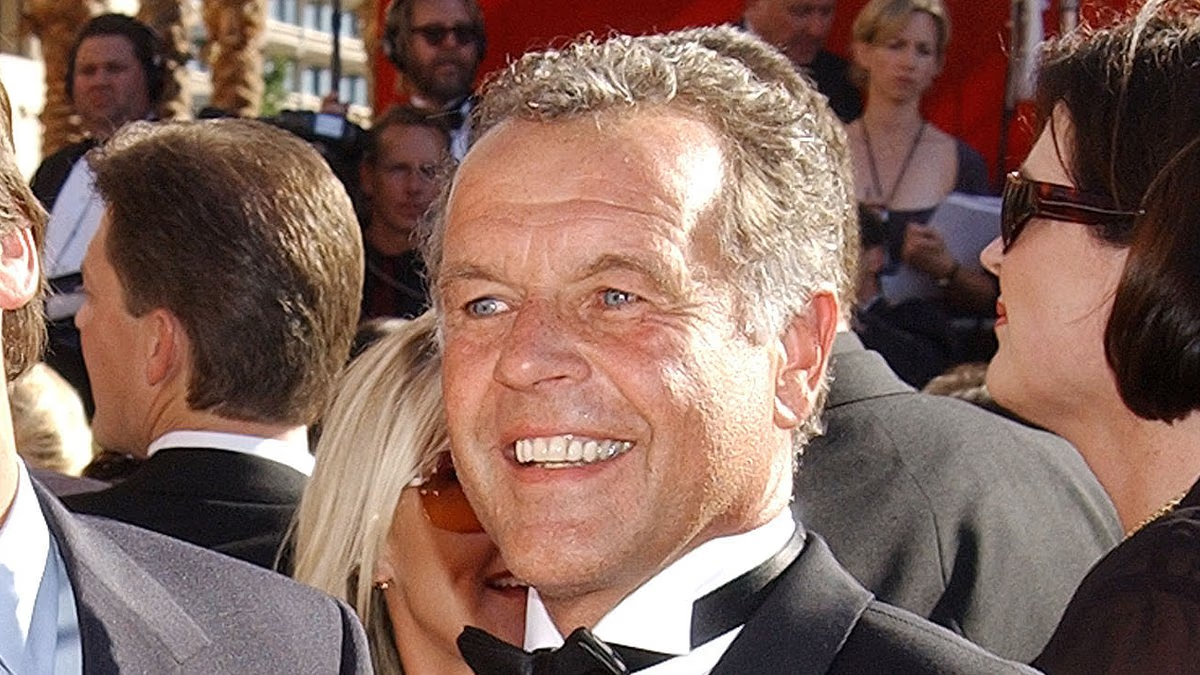
To learn more about Puente’s background, investigators contacted former Sacramento County Deputy District Attorney Bill Wood, who was involved in her cases in the early 1980s.
“Most of the cases involved elderly women,” said Wood. “She was befriending them and pretending to be a caregiver, while stealing their Social Security checks and personal property.”
Puente eventually pled guilty to five felonies. When news broke, the son of Ruth Martin, a retired and widowed pharmacist, contacted Wood with a haunting suspicion.
He explained to Wood that his mom moved in with Puente after her husband’s death—and he believed Puente killed his mother.
In 1982, the circumstances surrounding Martin’s death were considered equivocal, but, at the time, the evidence was not strong enough to move forward with a homicide charge.
What investigators found in Dorothea Puente’s yard
Armed with new information about Puente’s past, Cabrera questioned her again about Montoya, though she maintained her innocence.
“I haven’t killed anyone,” she is heard in a taped interview. “My conscience is not bothering me.”
Detectives turned to Plan B: They dug up her entire garden area.
About 20 minutes in, Cabrera uncovered a leg with a sheet around it. With at least two bodies in Puente’s backyard, the investigator had cause to arrest her, but she’d fled the area.
As the search for Puente continued, so did the dig—and a third body was discovered.
“I was in shock,” said Gayton, a reporter. “I couldn’t believe that the woman I knew could have done this.”
As the search continued, at least seven bodies were dug up from Puente’s yard. One was identified as Vera Faye Martin.
“There was a good possibility,” said Cabrera, “that she was buried alive.”
Dorothea Puente arrested, bodies identified
Thanks to a tip, Puente was arrested at a motel in Los Angeles after being on the run for five days.
“She looked at me,” Cabrera said in Killer Grannies. “She said, ‘I used to be a good person.’”
Later, Puente’s bank statements revealed a possible motive.
“We found that victims were all on Social Security,” said Cabrera. “The overall motive was obtaining and using their Social Security checks.”
Detectives learned she had banked over $70,000 this way. Meanwhile, toxicology reports revealed that victims had Flurazepam in their systems, which, according to Cabrera, Puente was the only person in the boarding house with a prescription for the tranquilizer.
Investigators believed Puente drugged victims and then buried them. She was ultimately charged with killing nine people—including the seven whose bodies were buried in her garden.
“To this day,” said Cabrera, “we don’t know who helped her moved bodies.”
Dorothea Puente’s trial begins
On Nov. 2, 1992, Puente’s court proceedings began.
Character witnesses, including Gaytan, spoke on Puente’s behalf.
“Maybe she didn’t kill them,” said the former reporter. “Maybe they took the medicine and were responsible for their own deaths.”
Cabrera understood how Puente’s champions felt. “Being this little old lady type,” he said, “was the best disguise. We don’t picture [her] as being this type of monster.”
After deliberating for 24 days, the jury found Puente found her guilty of three murders—two in the first degree and one in the second degree.
Puente was sentenced to life without parole in prison. She died of natural causes at 82 while incarcerated at the Central California Women’s Facility in Chowchilla, California.
Oxygen’s Killer Grannies airs Sundays at 8/7c p.m.