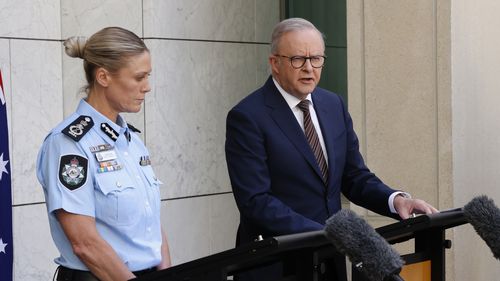

“The alarming incidents at Bondi underscore the urgent need to reduce the number of firearms on our streets,” he stated.
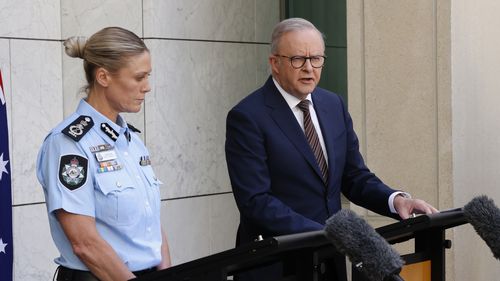
“It’s been revealed that one of the individuals involved in the terrorist act was a licensed gun owner, possessing six firearms despite residing in the suburban heart of Sydney, at Bonnyrigg,” he continued.
“There is no justification for an individual in such a setting to own so many weapons,” he emphasized.
“Currently, Australia is home to over 4 million firearms—more than the number that existed nearly three decades ago during the Port Arthur massacre,” he noted.
The financial responsibility for the buyback program will be shared equally between the federal and state governments.
As was the case in 1996, the states will manage the collection of firearms, while the Australian Federal Police will oversee their destruction.
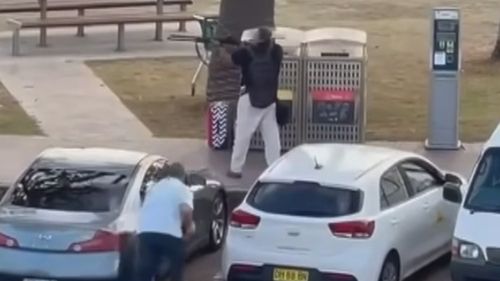

The buyback will help enforce the changes to firearm control laws agreed to by national cabinet earlier this week, which will include limiting the number of weapons one person can own, bringing forward the National Firearms Register, and restricting gun licences to Australian citizens.
That overhaul comes after one of the shooters, 50-year-old Sajid Akram, legally owned six long-arm firearms, some of which were used to carry out Sunday’s massacre.
He was granted an AB gun licence in NSW in 2023, despite his son having been investigated â and cleared â by ASIO over potential extremist links years earlier.
Any changes to federal laws are unlikely to face any trouble getting through parliament, with Labor holding a comfortable majority in the lower house and needing only the support of the Greens to get the assent of the Senate.

Senior Coalition figures, though, have signalled their opposition to changes to gun laws, with Nationals leader David Littleproud labelling them a “cheap political smokescreen”.
However, Albanese said Australians understood the need for gun controls to be modernised.
“In 1996, the then-Howard government did the right thing: intervened to have a scheme which Australians have been rightly proud of,” he said.
“We need to go further… if a bloke in Bonnyrigg needs six high-powered rifles and is able to get them under existing licensing schemes, then there’s something wrong.
“I think Australians can see that.”

NSW details stronger gun laws
Having already promised to recall parliament before Christmas to pass stronger state gun laws, NSW Premier Chris Minns and Police Minister Yasmin Catley detailed exactly what those controls will include.
Licensed residents will be limited to owning four guns each, although there will be some exceptions for farmers, other primary producers, and sporting shooters.
Category A and B licences will now only cover magazines with a capacity of 5-10 rounds, while some guns will be upgraded so they can only be obtained under a category C licence.
”Will reclassify straight, pull, pump-action, button, lever release firearms into category C – limiting their access primarily to farmers, agriculture, and primary producers,” Minns said.
The state will also enforce more frequent licence renewals and stronger identity checks.
“People need to remember: owning a gun is a privilege, it is not a right,” Catley said.
“That privilege must never, ever outweigh community safety.
“These reforms ensure there is no ambiguity when it comes to public safety.
“They strengthen oversight, reduce the availability of high-risk firearms, and give the police the tools that they need to intervene as early as possible.”
The new legislation will be introduced to NSW parliament on Monday.