
Share this @internewscast.com
As Australia gears up for another summer that’s set to sizzle, experts say there are surprisingly simple, science-backed tricks that can help keep your home cooler — without cranking the air-con, blowing the budget or living in semi-darkness.
From leafy houseplants to clever design tweaks, these heat-beating hacks can cut costs, ease heat stress, and make the hottest days feel a little less … dramatic.
While the usual sun-safe advice still applies outdoors, staying cool inside often calls for a different toolkit.

In a quest to discover practical and unexpected ways to beat the heat, SBS News turned to experts who highlighted an often-overlooked solution that might be flourishing right in your living room: houseplants.

Beyond their well-known ability to purify the air and enhance humidity, indoor plants offer another surprising benefit—they can actually cool the surrounding area.

Botanist and tree specialist Gregory Moore explained that clustering indoor plants can help reduce room temperatures through a process known as transpiration.

A man wearing a peach t-shirt is watering indoor plants.

Moore, who is also a senior research associate at the University of Melbourne’s School of Agriculture, detailed this natural cooling mechanism. He described transpiration as a type of evaporative cooling powered by plants.

“Watering your plants early in the morning is probably the most effective way to maximize this cooling effect,” he advised.

Moore said all indoor plants will transpire, but the larger they are and the bigger their leaves, the more cooling they will provide.
“Many indoor plants such as monsteras, philodendrons, rubber plants and even some indoor palms will do well,” he said.

So before you crank the air-con, consider calling in a few leafy reinforcements. Turns out, the coolest room in the house might just be the one with the most plants.

Smart, low-cost cooling hacks

Beating the heat doesn’t have to mean blasting your air conditioner or spending a fortune. The key is to get ahead of the sun and stop heat from sneaking into your home ahead of a hot day.

According to the government’s guide to environmentally sustainable homes, up to 87 per cent of a house’s heat comes through windows — so blocking the sun early is half the battle.

Shamila Haddad is an architectural scientist specialising in indoor air and environmental quality at the University of Sydney.
She said there are plenty of simple, low-cost strategies that can make a big difference.
“Building-oriented measures include closing blinds or curtains during daylight hours, installing external shading and light-coloured blinds to block direct sunlight, window film, and increasing airflow with fans, ceiling fans and cross ventilation,” she told SBS News.
“Opening windows at night and closing them in the morning helps remove trapped heat. Limiting the use of heat-generating appliances, such as ovens, stovetops, halogen lights, and electronics, helps maintain lower indoor temperatures.”
Haddad notes that as climate change brings more frequent and severe heatwaves, effective cooling strategies will only become more important.

She highlighted passive design, cool materials, enhanced ventilation, glazing, insulation, and smart technologies as ways to reduce reliance on energy-intensive cooling — keeping homes comfortable and energy bills lower.

Sleeping through the heat: How to stay cool at night

Tossing, turning, and kicking off the covers on a hot night can make it hard to get a good sleep. But there’s no need to sweat it — science and clever sleep hacks from around the world show there are plenty of ways to stay cool through the night.

Children are spreading their arms in front of a standing fan inside a house.

A study by the University of Sydney found fans can be effective at keeping people comfortable even when temperatures soar to 40 degrees. Source: Getty / ridvan_celik

Fans and fresh air

Opening a window at night can let cooler air circulate through your home, and fans amplify that effect.
A study by the University of Sydney found fans can be surprisingly effective at keeping people comfortable even when temperatures soar to 40 degrees.

Professor Ollie Jay, lead researcher, stated: “Heatwaves claim lives every year, so it’s essential that people who can’t afford air-conditioning know that a fan is a good alternative and could even save lives.”

Warm showers for cool sleep

It might sound counterintuitive, but a warm bath or shower before bed can actually help lower your body temperature. By stimulating blood flow to the hands and feet, your body releases heat more efficiently, helping you drift off without overheating.

Doona diplomacy

Scandinavians have long been ahead of the curve when it comes to summer sleep hacks. Their trick? Separate doonas. This approach, common in Sweden, Norway, and Denmark, is gaining fans worldwide.
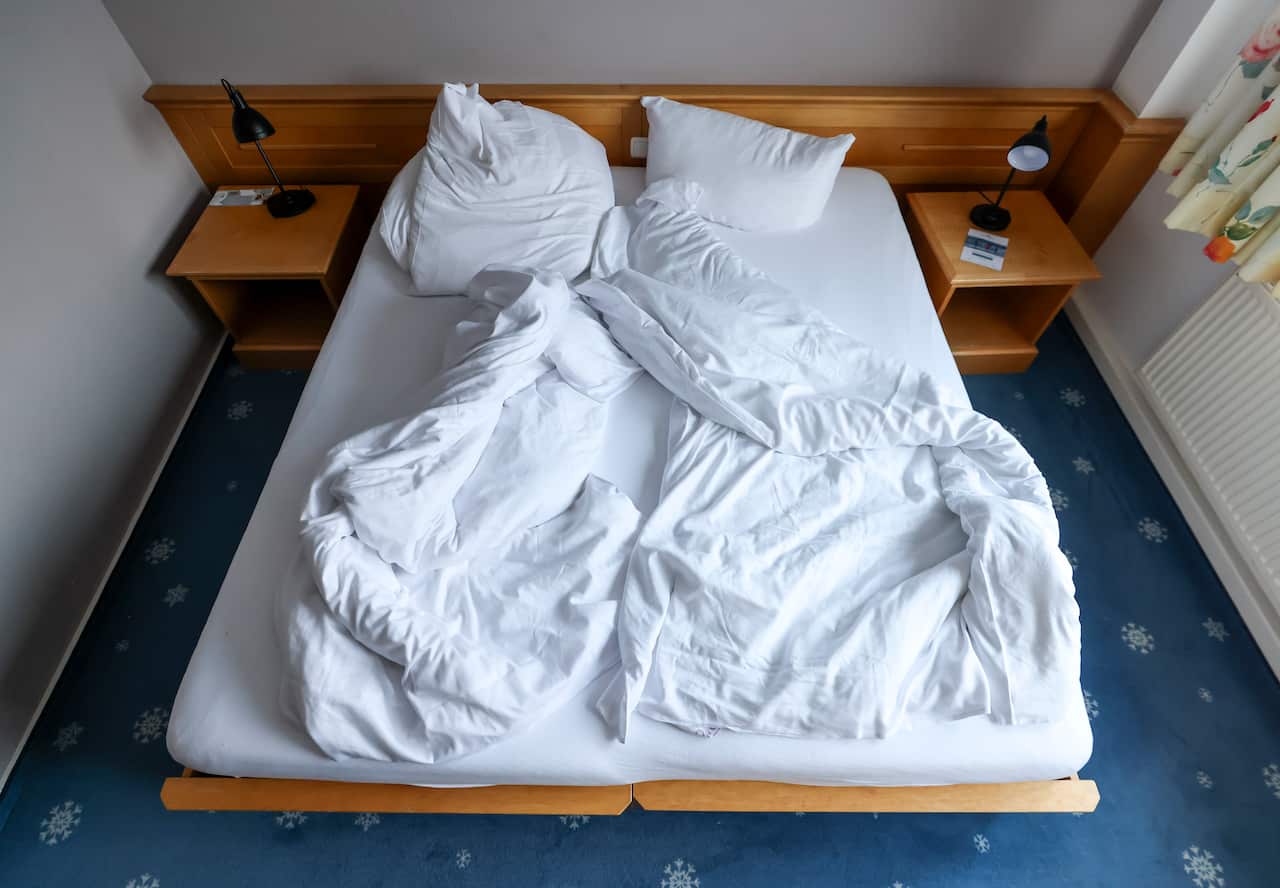
An unmade bed with a white sheet, matching quilts, and pillows.

Using a personal doona allows each sleeper to tailor their bedding to their individual body temperature. Credit: Jan Woitas/picture alliance via Getty Images

Having individual doonas allows each sleeper to tailor their bedding to their personal body temperature. Hot sleepers can opt for a lighter cover, while cooler sleepers keep a thicker quilt — all without disturbing each other’s sleep.

Keeping your pets safe and cool this summer

Hot and humid weather can be tough on our furry (and feathered) friends.
A few clever tweaks around your home can make a big difference: stock up on indoor plants, foil your windows to block the sun, create airflow with fans or open windows, and set up cozy cool spots for pets to retreat to.
Sarah Zito, a senior scientific officer for companion animals at RSPCA Australia, called for pet owners to bring animals indoors whenever possible, even if they don’t have air conditioning.

“This is especially crucial for animals confined to cages such as rabbits, guinea pigs and birds as they can’t seek a cooler location on their own,” she said.
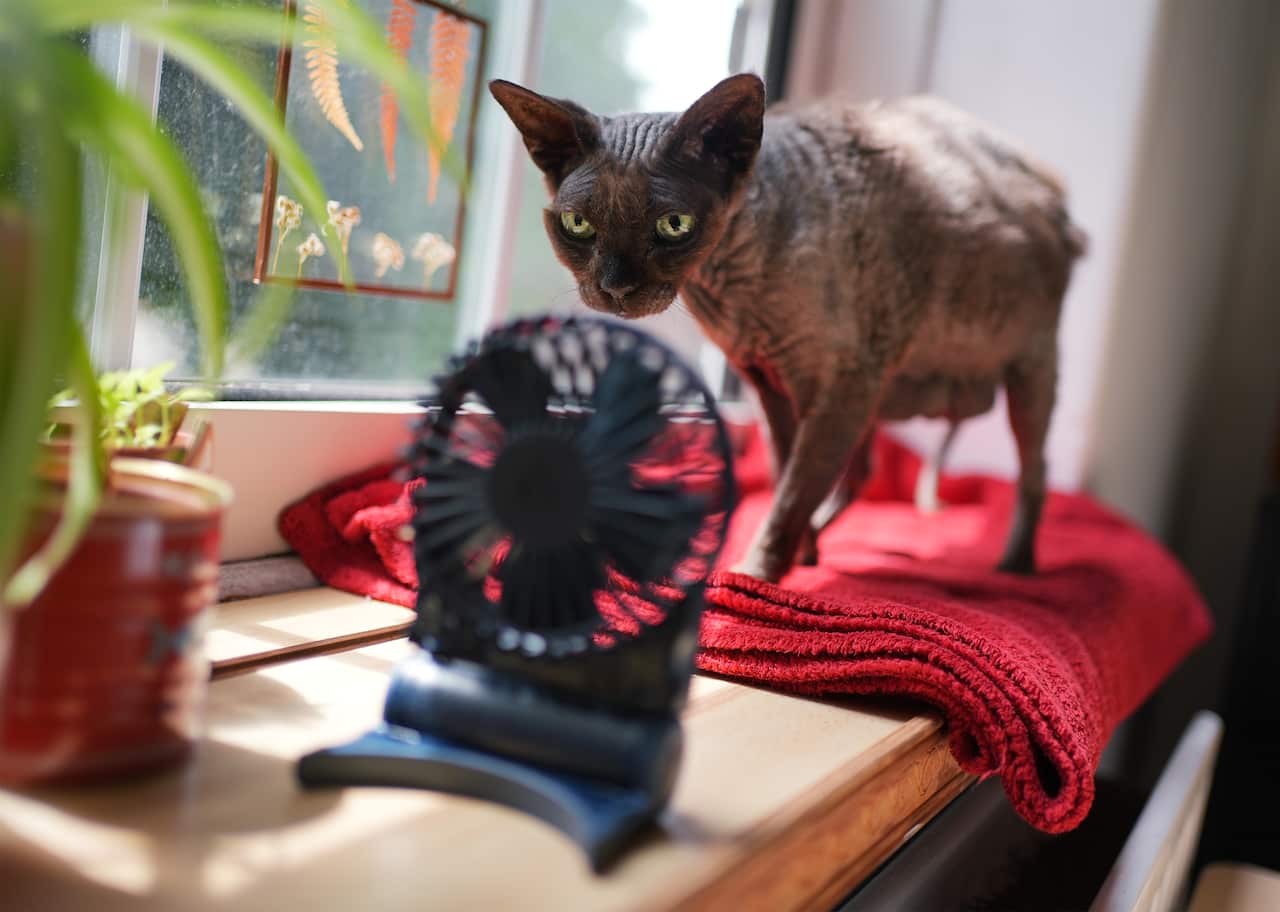
A small dog standing on a folded red rug placed on a windowsill is looking at a small cooling fan placed in front of it.

Sarah Zito from RSPCA Australia said pet owners should bring their animals indoors whenever possible, even if they don’t have air conditioning. Credit: Yui Mok/PA

Creating a ‘cool zone’ for your pets is a simple but effective way to help them stay comfortable. Offer them a choice of cool tiles or damp towels to lie on, and make sure fresh, cool water is always within reach, she said.


Spotting signs of overheating

Keep an eye out for warning signs like excessive panting, drooling, bright red or pale gums, or lethargy. These could indicate your pet is overheating and needs immediate attention.
For dogs, it’s best to offer small amounts of water repeatedly rather than letting them gulp a large volume at once.
“Avoid allowing your dog to rapidly consume a large amount of water as this could contribute to issues such as gastrointestinal upsets, bloating and aspiration.”

Share this @internewscast.com
You May Also Like
Surf Life savers from Bondi fill the beach after a minutes silence on Saturday, before starting patrol.

Bondi Beach Lifesavers Host Solemn Vigil for Terror Attack Victims

Hundreds of lifesavers have united on the shore of Bondi Beach for…

Misinformation Regarding Bondi Incident Leads to Vilification of Pakistani Australians

As misinformation tore through social media in the aftermath of the Bondi…

Sydney Bakery Offers Ben More than Just Employment Opportunities

For many refugees and asylum seekers in Australia, finding work can take…
One teen said she made a new account to get around the ban

Albanese’s New Social Media Ban Faces Immediate Challenges as Students Find Ways to Circumvent Restrictions

Australia’s new social media restrictions for those under 16 are now in…
An independent report released by Optus shines a light on a serious issue with our modern mobile-reliant communications systems.

Critical Alert for Australians: Changes to Triple Zero Emergency Call Protocols You Must Know

The Optus network outage on September 18, which led to the failure…
Claudio Neves Valente, the suspect in Brown University shooting, at a rental car place in Boston, Massachusetts.

Reddit Sleuths Aid Police in Capturing Elusive Brown University Shooter: A Digital Manhunt

Police lights flashed for hours as law enforcement officers surrounded a storage…

Bondi Lifesaver Ahmed Al-Ahmed Questions Merit of $2.5 Million Donation

Ahmed Al-Ahmed, the tobacco shop owner who was wounded after disarming one…

Breaking: U.S. Unleashes Precision Strikes on ISIS Strongholds in Syria Amid Escalating Tensions

In a significant military maneuver, U.S. President Donald Trump has described recent…
ITV News Arts Editor Nina Nannar has detailed her 'agonising' trip to New Zealand to scatter her late husband Steve's ashes after losing him to kidney disease in 2022

ITV News Arts Editor Nina Nannar’s Heartfelt Journey to New Zealand: Honoring Late Husband’s Memory Amidst Kidney Disease Battle

Nina Nannar, the Arts Editor for ITV News, recently shared the emotional…
NSW Premier Chris Minns

Premier Addresses Planned Protests with Urgent Message on Public Safety

Chris Minns, who is pushing for parliament to grant “extraordinary powers” to…
Chris Cairns is pictured with his estranged wife Melanie Crosser and their children before the triple health blow that almost killed him and left him paralysed

Cricket Legend Overcomes Cancer Struggles to Share Emotional Story of Marriage Split

Renowned cricket legend Chris Cairns has revealed details about the end of…
The world's longest flight recently took its first journey, taking 29 hours and covering 12,400 miles. And while it may seem like a nightmare to some, it has been celebrated as a landmark success for long-haul travellers who no longer need to take a connecting flight. Launched on December 4, the China Eastern Airlines route sets off from Shanghai and lands in Buenos Aires. The flight from China to Argentina takes more than 25 hours, with the return journey taking four hours longer.

Record-Breaking 12,400-Mile Flight Sets New Benchmark for Longest Journey

The world’s longest commercial flight has officially taken off, marking a significant…