Every day, we make choices. Cereal or eggs for breakfast. Whether to take the train or the bus. Whether to accept being made redundant … or brutally top anyone in the way of the job you want.
That last choice, at least, belongs to No Other Choice, the latest film from acclaimed South Korean director Park Chan-wook.

Park Chan-wook, renowned for his cinematic works such as “Oldboy” (2003), “The Handmaiden” (2016), and “Decision To Leave” (2022), has dedicated over twenty years to exploring the murky depths of human nature, focusing on themes of vengeance, power, and pleasure, often flavored with intense psychological elements.
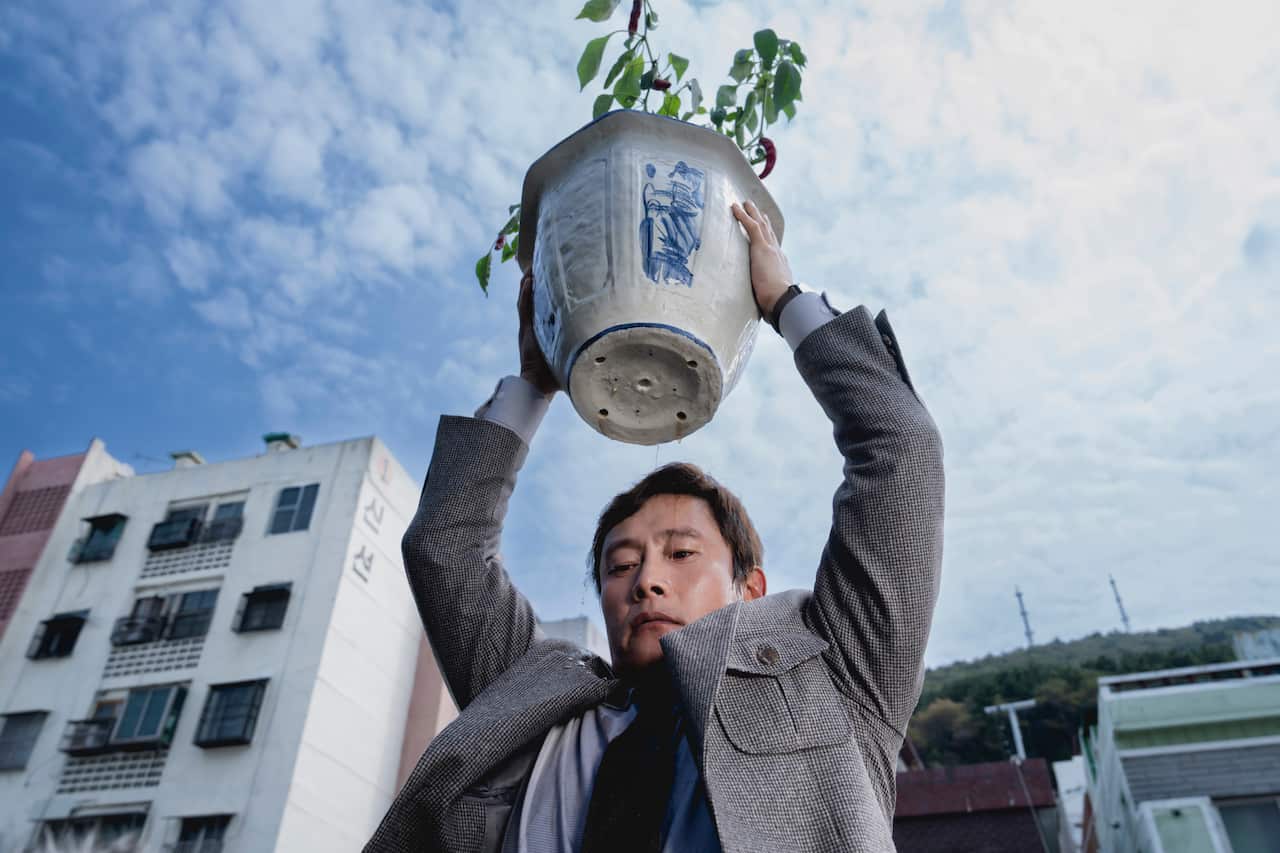
A man in a suit holding a vase. A blue sky is behind him.

In his latest film, Lee Byung-hun, known for his role in “Squid Game,” portrays Man-su, a loyal corporate employee who faces the unexpected challenge of unemployment, leading him down an unusual path to re-enter the workforce.

Set to hit Australian theaters on January 15, “With No Other Choice” sees Park shifting his lens towards a subtler form of horror: the existential dread that arises when one’s career—and the identity tied to it—vanishes.

The narrative, despite its harshness, follows a compelling logic. Park has long been fascinated with what drives individuals to their breaking points, particularly when external pressures and systems push them to the brink.

At its core, No Other Choice examines the idea that work gives life meaning — a theme Park says resonated with him more deeply than he initially expected.
“When I first heard about this story, I thought it would have nothing to do with me because it’s about paper manufacturing, which felt so far from my life and from filmmaking,” Park tells SBS News via a translator.
“But after finishing the story, I was very surprised at how easily I was able to empathise with it. There are quite a few similarities between paper manufacturing and filmmaking.

“Paper is often underestimated,” Park muses. “People casually discard it without a second thought, yet certain types of paper, like currency or passports, hold significant value.”
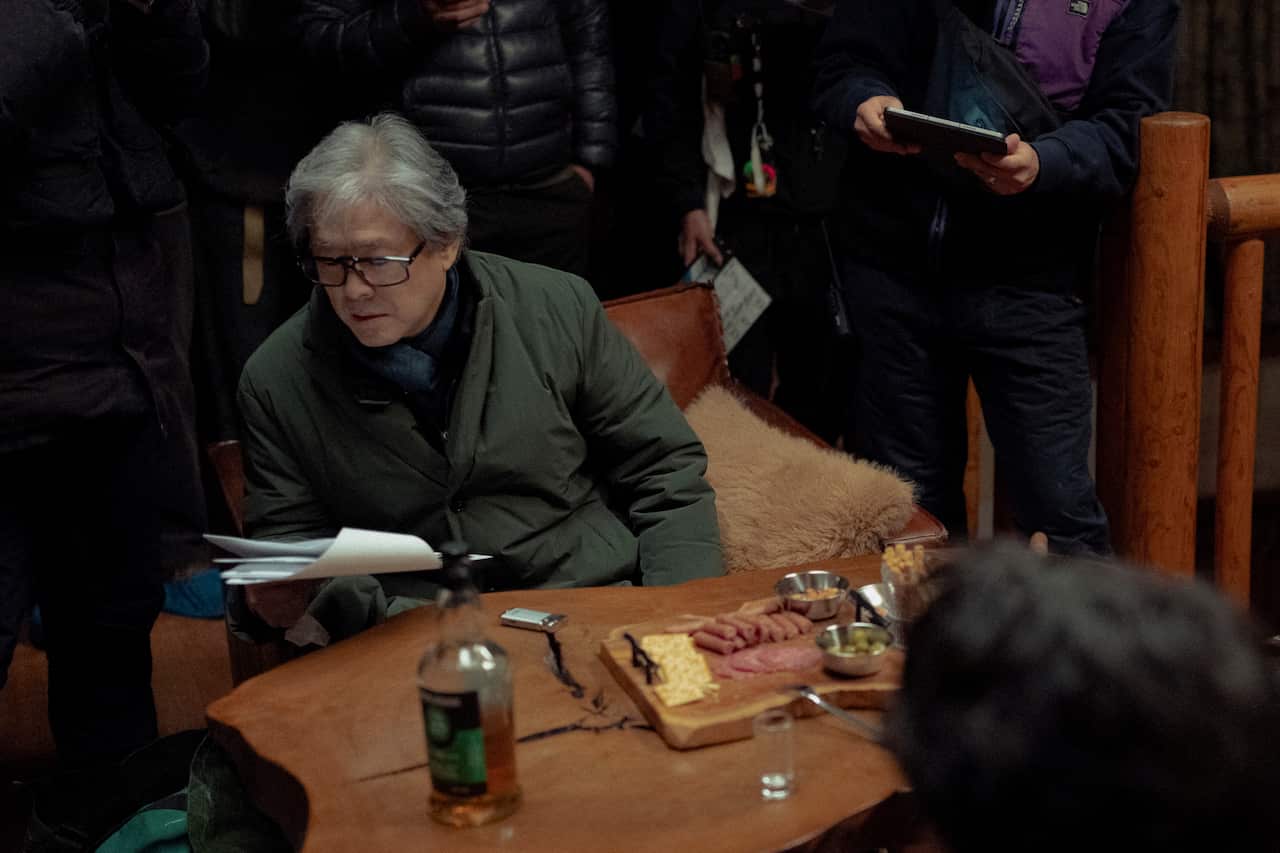
A behind the scenes shot of Park Chan-wook on a film set. He is holding a script and there is a cheese board in front of him.

Park Chan-wook is a giant of world cinema. His latest film, No Other Choice, explores the horrors of work. Source: Supplied / Mubi

He explains that for some people, film and TV are viewed similarly, as “a meaningless source of entertainment” or “a way to kill time”.

But for others, works of film and television can be very precious — even life-changing.
“Which is, of course, the kind of works that filmmakers strive to make as well,” he says.

“I think that’s why I was able to very easily empathise with the characters and the story, because it’s a story about someone who has devoted their life to something that other people don’t consider very important.”

A distinctly Korean pressure

The film is adapted from Donald Westlake’s 1997 novel The Ax, which also follows a family man eliminating his rivals in a shrinking job market.
But Park reworks the story through a distinctly Korean lens, sharpening its focus on class, familial obligation and the pressure to provide.
While anyone who has experienced redundancy may notice a recognisable anxiety soaking through the film, Park says the story is particularly emblematic of Korean society’s relationship with work.
“Living in Korean society, I’m constantly thinking about and surrounded by the devastating state of people who have lost their jobs. Modern Koreans, especially, have become slaves of their jobs,” he says.

“They spend most of their time at their jobs and they find the achievements from their job as their life’s achievements as well.”
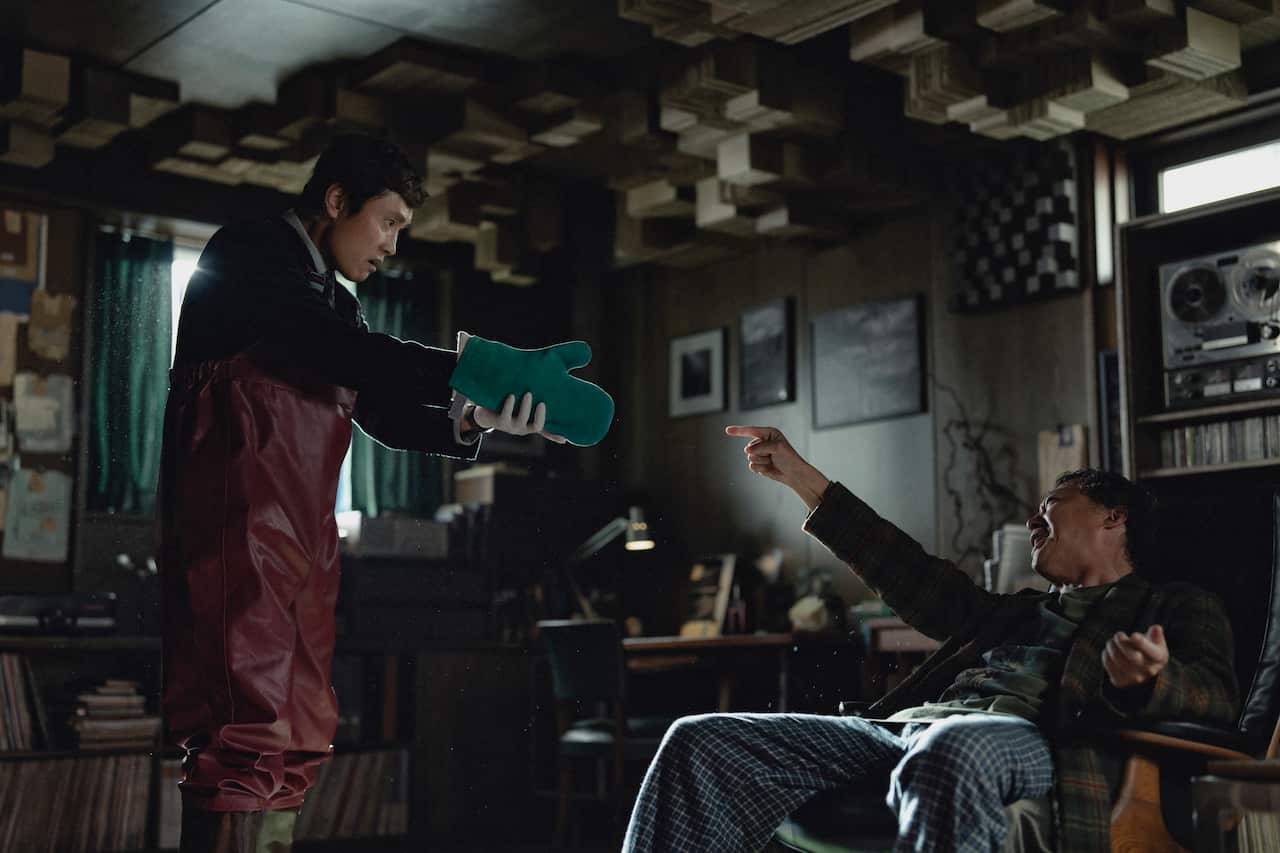
A man holding an oven mitt at another man's face.

Director Park says the film was inspired by the real-life devastation of job loss in modern South Korean society. Source: Supplied / Mubi

Park notes that South Korea’s social welfare system was introduced relatively late — and in stages over the 40 years leading up to the early noughties — intensifying the consequences of domestic job losses.

“Up until a few years back, people would be placed in a very hopeless state if they lost their jobs,” he says.
“We would hear about people who would kill their family after they lost their job and then eventually also kill themselves because they had no hope for the future.”
Those real-world tragedies also influenced his 2002 film, Sympathy for Mr. Vengeance.
“I remember feeling very shocked by news articles about that,” he says.

“Reading The Ax, I was remembering those incidents and I think I was influenced by the societal circumstance around me as well.”

Pressure to perform

Despite his global acclaim and having a spate of international awards and accolades, including a BAFTA and multiple awards at Cannes Film Festival, the director remains acutely aware of how success operates within filmmaking — not simply as validation, but as leverage.
“The sad characteristic or fate of filmmaking is that you can’t do it alone,” he says.
“So unlike composing music or drawing a picture, it requires a lot of people and a lot of money to make.

“And unlike other artists like painters or poets, filmmaking requires you to care about what others might consider worldly desires — such as box office scores or awards or good reviews.”
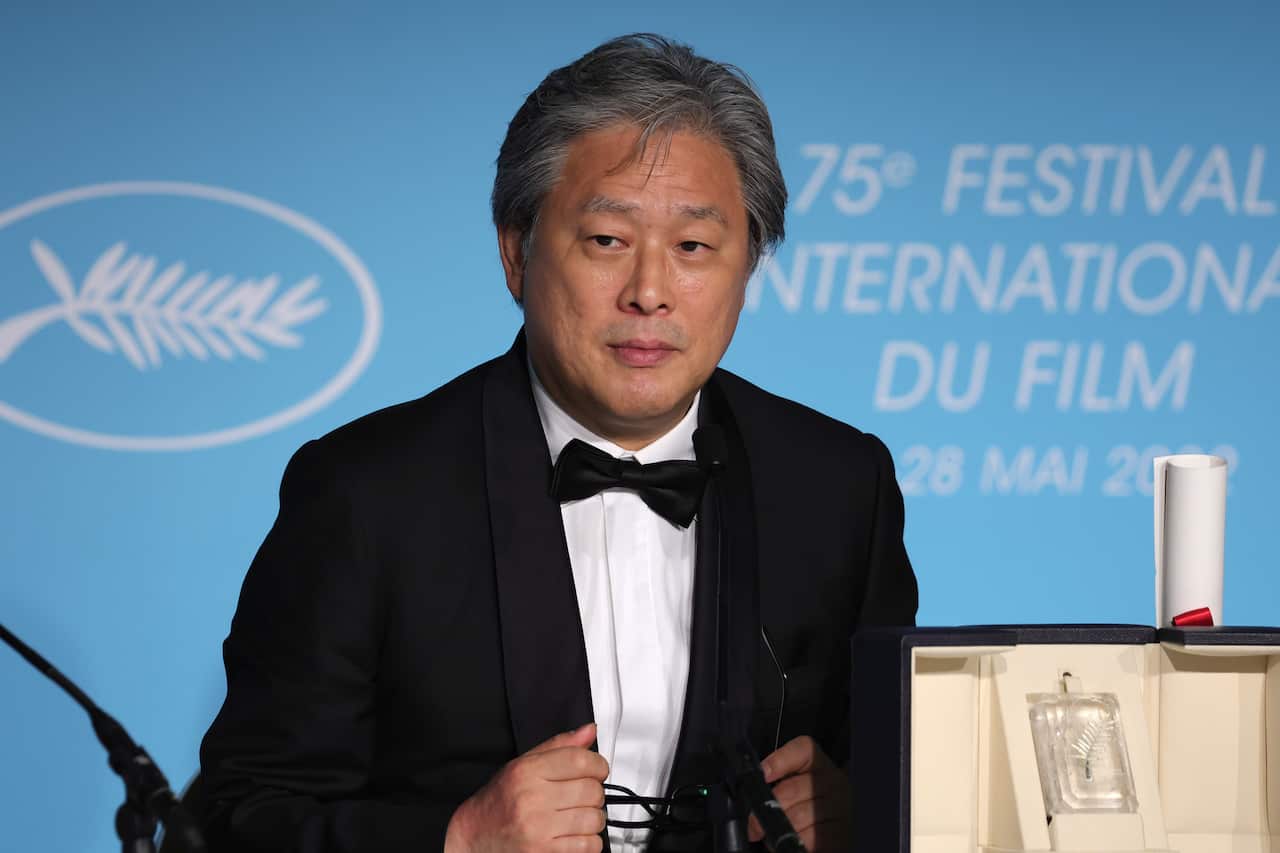
A man in a suit at a Cannes Film Festival press conference.

While he’s one of South Korea’s most acclaimed filmmakers, Park Chan-wook still says he needs “worldly success” to be able to continue his career. Source: Getty / John Phillips

Despite his influence on global cinema, Park has never been nominated for an Academy Award.

He previously described it as “hypocrisy” to pretend awards don’t matter. Not because they define artistic worth, but because they can determine whether the next film gets made.

“I make films that require a certain level of capital to be invested. I also want creative freedom when I’m making my films as well,” he says.

So I can’t help but accept that I also require the so-called worldly success in order to continue in my career.

It’s an understandable concession: an award can come with more power, more creative freedom, and bigger budgets.
Just look to Bong Joon-ho, the other globally-renowned titan of South Korean cinema, whose career skyrocketed after his film Parasite won multiple Academy Awards, including best picture — the first non-English language film to do so.

Thumbnail of The Handmaiden

That win brought more eyes to Bong’s work and with it, more trust, manifesting in funding — a reported $150 million for his following project, Mickey 17.

In No Other Choice, the paper company operates as an invisible authority, quietly determining Man-su’s value. For filmmakers, Park suggests, the industry can function in much the same way.

A ‘bitter taste’ in a world without film

In that sense, the film is also a meditation on identity and purpose — and the forces that shape them.

For Park, it’s in part an opportunity to reflect on his sense of self and who he is outside of filmmaking.

I actually thought about that a lot while working on this film and I realised that I have to work on expanding other areas of my life other than just being a filmmaker.

“Working on my identity as a member of my family and also as an independent individual as well.”
But when faced with the prospect of his vocation being taken away, as it is for his protagonist, Park is deeply introspective.
“I guess if I were to imagine a world in which I wouldn’t be able to make films, it leaves a very bitter taste in my mouth.”
No Other Choice is in Australian cinemas now.

You May Also Like

Full-Time World Traveler Reveals the Hidden Dangers Behind the Glamorous Lifestyle

Since she was a child, Ombeline Daragon Ferreira felt a deep urge…

Australians Hopeful for Rare RBA Policy Shift Amid Economic Uncertainty

Ben Udy, the chief economist at Oxford Economics Australia, has issued a…

Decade-Long Delays in Mental Health Support Highlight Safety Gap for Vulnerable Australians

in brief Australians born overseas are delaying mental health support and receiving…

Search Suspended Following Triple Fatality in NSW Maritime Rescue Operation

A search operation following the capsizing of a yacht off northern New…

Discover the Real Impact of RBA Rate Hike on Your Finances

The recent surge in interest rates has jolted millions of Australian borrowers,…

Censors Nearly Shelve Disturbing Remake of Controversial ‘Faces of Death’ Horror Film

The latest iteration of the infamous horror film, “Faces of Death,” almost…

Leagh’s Unexpected Discovery on Partner’s Phone Leaves Her in a Dilemma

Would you have the courage to inform a friend that their partner…

US Secures Strategic Victory on Vital Oil Route Following Trump’s Directives

The United States military has announced that two merchant ships flying the…

Controversial ‘Globalise the Intifada’ Event Proceeds Despite Lord Mayor’s Cancellation Attempt

A pro-Palestine forum will take place in Sydney despite permission to use…

Trump Announces Strategic Initiative to Navigate Stranded Ships Safely Through Hormuz Starting Monday

IN BRIEF The United States will soon start escorting ships through the…

Poll Reveals Key Concern for Anthony Albanese Amid Uluru Rally: The Post-Voice Vote Challenge

Recent polling indicates that voters are increasingly distancing themselves from Anthony Albanese’s…

The Voice Referendum: Analyzing the Impact and Outcomes of a Pivotal Campaign in Australia

The seven-month journey leading to the referendum on the Indigenous Voice to…