
The rising cost of groceries in Australia is increasingly evident at the checkout counter, with many consumers feeling the financial strain. A recent analysis conducted by the Daily Mail highlights just how severe these price hikes have become.
The investigation involved purchasing ten common grocery items and comparing their current prices to those from the previous year. The findings reveal a dramatic increase in costs, well above the official inflation rate.
Among the items in the shopping cart were a 180g block of Cadbury chocolate, Coles instant coffee, Weet-Bix, Pink Lady apples, large free-range eggs, beef mince, carrots, Libra tampons, Coca-Cola, and milk.
Particularly hard-hit are fresh produce and essential personal commodities. Leading the surge are Pink Lady apples, which have skyrocketed by 61 percent, jumping from $4.90 to $7.90 per kilogram over the past year.
Carrots have also seen a significant rise, with prices increasing by 47 percent from $1.70 to $2.50, highlighting how even basic vegetables are becoming notably pricier.
Beef mince, a staple in many Australian households, has not been spared from the inflationary pressures, experiencing a 23 percent rise from $6.50 to $8 for 500 grams.
The Daily Mail’s comparison also noted a sharp rise in tampon prices, up 38.5 per cent from $6.50 to $9.00 for a 32‑pack.
These increases are among the most punishing because they affect items many households buy weekly, making it difficult for shoppers to reduce their spending.

Pictured, the cost of an average Aussie’s weekly supermarket shop has gone up in 12 months

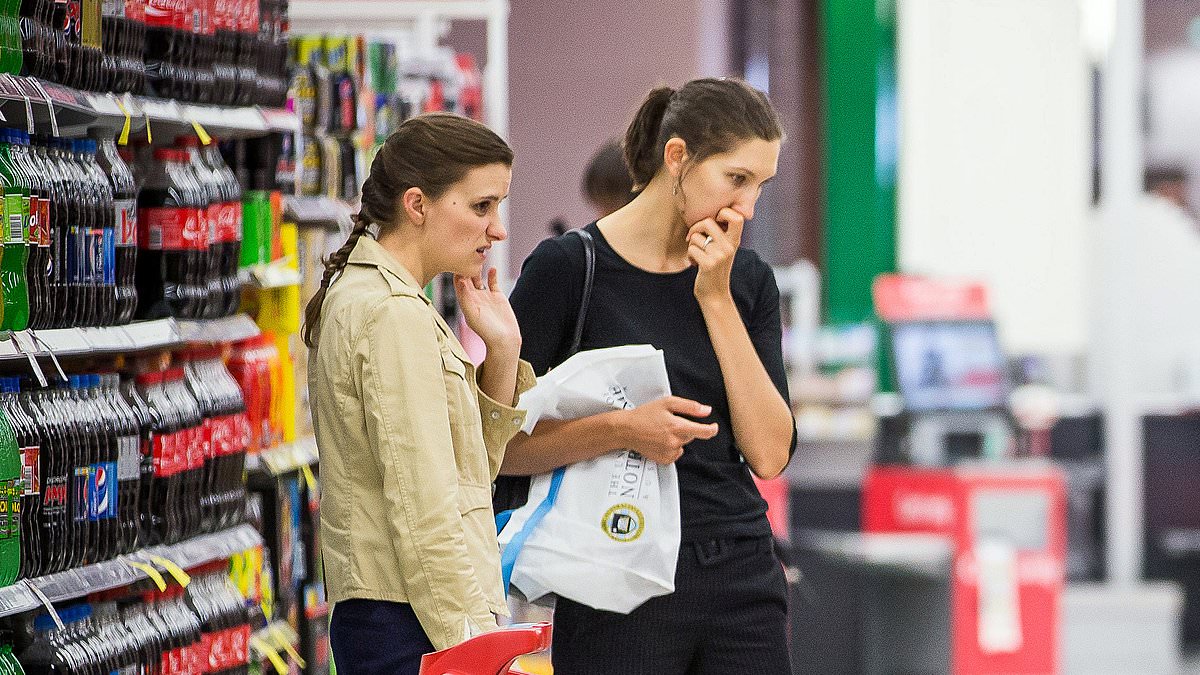
With further interest rate hikes expected in 2026, the cost-of-living crisis shows little sign of easing for Australian families (stock image)
Further down the list, familiar pantry staples showed more moderate but noticeable increases.
Instant coffee is up 18.2 per cent to $6.50, while Weet‑Bix and Cadbury chocolate blocks have both risen 14.3 per cent. Vegemite has edged up 5 per cent to $4.20.
Refrigerated items also saw increases, including large free‑range eggs going up 8.8 per cent to $6.20 and full‑cream milk increasing 6.7 per cent to $3.20.
Even Coca‑Cola, one of the smallest movers, is still 3.9 per cent more expensive at $4 a bottle.
Fresh data from the Australian Bureau of Statistics on Wednesday showed the Consumer Price Index rose 3.8 per cent in the year to December, accelerating from 3.4 per cent in November.
Housing remained the biggest driver of inflation, up 5.5 per cent, followed by food and non-alcoholic beverages (3.4 per cent).
At the butcher, shoppers were hit hard with meat and seafood prices rising 4.4 per cent.
This saw sharp increases in beef and veal (+10.8 per cent) and lamb and goat (+13.4 per cent), fuelled by strong overseas demand for Australian red meat.

Fruit and vegetable prices have jumped, with extreme rain in Queensland blamed for triggering shortages and higher prices for cucumbers, zucchini and capsicums
Vegetable prices rose 3.8 per cent, following extreme rain in Queensland which triggered shortages and higher prices for cucumbers, zucchinis and capsicums.
Fruit prices jumped 4.2 per cent, as reduced apple supplies pushed costs higher.
Snack seekers also faced steeper prices, with the cost for confectionery and snack foods rising 6.5 per cent largely due to ongoing global cocoa shortages.
There was some limited relief. Egg prices have fallen about 5 per cent over the past six months, while oils and fats are now 2 per cent cheaper than a year ago.
Non-alcoholic beverages surged 4 per cent, led by a 15.3 per cent jump in coffee, tea and cocoa prices, caused by lower coffee bean supply from major overseas producers.
Eating out has become more expensive too. Meal and takeaway prices have jumped 3.5 per cent, as cafés and restaurants pass on higher wage and ingredient costs to customers.
Canstar’s Sally Tindall said the cost of living has ramped up, with the average family of four spending $260 each week on groceries.
‘I almost choked on my cereal when I went to buy a box of Uncle Toby’s Plus for $9.50,’ she said.

Canstar’s Sally Tindall (pictured) said the cost of living has accelerated with the average family of four spending $260 each week on groceries
‘From 1 July, new government rules ban Coles and Woolies from putting on an excessive mark-up on groceries compared to the cost of supply, however, there’s no guarantee this will result in a lower total at the checkout.
‘The supply chain can be complex and susceptible to variations, so it could well be that it just costs more to get that box of cereal onto the supermarket shelves.’
Ms Tindall said there are also fears the new rules will lead to more conservative prices and less opportunity for things to go on special.
‘Unfortunately, this is unlikely to turn around any time soon, impacting everyone across the country but those on the lowest incomes the most,’ she said.
The sharp increases come at a time when households are already under severe financial strain, with millions of mortgage holders bracing for fresh pain as the Reserve Bank moves closer to another interest rate hike.
The RBA meets on Tuesday, with borrowers across the country anxiously watching for what is widely expected to be another rise.
VanEck’s head of investment and capital markets Russell Chesler described the latest inflation data as ‘uncomfortably high’.
‘Inflation is not moving decisively in the right direction,’ he said.
‘With unemployment still low at 4.1 per cent, household spending resilient and property prices continuing to rise, it is no longer a question of if rates move higher, but when the RBA acts and how many hikes ultimately follow this year.’