
Researchers suggest that supermarket loyalty programs might play a pivotal role in the early detection of ten types of cancer by identifying notable changes in customer shopping behaviors.
Patterns such as increased purchases of specific over-the-counter medications and subtle dietary shifts often emerge several months before a medical diagnosis, experts note.
Imperial College London is collaborating with major retailers Tesco and Boots to explore whether data from their Clubcard and Advantage programs could be instrumental in saving lives.
Each type of cancer may exhibit a unique pattern in purchasing habits, including how frequently people buy items like painkillers and indigestion remedies, or how they alter their food purchases.
Decoding these patterns could empower the NHS to detect more cancers at an earlier stage, when treatments are less costly, more effective, and survival rates are significantly higher.
Previously, the same research team successfully utilized shopping histories to identify ovarian cancer up to eight months before its formal diagnosis.
Their expanded study comes ahead of the publication of the Government’s National Cancer Plan on Wednesday, outlining how ministers hope to slash cases and improve treatment.
Expected measures aimed at helping a million cancer patients get back to or stay in work, include a national database that alerts patients to clinical trials of new drugs and an enhanced role for genetic testing.

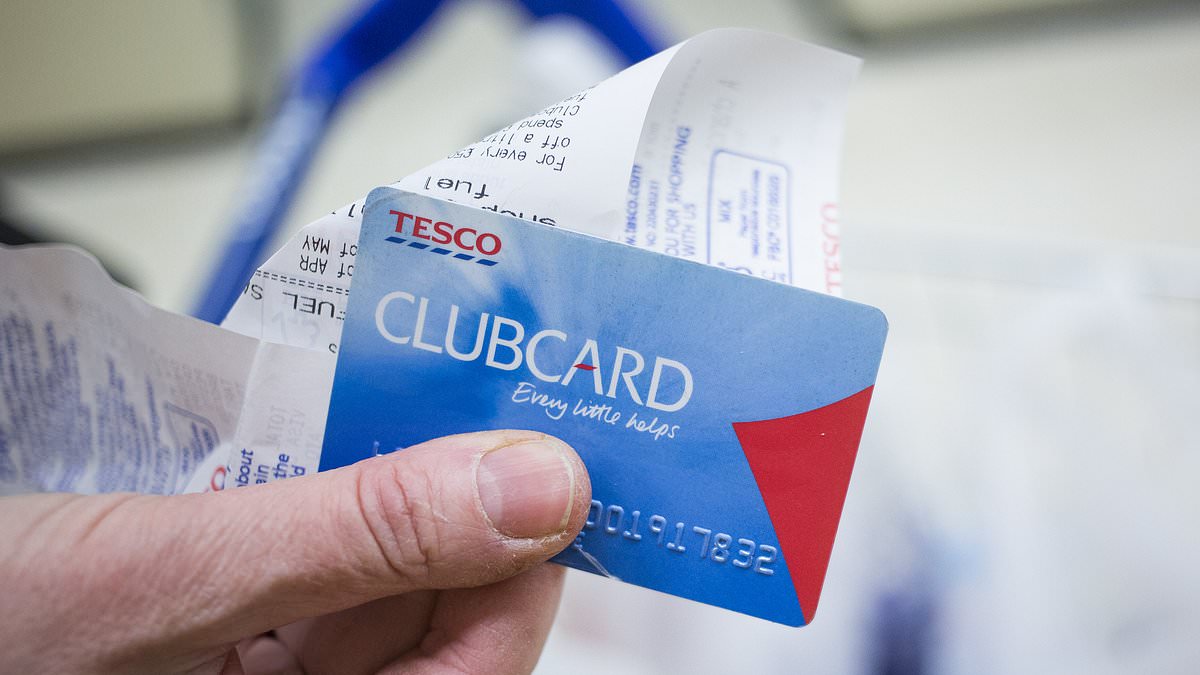
Supermarket loyalty schemes such as the Tesco Clubcard (pictured) could help diagnose ten types of cancer earlier by flagging tell-tale changes in the shopping habits of customers, researchers say
Lead researcher Professor James Flanagan said the study ‘ultimately has the potential to revolutionise how we can use everyday data to understand and improve people’s health’.
And Dr Talisia Quallo, head of prevention and early detection at Cancer Research UK, which is funding the work, said: ‘In the future, shifts in purchasing behaviour could act as an early warning system, prompting people to seek medical care more quickly for emerging symptoms.
‘The study wants to find out if loyalty cards could be used for earlier detection of other cancers.
Changes in what we shop for, and when those changes start to happen, could become a powerful tool to find cancer at an earlier stage, when treatment is far more likely to be successful.’
The Cancer Loyalty Card Study 2 will recruit 2,900 volunteers across the UK, making it one of the largest studies of its kind.
It will expand its scope to investigate ten specific cancer types – bladder, colorectal (bowel), endometrial, liver, oesophageal, ovarian, pancreatic, stomach (gastric), uterine and vulval.
Many of these conditions often present with mild or non-specific symptoms, such as fatigue, bloating or indigestion, which can lead people to self-medicate before seeking medical advice.
The goal is to define a purchasing ‘threshold’ that differentiates the habits of healthy individuals from those with cancer, as well as to identify what products are purchased for each type of the disease.

Now experts at Imperial College London are working with Tesco and Boots to see whether data from their Clubcard and Advantage programmes can save lives. Pictured: A Boots advantage card
Professor Flanagan noted that while some of the products bought might be expected – such as laxative purchases for colorectal cancer – that is not always the case.
‘In our previous study, indigestion medicines turned out to be linked to shoppers with ovarian cancer,’ he said. ‘So part of this study is very much about finding out which products are in play.’
The latest research is a collaboration between Imperial College London and the universities of Birmingham, Nottingham and Lancashire.
Marc Donovan, healthcare development director at Boots, said: ‘Over a quarter of the UK population has a Boots Advantage Card, and this study represents the potential for everyday shopping data – when used responsibly – to be a powerful tool in helping customers spot and act on early healthcare warning signs.’
Oonagh Turnbull, the head of health and sustainable diets campaigns at Tesco, added: ‘We hope that with the help of our customers across the UK taking part and volunteering to share their Tesco Clubcard data, more lives can be saved by detecting certain cancers early, building on the success of the first Cancer Loyalty Card study.’