
It was a discovery no shopper would expect to make while preparing dinner.
Tiffany Grazier had bought a jar of Mezzetta golden pepperoncini pickled peppers from an Albertsons store in Phoenix, Arizona, to use in a pot roast.
However, after beginning to cook and licking her fingers, Grazier noticed something seriously wrong with the jar. Alongside the peppers was what appeared to be a pickled mouse.
“There’s a dead baby mouse!” she exclaimed in a TikTok video, holding the jar toward the camera and showing the animal floating inside before reacting with disgust.
About a week after Grazier posted the video on September 18, Mezzetta announced an urgent recall of its Golden Greek Pepperoncini Medium Heat pickled peppers over what it described as a “potential pest contaminant.”
In a statement, a company spokesperson said: “We’re aware of a video circulating on social media showing a potential pest contaminant in a jar of the product.
“We have contacted the consumer, moved quickly to investigate the situation and initiated a voluntary recall.”
The recall covers all 32-fluid-ounce jars of the pickled peppers marked with lot number 720106, which appears near the barcode.

The image appears to show a dead, pickled mouse inside a jar of Mezzetta golden pepperoncini pickled peppers.
Consumers have been advised not to eat the affected peppers and to return the jars to the stores where they were purchased for a full refund.
No injuries or illnesses associated with the recalled product had been reported at the time of the announcement.
Mezzetta did not provide additional information about the number of jars involved, the locations where they remained on store shelves or their best-before dates.
The company also did not identify the stores that sold the affected products. However, the golden pickled peppers are available nationwide at retailers including Walmart, Target and Kroger, according to their websites.
Grazier’s video has since been viewed more than 220,000 times, prompting a wave of shocked reactions from viewers.
One person wrote, “Could you imagine eating these in a dark kitchen and not knowing?” Another commented, “The way I just giggled and then started crying because I have the same ones in my fridge.”
A third viewer added: “Fun fact: People are eating from jars that came from the same mouse batch but don’t know it because you ended up with the mouse.”
A Mezzetta spokesperson said: “For generations, families have trusted Mezzetta products on their tables.


The image appears to show a pickled baby mouse inside the jar.

The recalled product was removed from sale because of a “potential pest contaminant.”

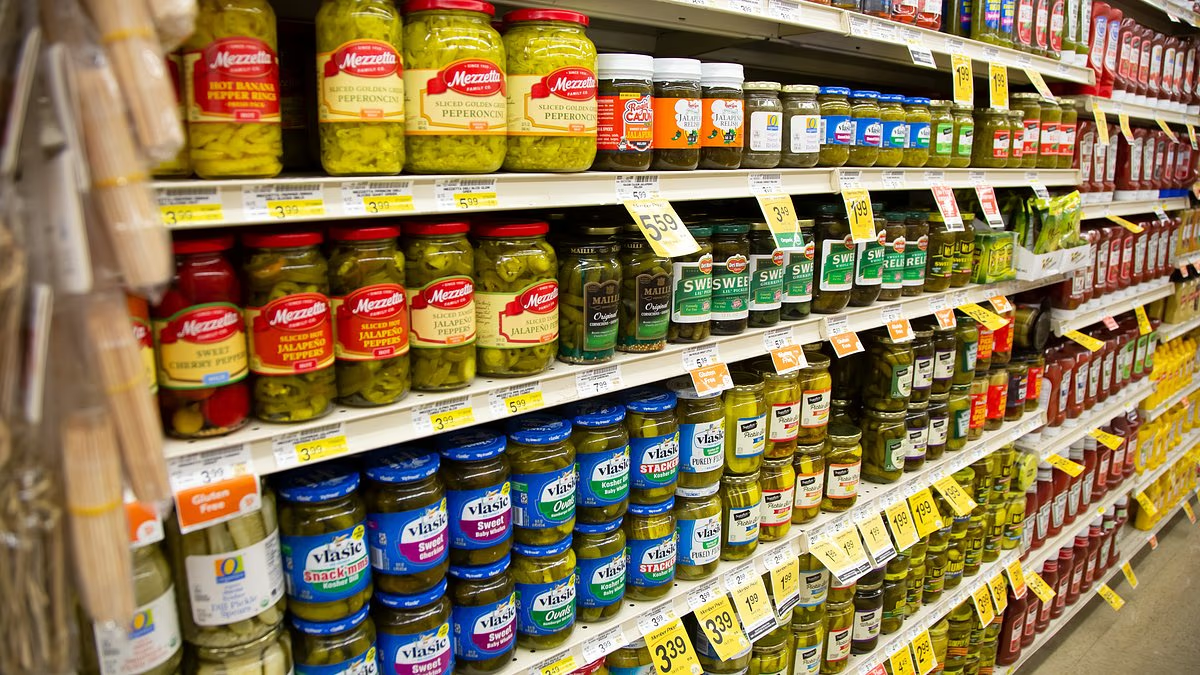
A stock image shows pickled foods displayed in a grocery store.
‘We take that trust seriously, which is why we wanted to share what we know about a voluntary recall… and the actions we are taking.’
They added: ‘We have requested to retrieve and examine the product involved in the original consumer report and are reviewing the relevant production, sanitation and food-safety records as part of our ongoing investigation.
‘We immediately took action to identify where the product was distributed and worked with affected customers to isolate and remove it from sale.
‘As our investigation continues, we’ll take other appropriate steps as needed.’
It is not clear how a rodent may have been added to the peppers, but this may happen if one is present in a factory and then falls into the production line. It can also be added during harvesting if it is on the pepper plants.
Pickled peppers are a popular pantry staple in the US and are regularly added as toppings to salads, sandwiches and pizzas for their sweet and tangy taste.
Mice that end up in foods can mix fur and dirt into them.
They may also add potentially dangerous bacteria including E.coli and listeria, which can trigger life-threatening complications such as sepsis.
The salty and acidic conditions in brine water kill off the vast majority of bacteria, but some – such as E.coli – may be able to survive the conditions and then trigger an infection if the contaminated food is consumed by an individual.
There is no evidence that the pickled peppers in the recall are contaminated with bacteria.


