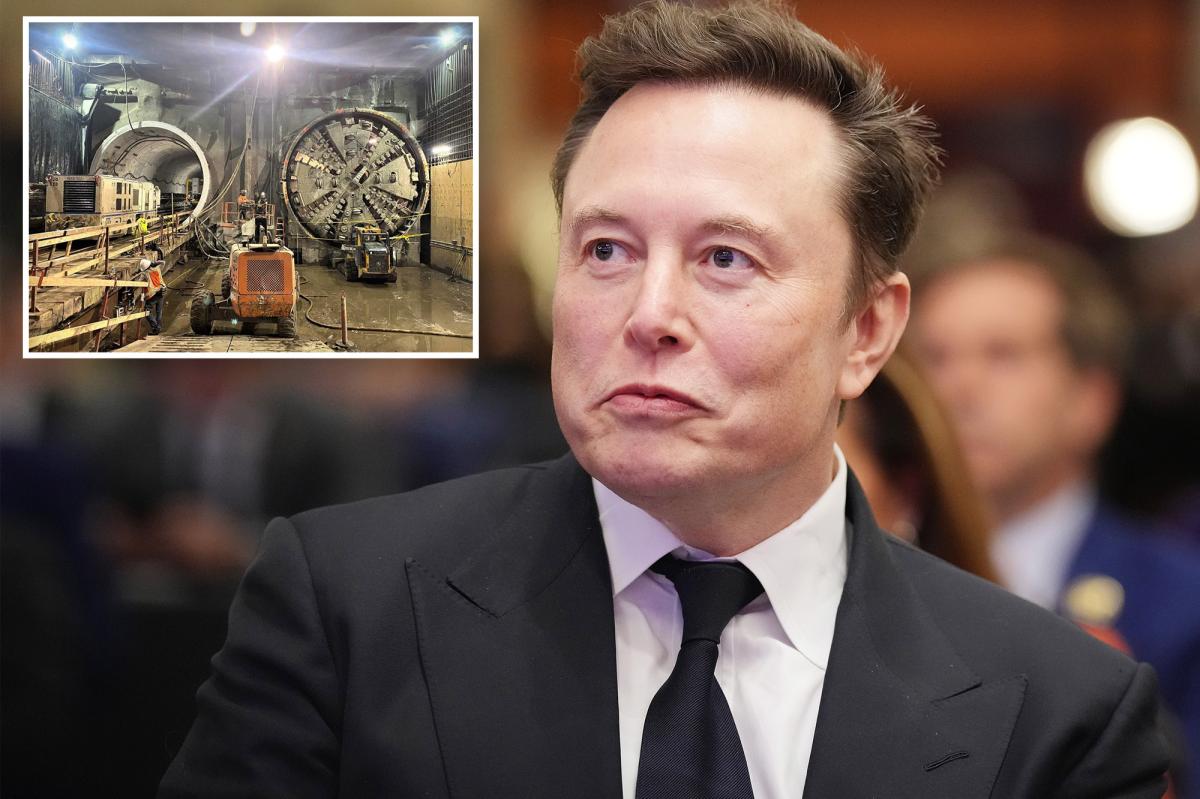


Elon Musk has once again set his sights on Los Angeles with a bold claim about his tunneling venture.
The billionaire entrepreneur highlighted a viral post on X, suggesting that his company, The Boring Company, could construct underground tunnels for a fraction of what Metro is spending on its rail projects in Los Angeles. Musk criticized conventional transit strategies, advocating instead for tunnels as a quicker and more cost-effective transit solution.
Los Angeles is currently finalizing a nearly 9-mile subway extension from Koreatown to Westwood, known as the D Line (Purple Line) Extension. This project carries a hefty price tag of approximately $9.5 billion, translating to around $1 billion per mile, depending on the segment.
Even more ambitious plans are in the works with the proposed Sepulveda Transit Corridor. This entirely underground route beneath the Santa Monica Mountains could cost between $20 billion and $25 billion for around 12 to 14 miles, with completion anticipated in the late 2030s or early 2040s.
In stark contrast, Musk’s Boring Company is eyeing a project in Nashville, aiming to dig highway tunnels spanning about 10 to 13 miles for an estimated $240 million to $300 million—a mere fraction of typical subway costs. However, this project is still in the planning stages, and the final costs are yet to be determined.
It’s important to note that the two systems differ significantly. The Boring Company’s tunnels are much narrower, catering to electric vehicles instead of high-capacity trains. They feature smaller stations and fewer safety measures, which help reduce costs but also severely limit passenger capacity compared to traditional heavy rail systems.
Musk founded The Boring Company after publicly venting about Los Angeles traffic and what he viewed as painfully slow, expensive infrastructure.
Early L.A. proposals — including a test tunnel in Hawthorne and a privately funded link to Dodger Stadium — stalled amid environmental review requirements, permitting hurdles, and community opposition. Similar plans in Chicago and elsewhere were later abandoned.
The company’s largest operating system is in Las Vegas, where the Las Vegas Convention and Visitors Authority funded an initial underground loop beneath the convention center that opened in 2021.
The system — now known as the Vegas Loop — uses Tesla vehicles to shuttle passengers through short tunnels and has carried millions of riders, with stations at the convention center, Resorts World, and Westgate, and plans for future expansion to the airport, stadium, and downtown.
Because the network is largely privately financed, it has been able to move forward faster than traditional public transit projects, avoiding many federal funding requirements and lengthy approval processes.