Healing after war: Inside Israel’s equine therapy program
Alex, aged 35 and a disabled veteran of the IDF, finds that the emotional scars from war linger far longer than his physical ones. Through the Transcending Trauma Project, initiated by Dr. Anita Shkedi and led by Director Yaron Yarkoni, Alex is finally receiving the support he needs.
As tensions rise with renewed Iranian attacks, Israel is grappling with both a fresh conflict and the resurfacing of deep-seated psychological traumas. In the heart of central Israel, Danny is finding solace and healing in a stable.
On October 7, Danny, whose name has been changed for privacy, was summoned from home. Within a few days, he found himself and his unit under fire while evacuating bodies from Kibbutz Kissufim. He spent six grueling months in the warzone, alternating between front lines in Gaza and rescuing critically injured soldiers. “We were fired upon while recovering the dead,” he recounted. “I witnessed the wounded in fragments. These are memories that will haunt me forever.”
Upon returning home, Danny describes himself as perpetually on edge—jumpy, tense, and struggling to return to everyday life. Weekly, he visits a stable to work with King, a large dark horse. “Here, something awaits me,” he shared. “It’s my one day of peace, a chance to escape the turmoil. There’s something waiting for me here.”
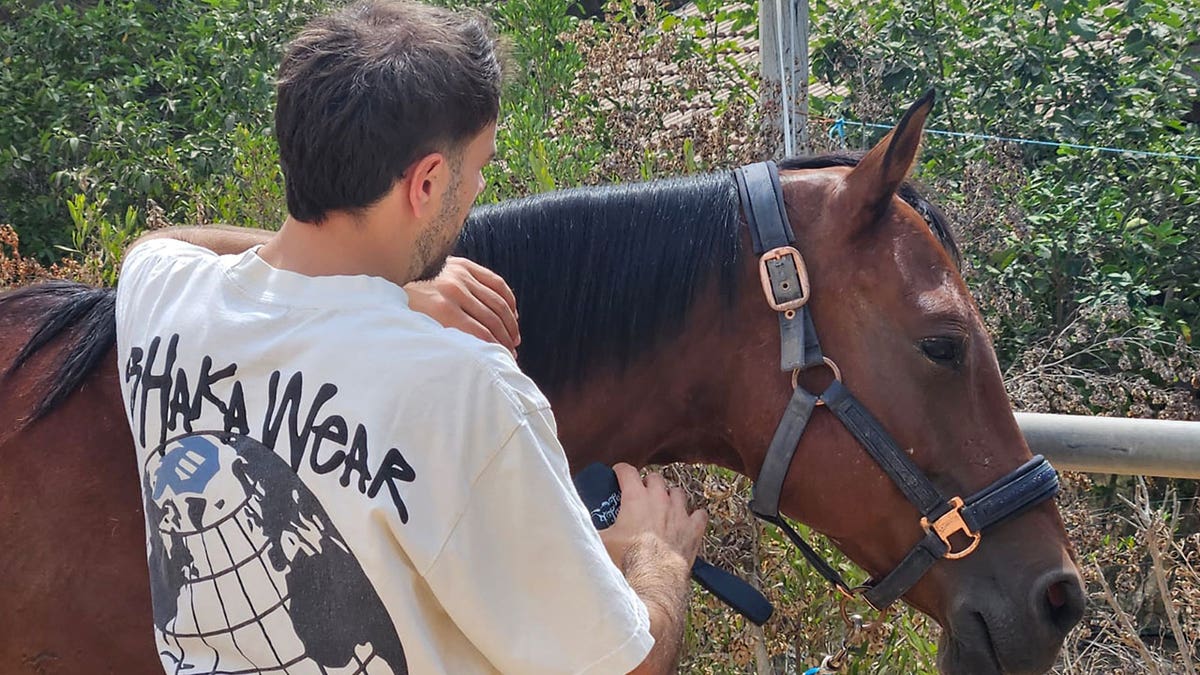
An Israeli veteran stands alongside his horse during a session at the equine therapy center run by the Brothers of Jonathan charity. This program is dedicated to fostering resilience and preventing chronic PTSD, as noted by Anita Shkedi.
His experience is just one of many surfacing from a nation confronting a mental health crisis, with a significant number of soldiers battling post-traumatic stress disorder. A recent report from Reuters, quoting Israel’s Defense Ministry, highlights a “nearly 40% surge in PTSD cases among soldiers since September 2023,” with projections of a 180% rise by 2028. Additionally, the report states that approximately 60% of all injured soldiers are afflicted with PTSD according to these statistics.
Alex, 35, is another veteran who found his way to the same stable. Standing beside a horse named Donna, he prepares for another therapy session. A victim of another one of Israel’s war he was stabbed seven times during Operation Cast Lead in 2009. He says the assault altered the course of his life.
“Pain you can get used to,” he says. “But post-trauma — you cannot get used to.”
He has been coming here for two months. “With Donna I feel the quiet and peace that I can’t feel at home when I’m alone and my thoughts go elsewhere,” he says. “The treatment with the horses is changing my life. Every week more and more, and I don’t want it to end.
“The Transcending Trauma Project was founded by Dr. Anita Shkedi, a pioneer in therapeutic horseback riding in Israel since the 1980s. After years in the field, she came out of semi-retirement following the Oct. 7 attacks to launch the program under a new charity she created, Brothers of Jonathan.
The initiative provides equine-assisted therapy to reservists, soldiers, veterans, Nova music festival survivors and family members struggling with the psychological aftermath of war.
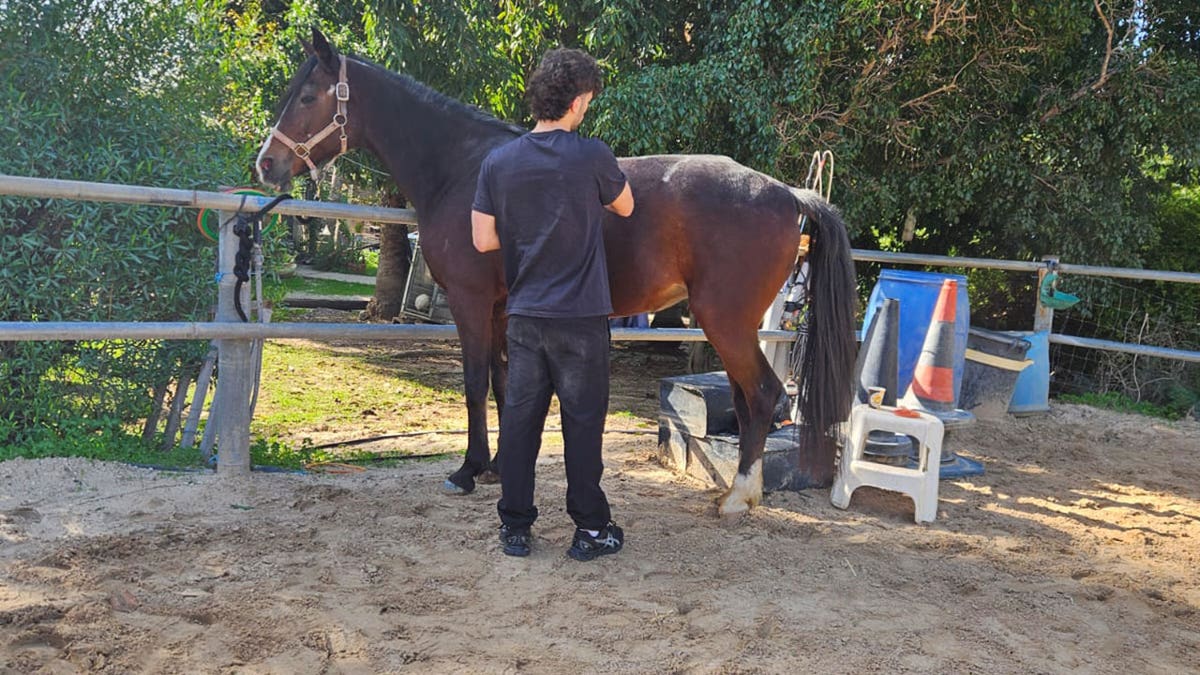
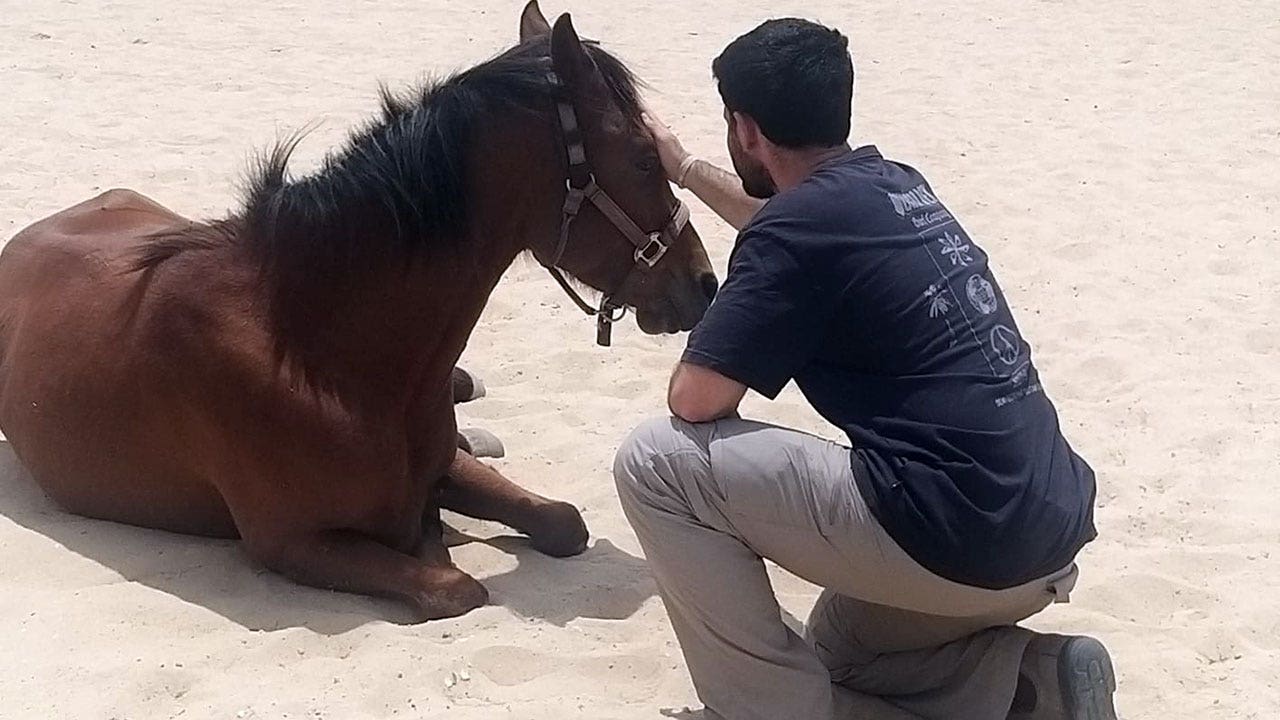
A participant in the Transcending Trauma Project works with a horse during a therapy session at a rehabilitation stable in Israel. The initiative was launched after the October 7 attacks to help those struggling with trauma. (Anita Shkedi)
For Shkedi, the project is deeply personal.
Her son, Jonathan Boyden, was mortally wounded during a rescue mission in Lebanon in 1993 and died weeks later from his injuries. For years, she said, she felt she had never fully honored his memory. “When he was alive and serving in the army, he always said to me, ‘Do something and help the injured soldiers,’” she recalled. “So I put everything together and felt this was the right thing to do — to start a charity called Brothers of Jonathan and help people in the way I know best, which is with the horse.”
Since launching in late 2023, the program has delivered more than a thousand therapy sessions and now operates with a growing waiting list. From the outset, Shkedi said her goal was not only treatment but prevention. “Right from the beginning, I was interested in prevention — if we can get to people early, maybe we can prevent symptoms of trauma from turning into chronic PTSD,” she said. “We need to save this generation.”
Many participants arrive in what she describes as “survival mode,” stuck in cycles of fear, anxiety and hypervigilance. But she warns that another psychological wound is emerging alongside classic PTSD symptoms.
“There will be a high level of moral injury — shame and guilt — alongside fear, anxiety and depression,” Shkedi said. “When that combines with PTSD, it is very shattering for a person.”
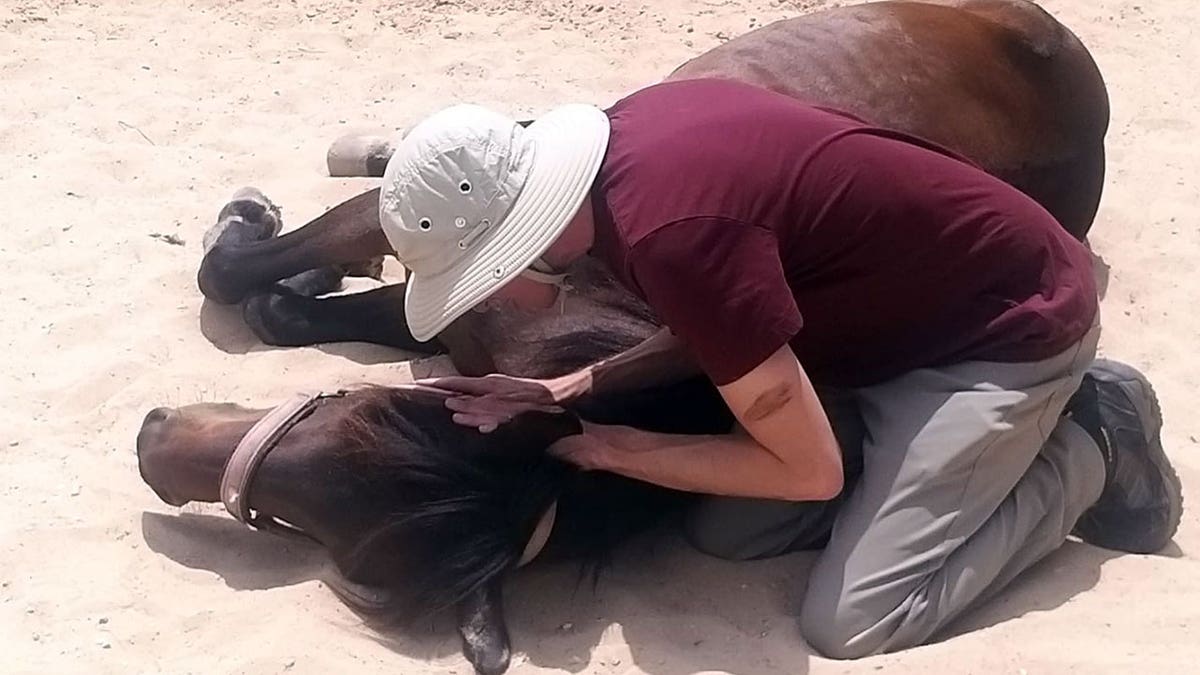
A former IDF soldier bonds with a horse as part of a structured, trauma-informed therapy program designed to help veterans and civilians process the psychological aftermath of war. (Anita Shkedi)
In the stable, she says, something shifts.
“Traumatized people need a safe place. Sometimes home is not a safe place,” she explained. “When they come to the horses, they attach easily. The environment becomes safe for them — and they start to feel safer inside.”
The therapy is structured and trauma-informed. Participants learn first to regulate themselves alongside the horse and eventually to guide and care for the animal.
“We don’t get rid of trauma. Trauma has happened,” Shkedi said. “Our job is to build resilience and post-traumatic growth — to help people move from co-regulation to self-regulation.”
For some, she said, the bond has been lifesaving.
“We have had people who were struggling with suicidal thoughts. The fact that they can attach themselves to the horse has really helped them.”
Looking ahead, Shkedi hopes to expand. “The dream is to have a place in Israel where people can come 24/7,” she said. “A place that says: you are safe here.”
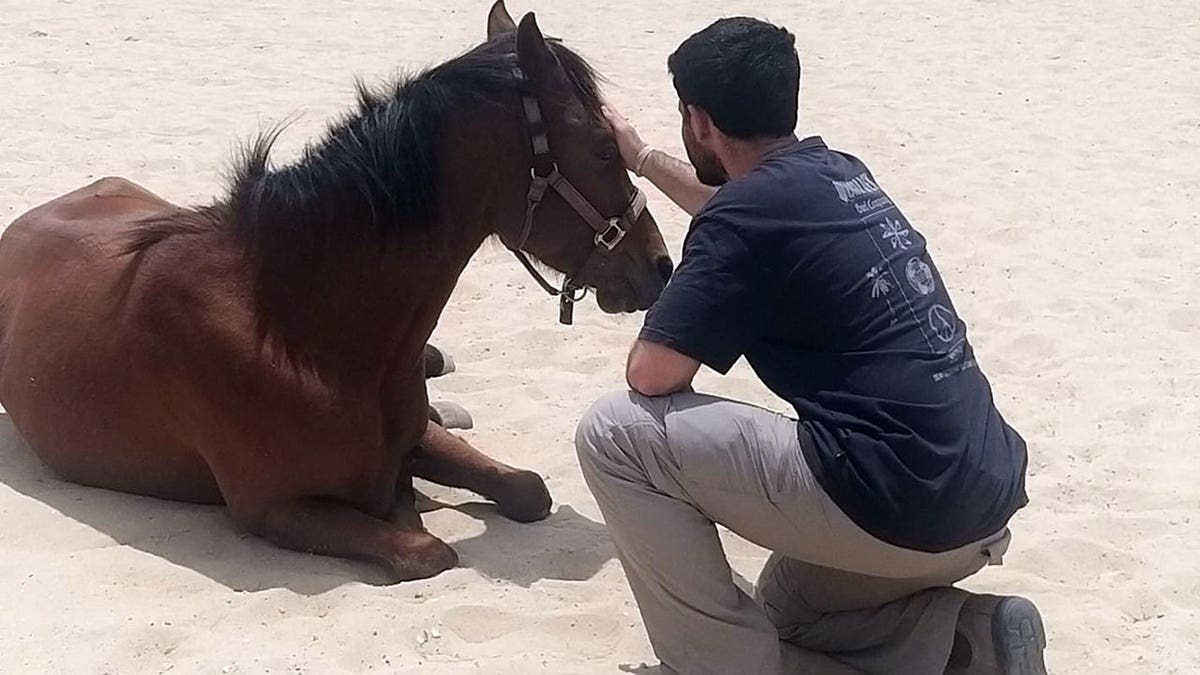
An Israeli veteran participates in an equine-assisted therapy session at the Transcending Trauma Project in central Israel. Organizers say the program supports soldiers and survivors coping with post-traumatic stress. (Anita Shkedi)
As the war continues and more soldiers rotate home, she believes the psychological toll is only beginning to surface.
“We are not just here for people to ride a horse,” she said. “We are here to help them move forward.”
Related Article