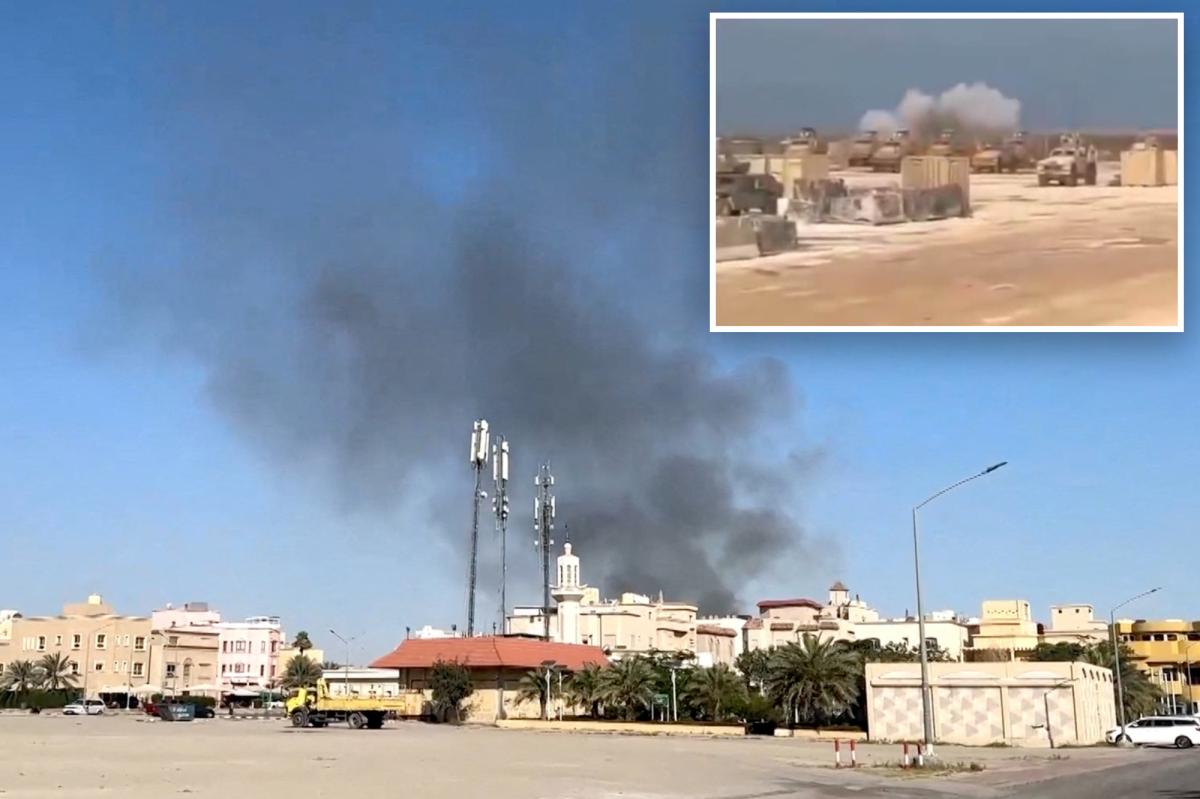


In a tragic incident, six U.S. service members lost their lives due to an Iranian drone attack in Kuwait. The soldiers were stationed at a makeshift command center, which lacked proper overhead protection. This vulnerability had been a concern even before the conflict commenced, as highlighted in a recent report.
The service members were operating from a tactical operations center near Shuaiba port when the hostilities of Operation Epic Fury erupted over the weekend. In the immediate aftermath, an Iranian drone targeted their base, leading to the devastating loss of life.
Despite Defense Secretary Pete Hegseth’s assertion that the tactical operations center was “fortified,” military sources disclosed to CBS News that the facility was essentially a triple-wide trailer, offering inadequate protection against aerial attacks.
One source lamented to the outlet, “We basically had no drone defeat capability,” pointing out that while there had been requests for additional air defense systems, these were not deployed in time to prevent the tragedy.
The attack in Kuwait not only claimed the lives of six service members but also left at least 18 others seriously wounded, according to U.S. military reports. This incident underscores the dire need for enhanced protective measures and resources for troops stationed in vulnerable locations.
Along with the six killed in Kuwait, the US military said at least 18 service members have been left seriously wounded in the war.
The dead service members have not been publicly identified.
The trailer’s only fortifications were 12-foot-tall T-walls, a steel-reinforced concrete barrier designed to protect military personnel from explosions and shrapnel, CBS reported.
While the walls could’ve protected the soldiers from a nearby explosion, they would be useless to defend against a drone dive-bombing from above, officials told the outlet.
While such structures are not uncommon at American military bases, the facility in Kuwait had been the subject of recent discussions given that it concentrated so many soldiers in a location that was not as well defended as other positions, three officials told CBS.
The Shuaiba port also lacked American counter-rocket, artillery and mortar systems, with the defense of the base left to Kuwait’s Patriot missile and other interceptors nearby, two other sources added.
Pentagon spokesperson Sean Parnell denied CBS’s reporting, claiming it was “not true.”
” Every possible measure has been taken to safeguard our troops — at every level,” Parnell wrote on X. “The Department is prepared for this engagement and has hardened our defenses.
“We’ve moved a significant number of our troops off the X and will always protect our bases and people from a significantly weakened Iran,” he added.
“We will continue fighting in a way that honors our six fallen: no apologies, no hesitation. Epic fury for them and for every American lost at the hands of Iranian radicals.”
The Pentagon directed The Post to Parnell’s post on X when asked to comment on the report.


