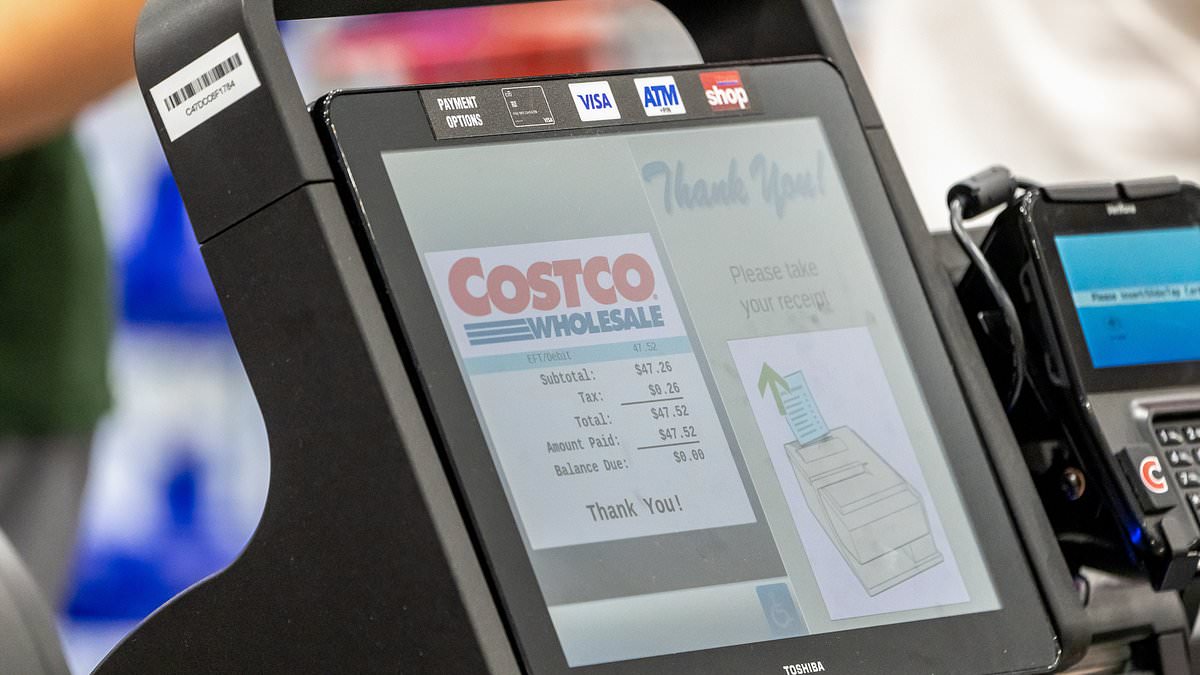

Costco has long been synonymous with unbeatable prices, but these bargains often come at the cost of time.
While customers enjoy the benefits of significant savings, they frequently encounter lengthy checkout lines. This is largely due to Costco’s model of bulk purchasing, the limited availability of express lanes, and the influx of shoppers during peak hours.
However, a change might be on the horizon. The warehouse retail giant has been rethinking its checkout process, reducing its reliance on self-checkout options while experimenting with new technologies in several of its stores.
Instead of completely eliminating self-checkout, Costco has opted to remove hand-held scanners from some kiosks. This decision followed reports that these devices were being misused to bypass proper scanning, leading to increased incidents of theft.
CEO Ron Vachris recently shared with investors that Costco is rolling out a system where employees pre-scan items in customers’ carts before they reach the cashier. This initiative aims to enhance efficiency and minimize errors during checkout.
This strategy contrasts with Sam’s Club’s ‘Scan & Go’ system, which allows customers to scan items using their app, pay digitally, and simply show a QR code at the exit.
Costco does not currently offer a nationwide app-based checkout system that allows customers to complete purchases entirely on their phones but it is investing heavily in new technology.
Still, some members say they have yet to notice meaningful changes.
One Reddit user wrote in late February: ‘I cannot figure out why Costco has refused to utilize technology more efficiently.’

In recent months, the members-only warehouse giant has adjusted its checkout strategy, scaling back on self-checkouts while testing new technology in select locations
Another said they switched to Sam’s Club primarily because of its mobile scanning system, adding: ‘We’re in and out in 15 minutes.’
Others, however, say they have seen self-checkout changes at Costco – and are not fans.
Rick LeBeau, posting in early February, said his San Diego-area warehouse removed hand-held scanners from self-checkout stations.
According to store staff, the decision was linked to theft concerns.
‘I didn’t think Costco would have a problem with that,’ he wrote, asking whether other locations had done the same.
Not all shoppers want more automation.
Some say they prefer traditional cashier lanes and are wary of increased app usage or data sharing.
‘I fully expect to still have the ability to go through a cashier line,’ one customer wrote. ‘The moment it becomes ‘app only’ is the moment I cancel my membership.’

Along with rock-bottom prices, Costco is known for long checkout lines – largely due to its high-volume, bulk-shopping model, limited express options and peak-time crowds

Not all shoppers want more automation. Some say they prefer traditional cashier lanes and are wary of increased app usage or data sharing
The checkout adjustments come as several major retailers reassess self-service technology.
Chains including Walmart and Target have also scaled back self-checkout in some stores following complaints about errors, slowdowns and theft.
Beyond checkout, Costco has rolled out a series of digital upgrades, including app improvements and virtual ‘waiting rooms’ for high-demand items such as Pokémon cards, designed to prevent bots from overwhelming the site.
Last year, the company also installed membership card scanners at store entrances to curb card sharing – a move that drew mixed reactions from customers.
As part of that crackdown, Costco began requiring membership verification at certain outdoor food courts, limiting access to non-members who previously could purchase the retailer’s $1.50 hot dog and soda combo.
Some shoppers have also complained about constantly shifting aisles – though executives have long described the rotating layout as part of Costco’s ‘treasure hunt’ strategy, designed to encourage discovery.
Earlier this year, the retailer faced accusations of shrinkflation after customers said a new cookie variety contained fewer units per package while prices remained steady or increased.


