
Ministers are preparing for the potential need to support UK citizens financially if the ongoing Middle East crisis leads to a surge in energy prices.
According to government sources, there is a keen awareness of the financial strain many people are experiencing, amid forecasts that the current turmoil is likely to persist.
Industry analysts have cautioned that the energy price cap might see a significant increase in July, potentially adding £500 or more to the average household’s energy costs.
Recent geopolitical tensions, particularly Iran’s retaliatory actions and concerns about supply disruptions from the region, have caused global prices of natural gas and oil to escalate.
As inflation could rise further by summer, families already facing economic hardships may push for government intervention to provide financial relief.
Previously, the Conservative government had intervened to mitigate energy bill increases following Russia’s extensive invasion of Ukraine, a move that cost the public over £50 billion.

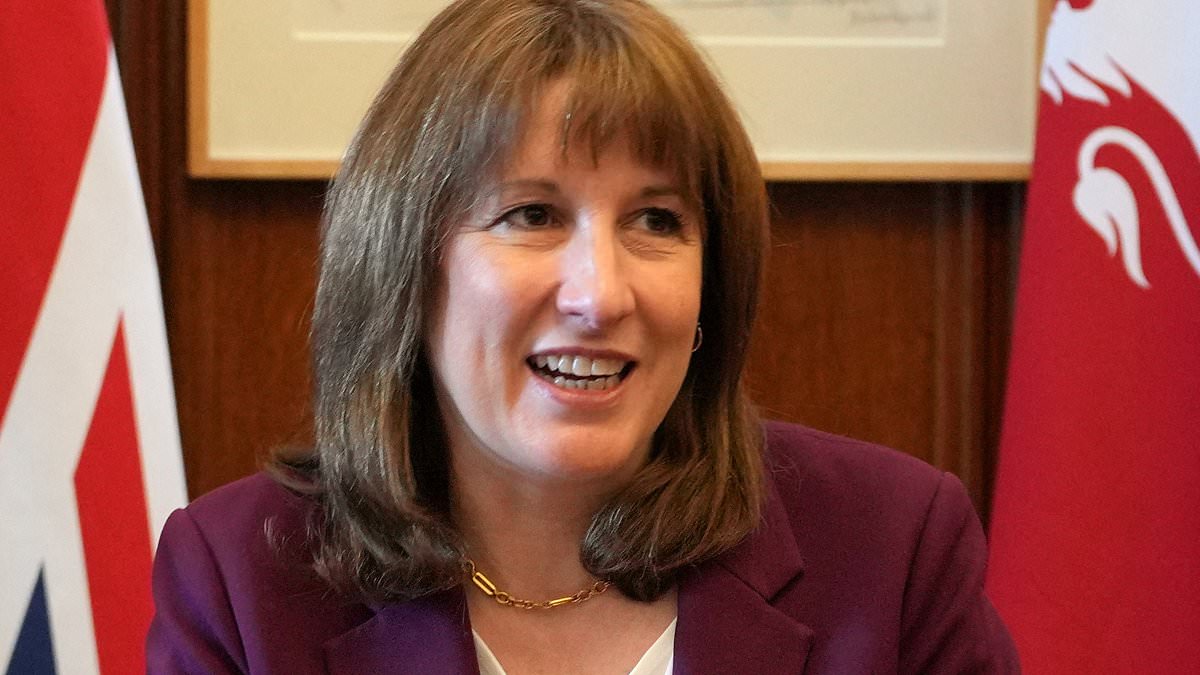
Rachel Reeves boasted about the government’s finances improving at the Spring Statement on Tuesday

Net Zero Secretary Ed Miliband has been holding talks with energy firms and said the government is was continuing to monitor the situation in oil and gas markets

Gas prices have been spiking since the US and Israel launched the attacks on Saturday
Rachel Reeves boasted about the government’s finances improving at the Spring Statement on Tuesday.
But the Treasury’s OBR watchdog made clear she is balancing the books largely on the basis of a tax windfall from surging stock markets.
The watchdog cautioned that a 35 per cent correction would add £26billion to borrowing, effectively wiping out the Chancellor’s ‘headroom’ for hitting her main fiscal targets.
The FTSE 100 has lost around a month of gains over the past few days.
Last night an analysis from Bloomberg Economics suggested that a prolonged conflict in the Middle East could add a percentage point to inflation and knock 0.5 percentage points off economic growth.
Analysts Cornwall Insight said forecasts for Ofgem’s price cap for July to September had surged to £1,801 a year for a typical dual fuel household – an increase of £160 or 10 per cent on April’s cap announced last week.
Cornwall said the rise was a ’cause for concern’ and warned any increase would also feed through to electricity prices.
The Resolution Foundation has suggested a £500 rise is possible, although the impact is highly sensitive to how long the crisis lasts.
One government source told the Daily Mail that ministers ‘understand the pressure people are under.
But they added: ‘We have time. The price cap protects people for three months.’
Ms Reeves reaffirmed her commitment in principle to end the windfall tax on North Sea oil and gas as she met energy bosses yesterday.
But she signalled that the Treasury is already looking ahead to the possible consequences of the Middle East turmoil for the public finances, pointing to a ‘more uncertain context for policy decisions’.
After talks with firms including BP, Adura and Offshore Energies UK, a Government source said: ‘The Chancellor was clear with industry that she wants the energy profits levy to come to an end.
‘She has made that promise and she stands by it. Indeed, it was a commitment she wanted to make this week.
‘But the crisis in the Middle East has had real-time consequences on oil and gas prices and it is right that we respond to this.’
Introduced by the Tory government in the wake of the war in Ukraine – which sparked a sharp rise in energy prices – the charge was brought in to claw back some of these unexpected profits for the Treasury.
Ms Reeves told the bosses that the expected triggering of the energy security investment mechanism in 2027 – which will end the windfall tax – ‘will be welcome and emphasised her keenness to provide certainty to the sector on that front, but she highlighted that geopolitical events create a more uncertain context for policy decisions’.
Net Zero Secretary Ed Miliband has been holding talks with energy firms and said the government is was continuing to monitor the situation in oil and gas markets.
He said: ‘Conflict in the Middle East is yet another reminder that the only route to energy security and sovereignty for the UK is to get off our dependence on fossil fuel markets, whose prices we do not control, and onto clean homegrown power we do.’
Speaking to the Energy Security and Net Zero Committee yesterday, Ofgem chief executive Jonathan Brearley told MPs: ‘Clearly, as we saw in the Russia Ukraine conflict, our gas supply cannot be separated from global events.
‘It’s important to make clear that our energy supplies remain secure.
‘Britain continues to benefit from a diverse gas supply which provides the market with the flexibility it needs in times of disruption.

Ms Reeves reaffirmed her commitment in principle to end the windfall tax on North Sea oil and gas as she met energy bosses yesterday
‘In the short term until the end of June, customers will be on fixed tariffs or protected by the price cap.’
He added: ‘Although we remain at the early stages of this conflict, if the Strait of Hormuz remains closed for a prolonged period of time it is likely this will create significant upward pressure on prices that customers will pay for their gas and electricity.
‘For example, in electricity, gas still sets the price for the majority of the time.
‘Now I know already there is a great deal of speculation about the scale and extent of those price changes. But genuinely it is too early to tell.
‘In my experience, gas traders find it extremely difficult to calibrate the sorts of risks we are facing, and therefore market projections are not a reliable guide to the future.’