Share this @internewscast.com
in brief
- Iran’s retaliatory blockage of the Strait of Hormuz continues to impact global oil prices.
- The government has said that the current fuel situation is a “national crisis”.
The government has declared a “national crisis” as it taps into emergency fuel reserves, compelled by recent global fuel supply disruptions stemming from the ongoing conflict in the Middle East. This move underscores the severity of the situation, as international tensions ripple through to domestic shores.
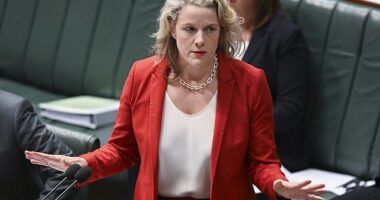
This week, the Minister for Climate Change and Energy, Chris Bowen, took decisive action by announcing a temporary adjustment to fuel quality standards. For the next 60 days, the government will permit the sale of higher-sulphur fuel, a measure intended to inject approximately 100 million additional litres into the market each month. This decision aims to mitigate the impact of the fuel supply shock on Australian consumers.
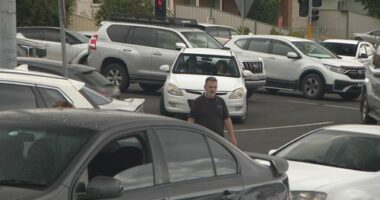
Furthermore, the government plans to release up to 762 million litres of petrol and diesel from domestic reserves. This step is largely in response to a surge in panic buying, which has exacerbated fuel shortages across regional Australia. The Labor administration is working to calm public fears, asserting that the shortages are primarily demand-driven rather than a consequence of dwindling supply.
Minister Bowen stressed that the arrival of fuel shipments at Australian ports continues as expected. However, the extraordinary spike in demand has led to local shortages, particularly in regional areas. The situation could become more strained if the Middle Eastern conflict persists, affecting future imports.
“There is no need to stockpile or hoard fuel,” Bowen urged, seeking to reassure the public. “Take only what you usually need so that everyone can access the fuel they require.”
Meanwhile, Opposition Leader Angus Taylor has kept the pressure on the government, questioning whether Australia faces the risk of running out of fuel entirely. His inquiries highlight the ongoing political debate over the nation’s energy security amid global instability.
“Labor’s mismanagement of fuel security and the economy is driving up inflation and hitting Australians’ cost of living hard,” Taylor said at parliamentary question time on Thursday.
Prices of petrol and diesel have risen sharply since the conflict began on 28 February. Between late February and mid-March, average petrol prices have shot up nearly 50 cents a litre across Australia’s five largest capital cities, according to the consumer watchdog’s first weekly report on the fuel market since the start of the war.
The Australian Competition & Consumer Commission have said they are concerned that prices at fuel pumps across the country have risen in line with wholesale costs, and in some cases even higher, rather than showing a usual lagged response.
“Industry need to explain this wide discrepancy urgently,” ACCC Commissioner Anna Brakey said.
“Fuel wholesalers and distributors need to be aware that we are ready to hold them to account for breaches of competition and consumer laws and will not hesitate to ask for the highest penalties appropriate under the law.”
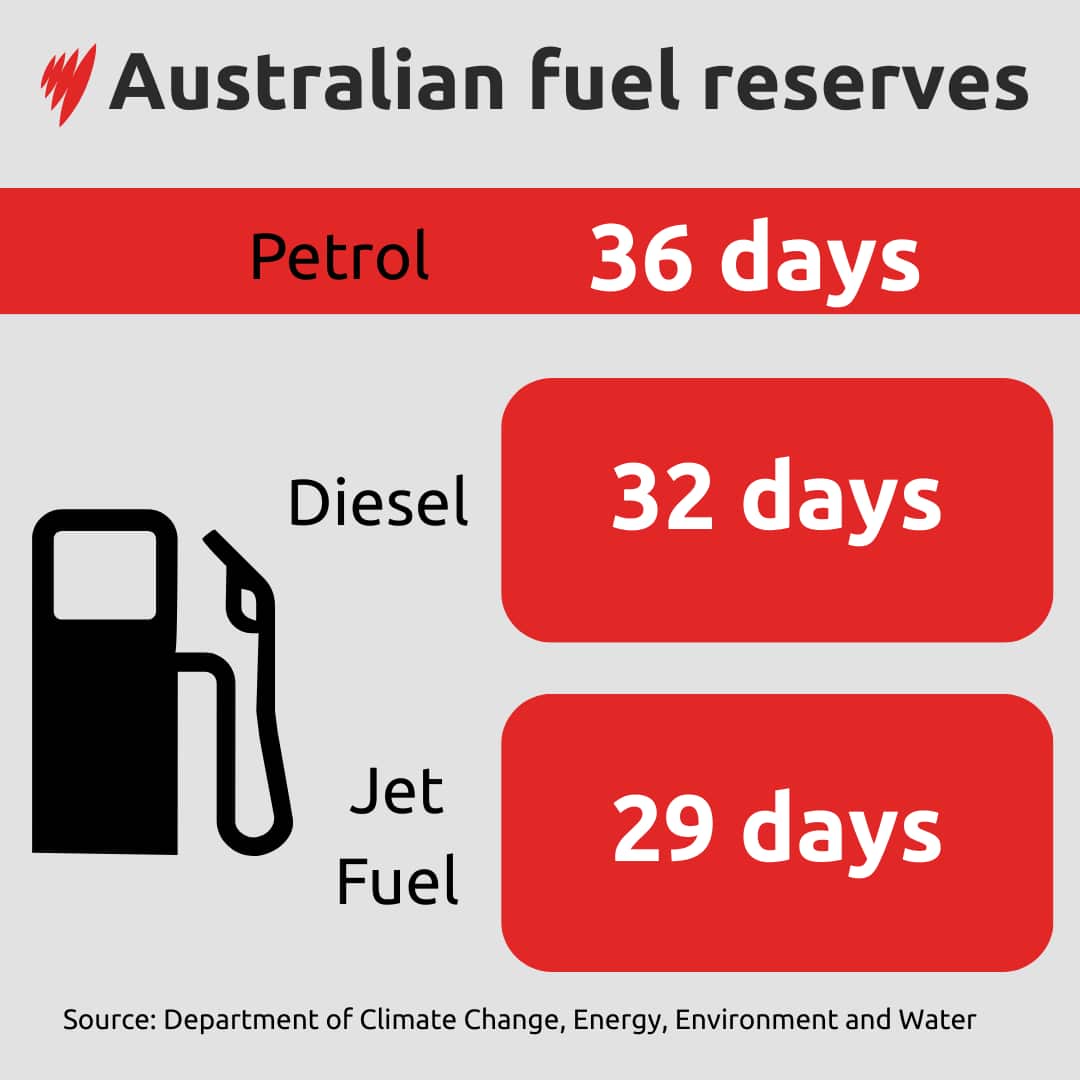
With just 26 days of diesel and 29 days of petrol consumption in reserve in Australia, there have been calls for the country to boost its fuel refinery capacity as well as accusations that Labor has avoided meeting its International Energy Agency (IEA) reserve requirements.
“The fruits of the cluster climate policy are now the loss of fuel supplies starting with small towns”, One Nation MP Barnaby Joyce has said.
“We shut our oil refineries to change the weather and made utilising our oil exploration vastly more complex because of environmental regulations.”
With the taps at the reserves being turned on, here’s what Australia’s fuel storage situation really looks like.
Australia’s fuel reserves
Australia is the only member of the IEA that does not hold the mandatory 90-day fuel reserve requirement, something the country has failed to meet since 2012. The goal was downgraded to 50 days.
Most IEA members hold an average of 140 days of their previous year’s net imports while Australia holds between 50 and 58 days.
The country used to have eight oil refineries but that number has dwindled to just two — the Viva Energy facitlity in Geelong, Victoria, and the Ampol Lytton refinery in Brisbane, Queensland — as domestic oil resources are largely exhausted.
At present, Australia imports roughly 90 per cent of its oil which it generally takes as refined product from South Korea, Singapore, Malaysia and Taiwan.
Refineries in the Asia Pacific region are much larger and can produce significantly more refined product at cheaper cost than our domestic ones, hence the transition away from onshore refining.
The shift has left Australia increasingly exposed to global energy shocks, critics argue, with the left-wing think tank the Australia Institute warning in the aftermath of price shocks around Russia’s invasion of Ukraine that the country is concernedly fuel insecure.
“Australia has a national security problem when it comes to transport fuel,” Richie Merzian, climate and energy director at the Australia Institute, said in April 2022.
“It’s worrying that Australia is almost entirely reliant on foreign oil for fuel consumption leaving it ill-prepared to deal with international disruptions.”
Will Australia run out of fuel?
On Friday, Taylor again pressed the government about whether the country would run out of fuel.
“We are nowhere near that,” Bowen said. “We have minimum stock obligations in place … of those, 80 per cent of it remains for future needs if necessary. That’s what the MSO is designed for. That’s what we’re operating.”
Minimum stock obligations (MSO) were put in place after the war in Ukraine in an effort to reverse the trend of declining reserves. While the measures have slowed the decline, they have not reversed a trend which has seen our backup fuel supply diminish from its high of 310 days in 2002.
While the government is confident that Australia has sufficient oil supplies at the moment, Bowen did not rule out the situation deteriorating if the conflict in the Middle East drags on.
“Will there be further threats to fuel supply as the international circumstance, if the international circumstance continues to worsen? Of course, that is a realistic thing which governments should prepare for and are prepared for,” Bowen said.
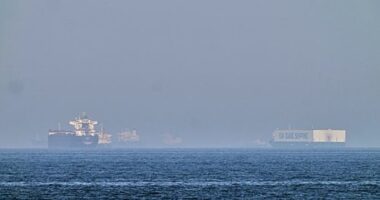
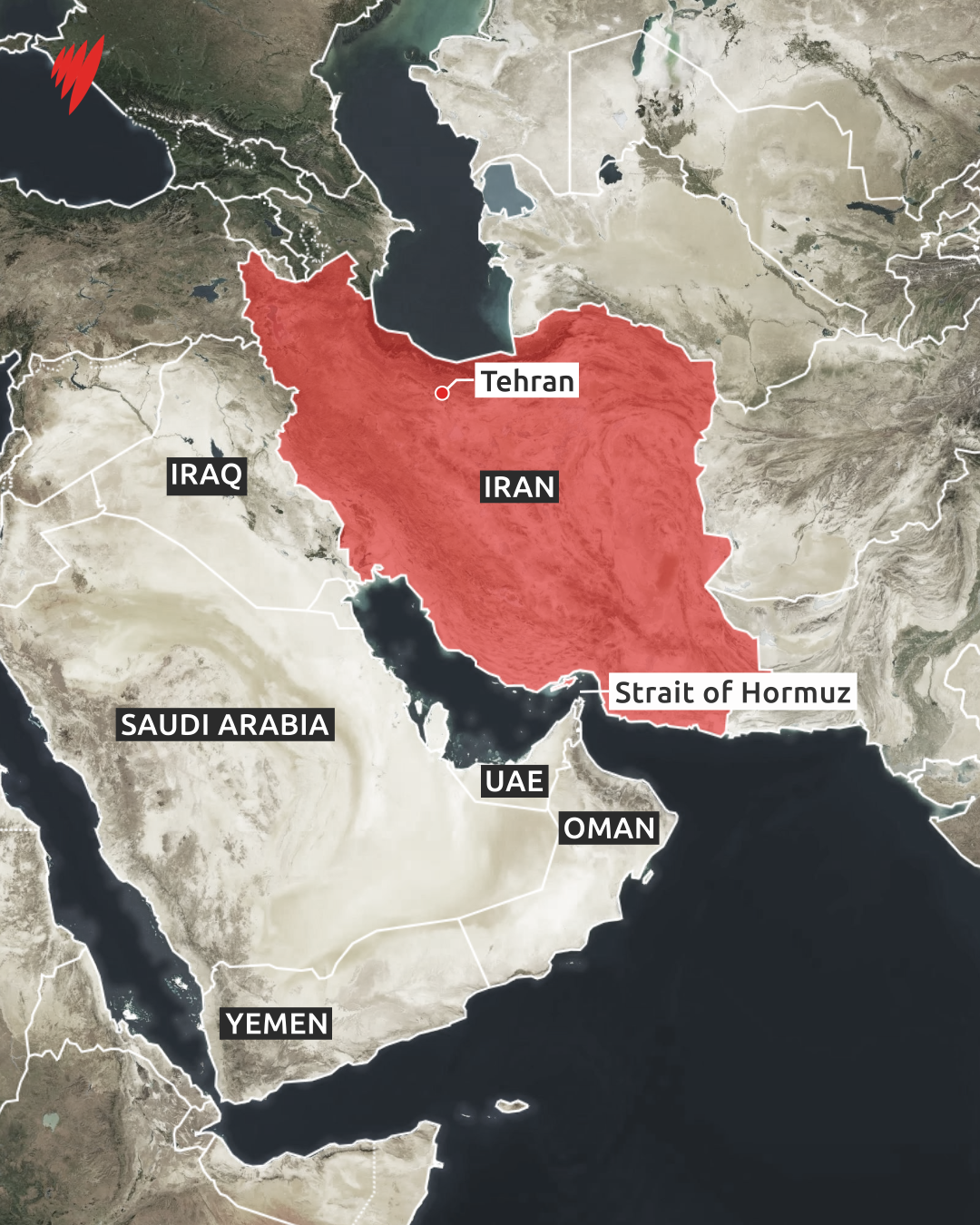
With roughly 20 per cent of the seaborne oil supply locked up in the Strait of Hormuz, demand-side issues are set to increase the longer Iran is able to block the passage of oil tankers through the strategic shipping lane.
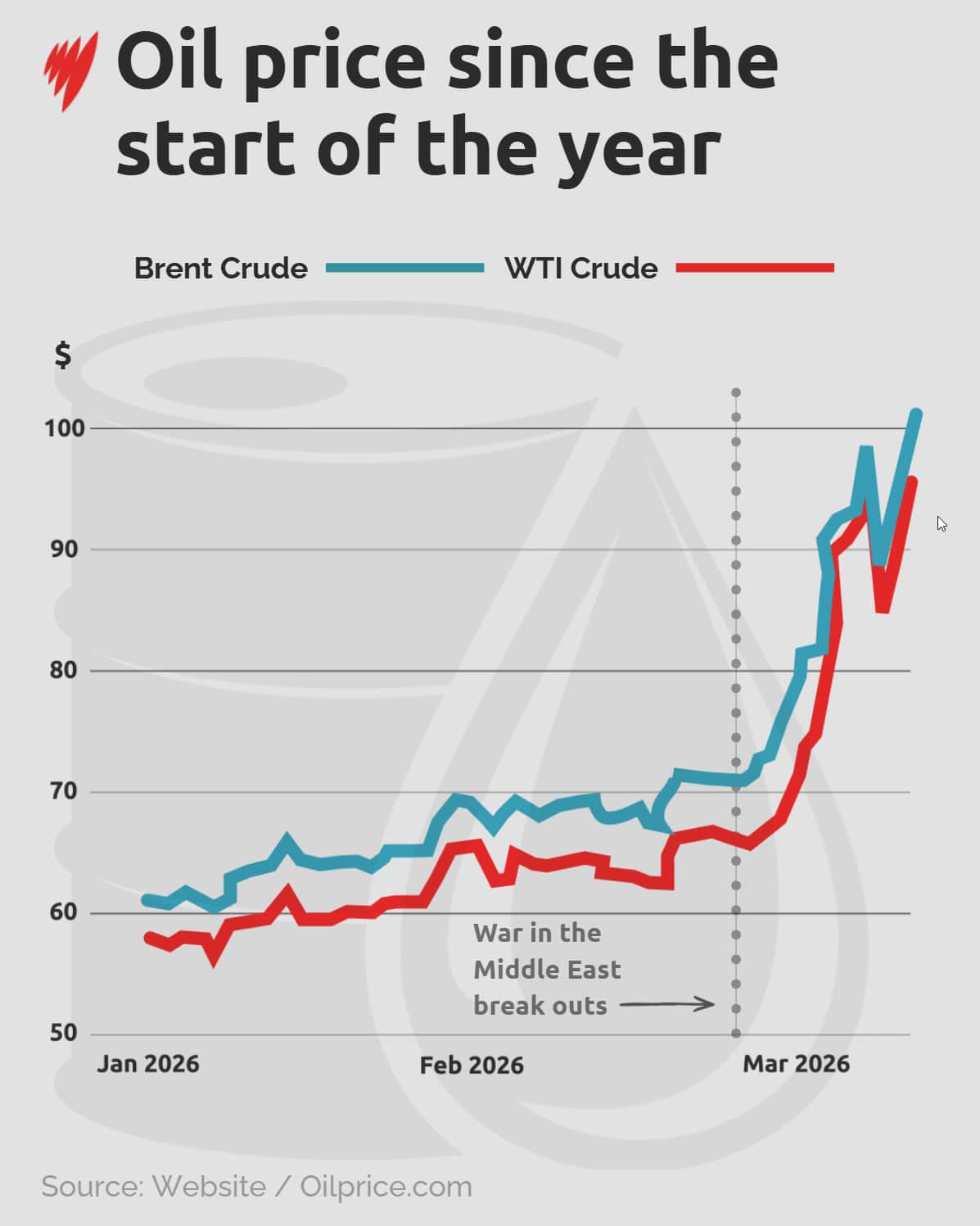
Overnight, three oil tankers were hit by Iranian fire as they attempted to pass the strait. Iran’s newly-chosen leader, Mojtaba Khamenei, has vowed to keep the strait closed and drive oil to US$200 a barrel while the joint US-Israeli assault continues.
“If this keeps going … the physical response is a really, really difficult one because it does begin to take you into that territory of rationing,” Greg Bourne, former regional president of BP Australasia, told SBS News.
With the agricultural industry in greater need of diesel to run farm machinery and sow crops, concerns have been raised of the potential for food shortages if supplies run low. Already, NSW Farmers have demanded the government do more to ensure that does not happen.
“Right now, we’ve got farmers across the country who have run out, or are running out of fuel, while others are only a week or two away from empty,” NSW Farmers President Xavier Martin said on Thursday .
“Normally they’re refilled by bulk suppliers, many of them smaller independent distributors in rural and regional areas. Those suppliers are telling our members they’re dry as well, with no more fuel coming.”
Bowen has ruled out rationing fuel supplies at the moment and says that the government does not foresee having to go down that route.
“That is not what we’re contemplating. That is not predicted,” Bowen said.
“What we’re doing is trying to increase supply for everyone across the board, but with particular focus for those regional areas that have faced the shortages most acutely”.
Bourne however believes that if the conflict in the Middle East continues to drag on, the measure could be inevitable.
“My reckoning is that it’s within a 30-day period,” he said.
Dirty fuel
The lowering of fuel standards to boost national supply by 100 million litres will result in the use of slightly higher levels of pollutants in vehicle exhausts from the use of so-called “dirty fuel”.
In December, Labor increased fuel standards in Australia, restricting levels of the chemical primarily responsible for acid rain and smog clouds above cities from 150 parts per million to 10.
The temporary relaxing of standards drops the levels back down to 50 PPM, significantly lower than that allowed by most other OECD nations. The European Union, for example, has mandated 10ppm sulphur fuels since 2009 while China and India moved to the same in 2017 and 2020 respectively.
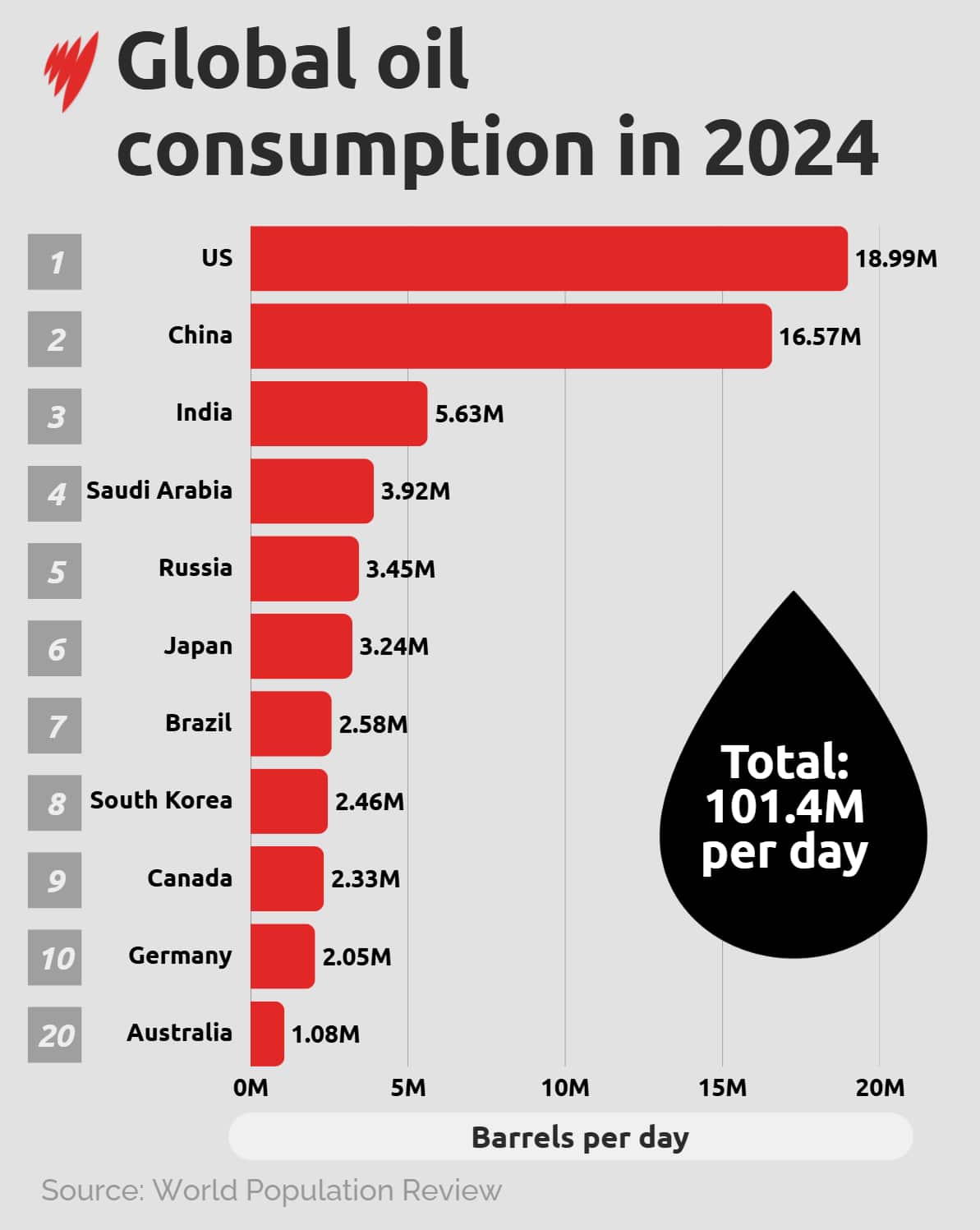
While 100 million litres may sound like a lot, that is roughly equivalent to less than a days worth of national fuel consumption, excluding jet fuel. That’s because we get through approximately 44 million litres of petrol and 92 million litres of diesel every 24 hours.
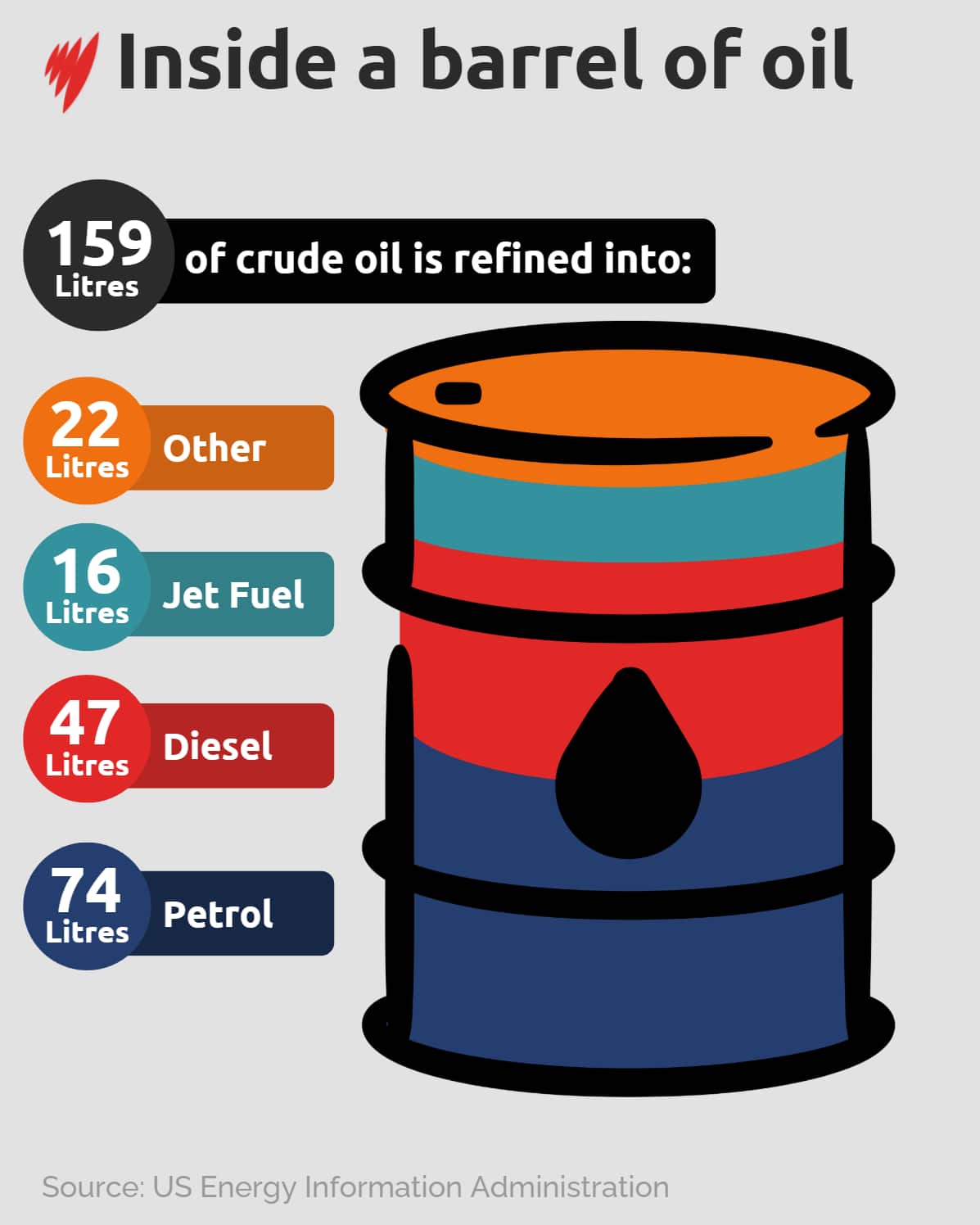
At around 1 million barrels of oil per day, Australia just scrapes into the top 20 oil consuming nations in the world. The world’s largest energy source crossed 101 million barrels used per day in 2024, with demand for the natural resource slowing but still climbing by 0.7 per cent annually, according to the Energy Institute.
In an effort to mitigate the impact of the blockade along the Iranian coastline which has driven the greatest disruption to global energy supplies since the oil shocks of the 1970, the IEA has agreed to release 400 million barrels of oil.
Despite the measures, as long as the war continues, the government has said that crisis response actions will need to be considered.
“Yesterday I made the point that a national crisis is a time for an opposition to step up as well,” Bowen said during his Friday press conference.
“As I said, if they haven’t noticed, there’s a war on. Yes, that is a crisis”.
For the latest from SBS News, download our app and subscribe to our newsletter.