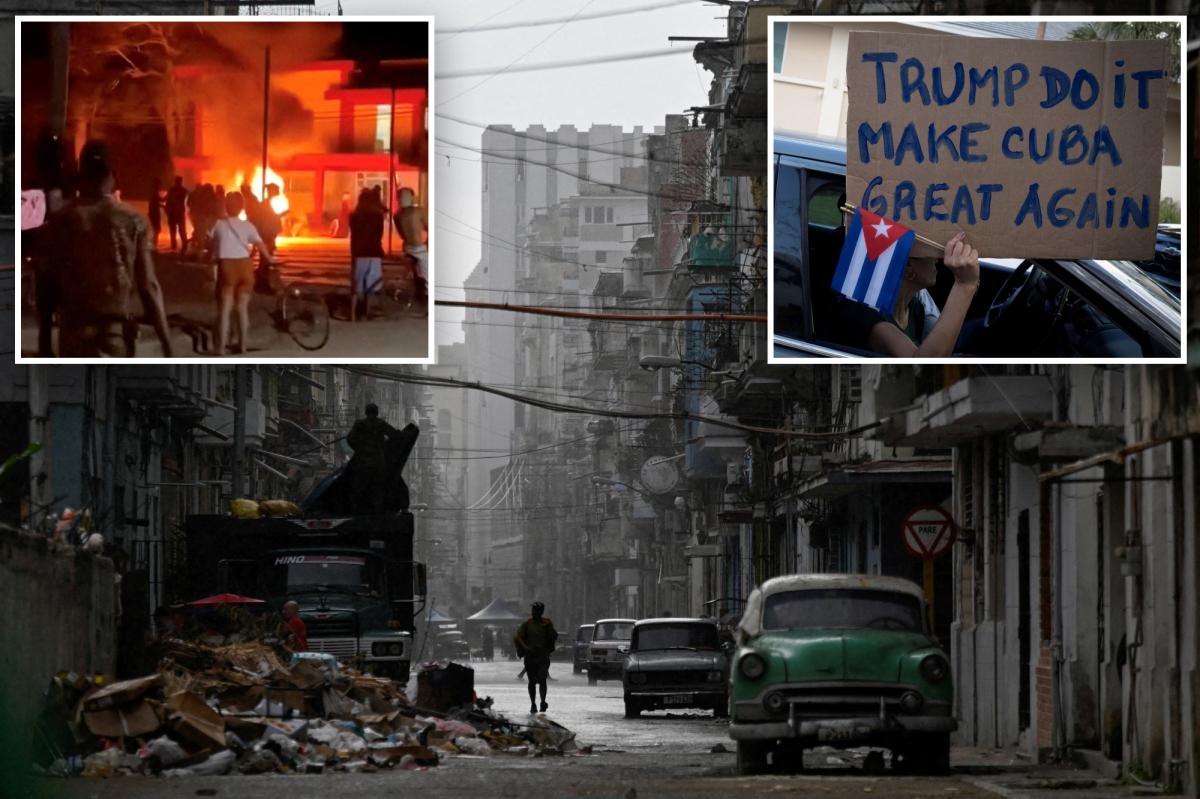


Unrest is mounting in Cuba as the nation grapples with widespread blackouts and an economy in freefall. This turmoil coincides with hints from President Donald Trump about potential changes for the island, leaving the Cuban community in Miami contemplating the future.
For 67 years, Cuba has been under authoritarian rule, with the Communist Party of Cuba as the sole legal political entity. Tensions erupted last week when protesters targeted a Communist Party headquarters, vandalizing the site and attempting to set it ablaze, according to local reports.
“Today’s protesters are more courageous than before,” remarked Jose Collazo, a Cuban migrant who left the island in the 1960s. “But remember, four years ago, when they protested, they faced brutal repression.”
Collazo frequently visits Domino Park in Miami’s Little Havana, a neighborhood bustling with Cuban immigrants. There, he joins fellow Cuban Americans for spirited games of dominoes and discussions on the current situation in Cuba.
Recently, conversations have been dominated by the crisis back home. On Monday, a failure in the national power grid plunged approximately 10 million Cubans into darkness, according to statements from the U.S. Embassy and Cuban officials. Authorities attribute the outages to both fuel shortages and malfunctions at aging power facilities.
The economic challenges are deepening, exacerbated by President Trump’s recent threats to impose tariffs on countries supplying oil to Cuba, further straining the island’s resources.
“They’re living like in the Stone Age. Cave people. That’s how they live. It’s sad to see the people [living with] malnutrition, living in ragged clothes,” said Collazo.
The escalating tension on the island comes amid remarks by Trump that he expects to have the “honor” of “taking Cuba in some form” and “I can do anything I want” with the neighboring country.
“Cuba right now is in very bad shape. They’re talking to Marco,” Trump told reporters, “We’ll be doing something with Cuba very soon.… We’re dealing with Cuba.”
On Tuesday, Marco Rubio, the son of Cuban immigrants, also made comments about the island, saying “they have to get new people in charge” in Havana.
Meanwhile, Pentagon officials told lawmakers there are no plans to invade Cuba, even as they described it as a long-standing security concern.
“In all the years I’ve been here— I’m going on 47 years— I think this is the first time I’ve seen really good things happening for Cuba,” said Francisco Botella, a Cuban migrant who lives in Miami. “You can tell it’s a very precarious situation this time around. Now the system is going down, way down.”
Hearing U.S. leaders discuss the situation brings members of the Cuban exile community like Botella and Collazo hope.
“I think this is the end for Cuba. I really think it’s over. Either the communist leaders leave, or what happened to Maduro will happen to them,” said Botella.
Cuban officials have continued to blame U.S. sanctions for the country’s economic hardships, while analysts say the government is facing mounting pressure from ongoing blackouts, shortages of basic goods and growing public frustration.