
Initially slated for a February launch, the highly anticipated moon rocket has faced multiple delays. However, the wait may soon be over.
In a significant development, NASA is now targeting early April for the first crewed lunar mission in over half a century, with potential liftoff as soon as April 1. This historic endeavor hinges on successful rollouts and tests, as stringent conditions must be met to ensure a safe launch. Currently, the Artemis II crew has already commenced quarantine procedures in Houston this week to prepare for their journey.
During a briefing on Tuesday, Lori Glaze, the acting associate administrator for NASA’s Exploration Systems Development Mission Directorate, shared updates on this mission and the broader aspirations of the Artemis program.
This mission will mark the first time astronauts venture to the moon since 1972, when Apollo 17’s Gene Cernan and Harrison Schmitt concluded the iconic lunar-landing series. Unlike their predecessors, the current crew won’t be landing on the lunar surface.
Set to last approximately 10 days, the mission involves a flyby of the moon. The crew will assess Orion’s systems and gain crucial experience in living and working in space, laying the groundwork for future human expeditions to Mars.
The mission is expected to last about 10 days, where the crew will do a flyby of the moon, check out Orion’s systems, and learn how to live and work on another world in preparation for human missions to Mars.
“Artemis II is a key test flight in our effort to return humans to the moon’s surface and build toward future missions to Mars, and it’s also an opportunity to inspire people across the globe and to give them an opportunity to follow along as we lead the way in human exploration deeper into space,” said Lori Glaze, acting associate administrator, Exploration Systems Development Mission Directorate at NASA Headquarters in Washington, in a statement earlier this year.
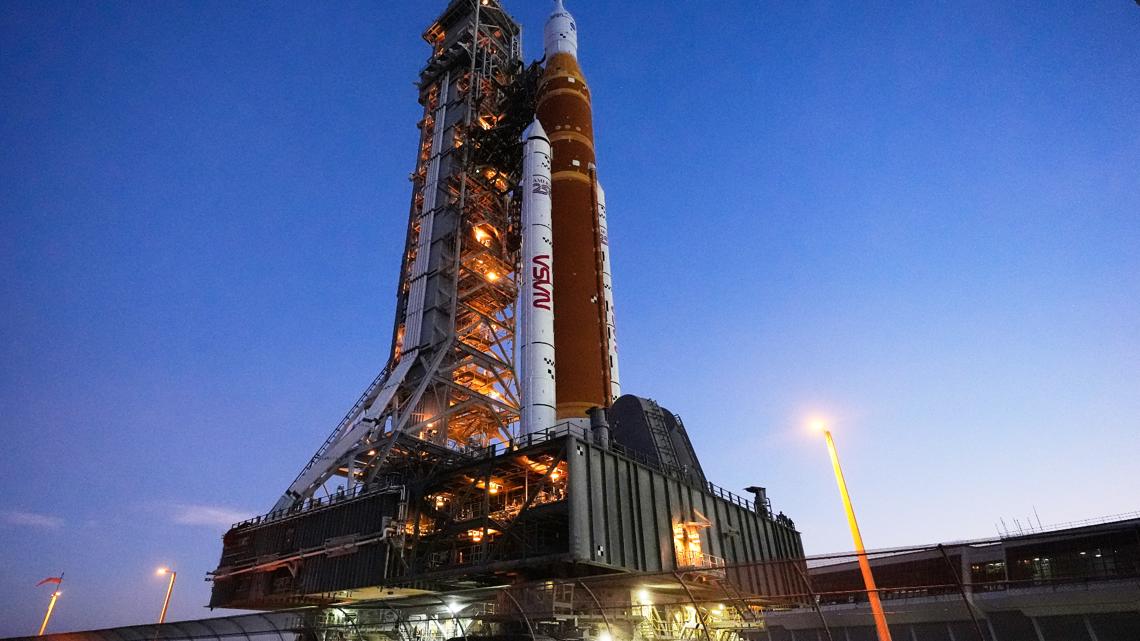
The Artemis II rocket launch was rolled back to its launch pad on Mar. 20. NASA said the ship could launch between April 1, April 3 through 6 or April 30.
Who is flying around the moon?
Three longtime NASA astronauts with spaceflight experience—crew Cmdr. Reid Wiseman, pilot Victor Glover, and Christina Koch—will be joined on the 10-day mission by Canadian astronaut Jeremy Hansen, a former fighter pilot awaiting his first rocket ride.
After launch, the crew will spend about two days checking out Orion’s systems and performing a targeting demonstration test relatively close to Earth before beginning the trek toward the moon.
The crew will then test the Space Launch System rocket and Orion spacecraft around the moon.
According to NASA, “The crew will assess the performance of the life support systems necessary to generate breathable air and remove the carbon dioxide and water vapor produced when the astronauts breathe, talk, or exercise.”
What this crew does will pave the way for lunar surface mission and long-term lunar science and exploration.