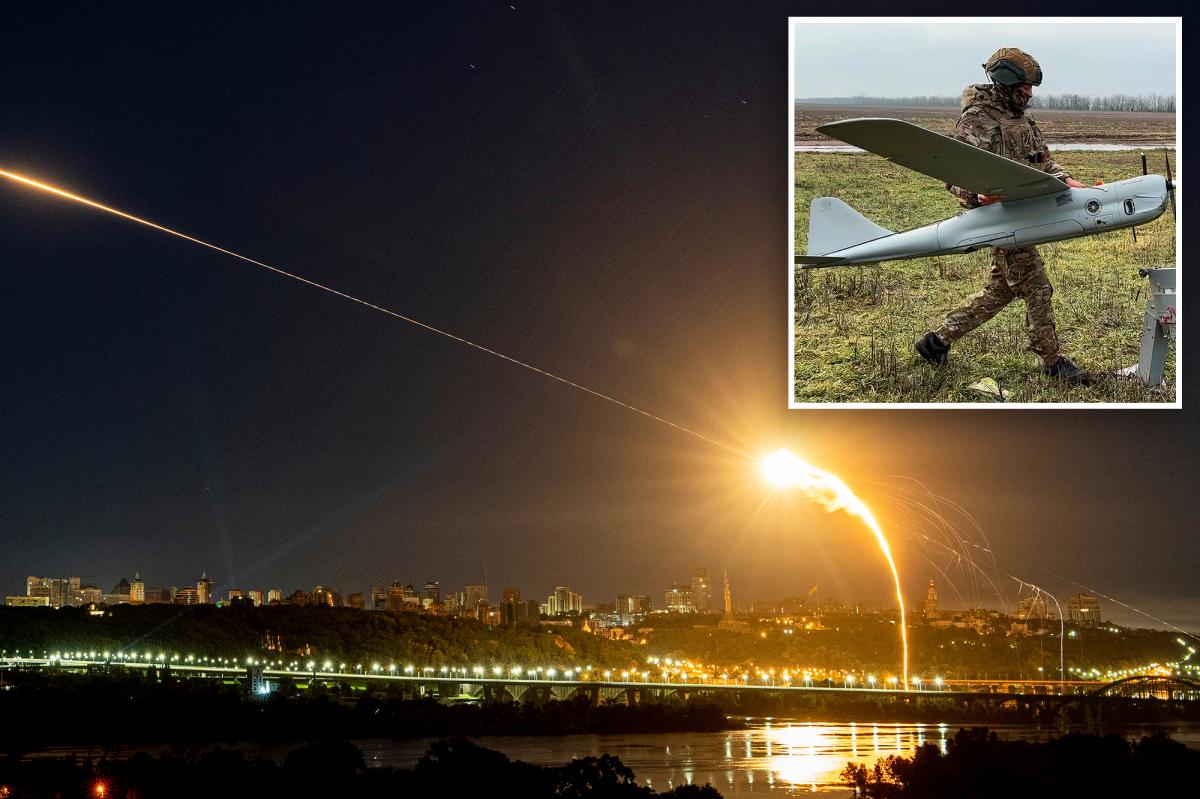


Russia is reportedly dispatching a consignment of drones to Iran, featuring enhanced versions of the drone technology initially provided by Tehran to Moscow after Russia’s incursion into Ukraine. This development was disclosed by U.S. and European officials to The Associated Press earlier this week.
In recent weeks, Iran has launched drone attacks on Israel, its neighboring Gulf states, and U.S. military bases throughout the Middle East, following assaults from the U.S. and Israel. Although Iran possesses its own cache of Shahed drones, Russia has refined the design during the conflict in Ukraine, notably by incorporating advanced navigation systems.
According to a European intelligence source, Russian and Iranian representatives have been engaged in “very active” negotiations this month about the drone transfer. A U.S. defense official noted uncertainty regarding whether this shipment is a solitary transaction or part of a broader series. The exact scale of the delivery and the number of drones involved remain unclear, with one European official suggesting that a small batch would unlikely influence the war’s outcome significantly. All officials requested anonymity due to the sensitive nature of the information.
The U.S. defense official also expressed uncertainty about Russia’s rationale for providing Iran with advanced drones, considering that each unit sent is one less available for use against Ukraine.
White House spokesperson Olivia Wales informed the AP that external provisions to Iran from other countries are not impacting U.S. operational effectiveness. She highlighted that the U.S. military has targeted over 10,000 sites and destroyed upwards of 140 Iranian naval vessels, leading to a 90% reduction in Iran’s missile and drone attacks. The Pentagon did not provide a comment when requested.
A European official indicated their intelligence points to an impending drone delivery, though the transportation method remains unconfirmed. Two truck convoys, labeled by Russia as carrying humanitarian aid, have traveled from Russia to Iran via Azerbaijan, potentially containing drones, according to the European official.
The Russian Embassy in the Azerbaijani capital Baku said that seven trucks with 150 tons of food and other aid crossed to Astara in northern Iran on Friday while Russia’s Emergency Ministry said 313 tons of medicine also was delivered to Astara by rail, the Interfax news agency reported.
A second European official said their country hasn’t been able to confirm Russian drone transfers to Iran, but said if drones are being transported by truck, their numbers are likely small and could be a largely symbolic gesture to maintain Moscow’s relations with Tehran. Moscow is helping Iran with targeting, the official added.
Russia and Iran are sharing intelligence
The U.K.’s latest defense intelligence assessment says Russia almost certainly provided training and intelligence, including on types of drones and electronic warfare, with Iran ahead of the war in the Middle East. Iran is also sharing information with Russia “quite generously,” the European intelligence official said, adding that Russian officials knew that Ali Larijani — a top Iranian security official — was dead before the rest of the world.
But Russia’s relationship with Iran has been rocky, the European official said, adding that Iranian officials felt “deeply disappointed” after Russia did not help Iran during its 2025 conflict with Israel which led to Trump ordering an attack on three key Iranian nuclear sites.
Asked on Thursday about reports in the Financial Times that Russia was supplying drones to Iran, Kremlin spokesman Dmitry Peskov described them as “false news stories.”
Russia and Iran signed a $1.7 billion deal for Iran’s Shahed drone technology after President Vladimir Putin invaded Ukraine in 2022 and Moscow began using the Iranian imports in battle later that year.
The Iranian drones were first shipped disassembled to Russia but a production line was later opened at the Alabuga plant in Russia’s central Tatarstan region. The plant has since rapidly expanded and recruited more workers including African women who say they were tricked into making drones.
Russia produced more advanced versions of Iran’s drones
Russian specialists have adapted and refined the Shahed drone by creating decoys with no explosives that are designed to overwhelm air defenses. They also have variously added jet engines, cameras, advanced anti-jammers, radio links, AI computing platforms or Starlink internet devices.
Drone debris found in Ukraine also indicates further cooperation between Iran and Russia on war technology, including exchanges in advanced anti-jamming systems and jet-powered engines that also are used to power Iran’s cruise missiles.
The U.S. official said it is not clear which version or versions of the drone Moscow is shipping to Iran.
Earlier this year, Ukrainian officials said Russian troops lost access to their Starlink satellite internet terminals on the front line after Ukraine asked Elon Musk’s SpaceX to help deny Russia use of the service in Ukraine. Russian forces consequently lost command-and-control capabilities and navigation for Starlink-capable drones.
Moscow may be giving its Starlink-capable drones to Iran because it has become more difficult for Russian forces to use them in Ukraine, the U.S. official said. Or Moscow might be providing Iran with other Shahed variants that are jet-propelled, use AI to pilot the drone even without a signal or that are equipped with cameras for reconnaissance, the U.S. official said.
More advanced drones create problems for the U.S and its allies
The delivery of advanced Russian drones to Iran could challenge the ability of the U.S. and its allies to intercept incoming drones, depending on how many Russian drones are sent or what Iran does with the more advanced Russian technology, the official said.
Jet propelled drones are faster and therefore significantly harder for the U.S’s anti-drone system currently in the Middle East to take down without relying on limited stocks of expensive high-end weapons.