
Every “Star Trek” series has experienced its own highs and lows throughout its run. “Star Trek: The Next Generation,” for example, eventually became a defining classic, despite a rocky first season filled with some of the show’s less memorable moments. While many “Star Trek” series improve over time, “Star Trek: Enterprise” offered a more inconsistent journey.
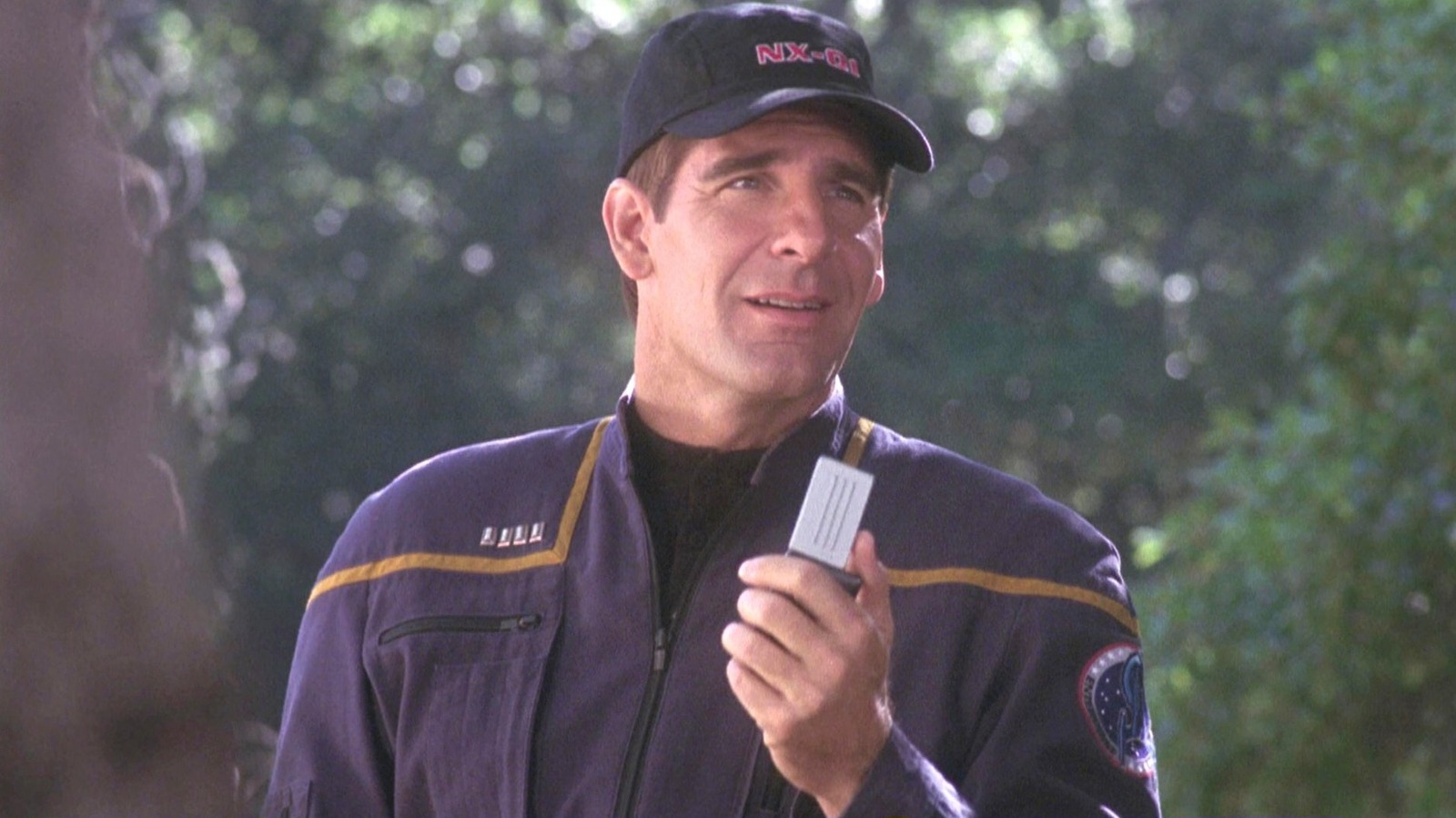
Set in the timeline between Zefram Cochrane’s (portrayed by James Cromwell) groundbreaking warp drive test in “Star Trek: First Contact” and the eras of “Star Trek: The Original Series” and “Star Trek: Strange New Worlds,” the prequel series chronicles humanity’s initial warp-capable explorations aboard the Enterprise NX-01, under the command of Captain Jonathan Archer (played by Scott Bakula). Despite a promising launch, the series struggled with questionable story arcs, mishandled characters, unnecessary sexualization, and a lack of direction, contributing to a sense of franchise fatigue that ultimately undermined its potential.
Nevertheless, “Enterprise” had its share of highlights, from Captain Archer’s cheese-loving beagle, Porthos, to the quirky Denobulan, Dr. Phlox (John Billingsley). These elements, however, couldn’t fully compensate for the unfortunate fate of Trip Tucker (Connor Trinneer) in the series finale. As we venture into ranking the four seasons of “Enterprise” from best to worst, let’s step into the decontamination chamber and take a closer look.
Unlike other “Star Trek” series, which often find their rhythm as the seasons progress, “Enterprise” began with its strongest season and gradually declined. The show kicks off with a pilot episode that emphasizes the tension between Vulcans and humans regarding space exploration. It follows Captain Archer as he seizes an opportunity to fulfill his father’s dream by transporting an injured Klingon.
Season 1 unfolds with episodic adventures, offering serviceable sci-fi fare, though some fans felt it didn’t delve deeply enough into established “Trek” lore. Episodes such as “Fight or Flight,” which explores Hoshi’s (Linda Park) space travel anxieties, the humorous “Unexpected” featuring Trip Tucker’s accidental male pregnancy, and the Phlox-focused “Dear Doctor” capture the season’s essence with decent special effects and average pacing.
4. Season 1
While it may not be the most groundbreaking “Star Trek” of its era, “Enterprise” Season 1 delivers a dose of creativity. It also introduces Shran (Jeffrey Combs), Archer’s Andorian ally, who stands out as one of the franchise’s most beloved supporting characters, showcasing why Combs is a fan-favorite guest star in the “Trek” universe.
From there, Season 1 develops into some episodic adventure-of-the-week stories. Episodes are serviceable enough for a sci-fi series, even if they don’t lean as hard into “Trek” lore as some fans would have liked. Entries like “Fight or Flight,” one of several storylines that deals with Hoshi’s (Linda Park) anxieties over space travel, the “Trip accidentally bumbles into male pregnancy” storyline of “Unexpected,” and the Phlox-centric “Dear Doctor” exemplify the season’s general vibe of Trekkie storytelling with solid special effects and meh pacing.
It’s not the best, most mind-blowing “Star Trek” of its era — even if it is the best for this beleaguered show – but “Enterprise” Season 1 gives us plenty of creativity, and introduces Archer’s Andorian bromance partner, Shran (Jeffrey Combs). He’s easily one of the greatest ancillary characters in the franchise, reminding fans why Combs is one of the most reliable and enjoyable “Trek” guest stars.
3. Season 4
Other than its disappointing series finale, an episode Riker actor Jonathan Frakes would come to see as a mistake, “Enterprise” Season 4 wasn’t terrible. After a couple of objectively messy seasons, the show seemed like it was finally starting to find its footing again — just in time to get canceled, of course.
This season certainly has its low points, like the surreal plot of its two-parter “Storm Front,” which imagines an alternate timeline 1944 where freaky, red-eyed aliens are directing a Nazi occupation of the United States, or the sexy Orion hotties storyline of “Bound.” But we also get fun additions like the ever-hammy Mirror Universe arc of the two-episode “In a Mirror Darkly” and the entertaining Section 31 subplot of “Affliction.” There’s also some much-needed worldbuilding with legacy “Trek” races like the Rigellians, Andorians, and Tellarites.
While the series isn’t perfect, the ship is on its way to being righted when that questionable finale comes along, a swan song that most fans consider the second-worst in “Star Trek” history, next to the sexist “TOS” ending “Turnabout Intruder.” Instead of following our beloved NX-01 crew to their next mission, we’re rushed through a speedy wrap-up framed by Riker as he looks back over what amounts to a holodeck history lesson. To add insult to injury, the writers up and kill Trip in a meaningless way that adds nothing to the storyline. Hey, but at least we got more Andorian lore this season.
2. Season 3
Season 3 comes fairly close to Season 4 in terms of quality. This year consists of mostly adequately entertaining sci-fi plots that still lack the momentum and gravitas of its peer shows, “TNG,” “Voyager,” and “Deep Space Nine.” The season takes a much less episodic approach to its storytelling, compared with its first two seasons, in the wake of a violent terrorist attack on Earth from an unknown alien race. They’re revealed as the Xindi in the Season 2 finale.
The third season thus takes a much darker turn, with the Enterprise crew grieving in a way that parallels the real-world pain and fear felt by many in the U.S. during the post-9/11 era. The story arc follows the Enterprise crew’s dealings with the Xindi and the malevolent Sphere-Builders behind them.
The story gets a little hard to follow at times, particularly in its connection to the Temporal Cold War, and T’Pol’s addiction to trellium (along with her various mental health struggles this season) is more than a little unnerving. And that’s to say nothing of “Extinction,” the bizarre fever dream of an episode that serves as a spiritual successor to the “Voyager” episode “Threshold.” But even at its worst, Season 3 is still a fun ride, and the Xindi worldbuilding makes for a pretty cool concept.
1. Season 2

Paramount
Every “Star Trek” series has an episode most fans wish they could retcon from canon (refer to “Code of Honor,” an embarrassing early “Next Gen” episode). For many “Star Trek: Enterprise” viewers, that retcon would include a fair chunk of Season 2, which many fans felt generally failed to live up the show’s potential. It’s not even that these episodes are bad — they’re just not that interesting, either. Take “Carbon Creek,” the ASMR-vibey episode that finds T’Pol (Jolene Blalock) sharing a story about her great-grandma T’Mir (also played by Blalock) as she’s stranded in 1950s Pennsylvania with a couple of her Vulcan buddies.
Other slow-paced or seemingly pointless entries like “A Night in Sickbay,” “The Crossing,” and “Precious Cargo” are common throughout the season. There’s also the mishandled after-school special vibe of “Stigma,” which would go down as one of the weakest “Trek” efforts at serious political commentary.
As tends to happen with “Star Trek” from time to time, a few episodes seem to rehash tropes from other “Trek” series — although, arguably, these make for some of the season’s better entries, particularly with the Hoshi-centric transporter horror episode “Vanishing Point.” But for the most part, the season’s best sci-fi concepts — as exemplified by the Doctor Whovian “Dead Stop” — just don’t get the pacing and story development they deserve in Season 2. The results are a wholly forgettable season, for what’s often regarded as the most forgettable “Star Trek” series.