The countdown to the winter holiday season has begun, and skiers and snowboarders are already picturing fresh corduroy pistes, clear blue skies and perfect turns.
Ideal conditions have never been guaranteed. However, as climate change continues to reshape mountain weather around the world, dependable snow can feel increasingly difficult to find.
This season, two major atmospheric influences will also play a role: a powerful El Niño and a Sudden Stratospheric Warming (SSW) event that has disrupted the polar vortex.
El Niño is a naturally occurring climate pattern that typically develops every two to seven years, when sea-surface temperatures in the tropical eastern Pacific climb at least 0.5°C above average.
Experts say El Niño can intensify extreme weather, including heatwaves, droughts and heavy rainfall—trends that are already becoming more common as a result of climate change.
So what could that mean for this year’s ski holiday? And which resorts in Europe and North America offer the best prospects for reliable snow?

Unusual weather patterns, including El Niño and Sudden Stratospheric Warming (SSW), which has unsettled the polar vortex, are expected to influence snow conditions this winter (Pictured: skiers in Courchevel, France)
Many European resorts have yet to open, with the first lifts due to start turning this weekend. Even so, several high-altitude destinations have already received substantial snowfall, offering early-season visitors the chance to enjoy excellent November skiing.
Fraser Wilkin, founder of weathertoski.co.uk and managing director of snow-wise.com, tells Our News Outlet which resorts winter sports enthusiasts should consider before Christmas if they want to make the most of the early snow.
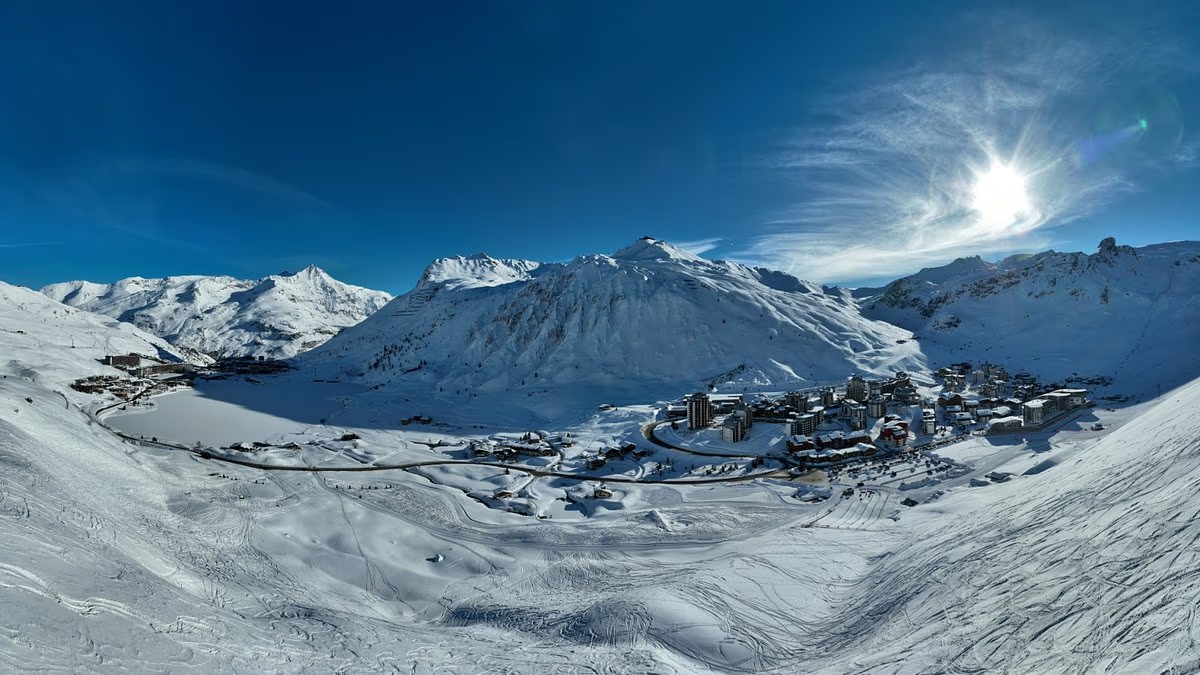
He says: ‘The higher resorts in the western Alps have had an enormous amount of snow, particularly Tignes and Val Thorens, both of which will open with deep coverage on Saturday.
‘Cervinia in Italy, which is already operating, is another resort with exceptionally strong early-season conditions. Some of these areas have recorded as much as 1.5 metres of fresh snow at altitude this week.
‘Lower-lying resorts and destinations farther east, including those in Austria, have not seen the same snowfall so far. But it is still very early in the season, and conditions can change rapidly at this time of year.’
GO HIGH OR GO HOME? WHERE TO BOOK RIGHT NOW

French resort Tignes, located 2,100 metres above sea level, has received a substantial blanket of November snow
The Met Office and the World Meteorological Organization have confirmed that a ‘super’ El Niño is developing, with tropical Pacific sea temperatures reaching record levels.
Wilkin says the pattern ‘is likely to increase the chances of mild, stormy weather in late autumn and early winter, with a succession of Atlantic storms’, making Europe’s highest resorts the safest choice for snow-reliable conditions.
Wilkin says: ‘If I were booking an early-season trip now, Tignes, Val Thorens and Cervinia would be at the top of my list.’
‘I would also look at Val d’Isère, La Plagne, Les Arcs, La Rosière, La Thuile, Zermatt and Verbier.
‘The short version is that high and western resorts are the best options for now.’
WHAT ABOUT MID-SEASON SKIING HOLIDAYS?

Lower-altitude resorts could struggle at the start of the season, but conditions are expected to become more favourable as winter progresses (Pictured: an Austrian ski resort with limited snow)
‘A greater chance of cold outbreaks as we move into the heart of winter could benefit lower-lying resorts,’ says the weathertoski.co.uk founder.
He explains: ‘This strong El Niño raises the possibility of colder conditions as the season moves into its middle and later stages.
‘Combined with the earliest Sudden Stratospheric Warming event on record, that could improve the outlook for lower resorts in January and February.
‘SSW events disturb the polar vortex and increase the likelihood of cold outbreaks across Europe and North America. Colder temperatures do not automatically guarantee more snow, but they generally improve the outlook for lower-altitude destinations.’
Resorts in Finland, Norway and Sweden are also worth considering, especially for families and intermediate skiers who are comfortable with a smaller selection of runs.
Our expert says: ‘Scandinavian resorts rarely receive huge snow dumps, but they are generally consistent and can provide dependable conditions if you are happy with a more limited area of terrain.’
AND HOW IS NORTH AMERICA SHAPING UP THIS WINTER?
The outlook is somewhat easier to assess in North America because ‘the relationship between El Niño and winter weather patterns is better established’, Wilkin says.
He adds that southern resorts are generally more likely to receive good snow. Mammoth Mountain in California, for instance, enjoyed heavy early-season snowfall, with around a foot arriving in early November and allowing the resort to open a week ahead of schedule on November 5.
As for Canada, he says: ‘Farther north, at resorts such as Whistler, the odds favour a milder and drier winter. However, El Niño is only a statistical influence, and the season will not always unfold exactly as the pattern suggests.’


