In a stark forecast, a prominent economist has cautioned that the ongoing conflict between the United States and Iran could cement elevated costs for Australian consumers for decades while potentially giving rise to a fresh wave of terrorism.
Shane Oliver, the chief economist at AMP, has highlighted how the war’s repercussions extend far beyond the immediate conflict zone, outlining nine enduring impacts Australia may face as a result.
Oliver noted a fleeting moment of relief during the past week, as President Trump postponed his threat to obliterate significant Iranian infrastructure. “The situation is precarious,” he remarked. “Regardless of whether the ceasefire persists or if the conflict intensifies, the long-term consequences are inevitable, surpassing the immediate stagflationary effects anticipated this year.”
Currently, the last vessels passing through the crucial Strait of Hormuz are reaching their intended destinations. However, this leaves refineries across Asia vulnerable to shortages of crude oil for refining processes.
Oliver has warned that the disruption to the global oil supply chain would begin to manifest this month, signaling a potential ripple effect that could impact economies worldwide.
Mr Oliver said that means the hit to global oil supply will start to bite this month.
‘Having another hit to supply and boost to inflation so soon after the last one in 2022 and on top of the tariff impact in the US will lead to another leg up in prices,’ he said.
‘This runs the risk of a further boost to inflation expectations and loss of faith in central banks’ ability to get inflation back to target.’

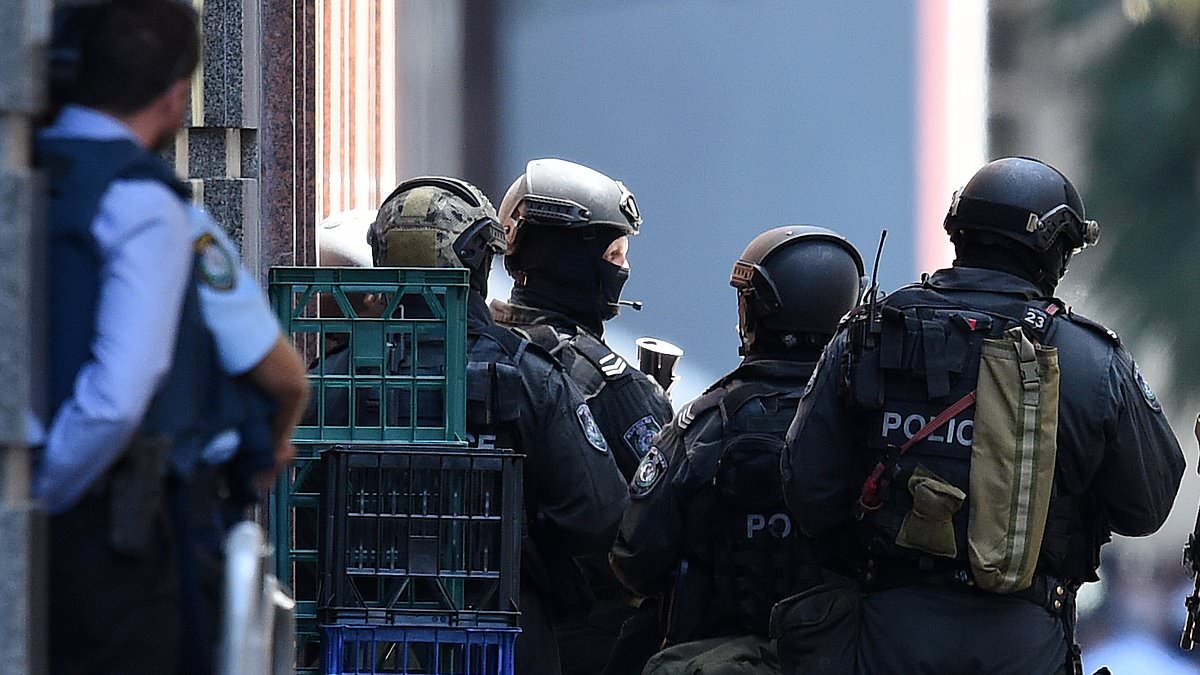
A top economist has warned the US-Iran war could lock in higher prices for Australian households for decades and lead to a new generation of terrorists (pictured, heavily armed police outside the Lindt cafe in 2014)

AMP chief economist Shane Oliver said the war is unleashing a chain reaction that stretches far beyond the battlefield, warning Australia faces nine long‑term consequences (pictured, higher grocery prices are among the changes)
Most economists expect the Reserve Bank of Australia to lift rates to 4.35 per cent when it meets in May while Westpac expects rates will be hiked again in June and August.
But the inflation shock is only the beginning. Beyond the immediate impact on prices and interest rates, the conflict will reshape government spending priorities for years to come.
‘Increased defence spending is an inevitable result of increased geopolitical risk,’ Mr Oliver said.
‘It will also be fuelled by Trump’s renewed contradictory attacks on NATO countries and other allies including Japan and Australia for not joining in on the attack on Iran.
‘Particularly so if the US decides to leave NATO as it’s been alluding to.’
Defence Minister Richard Marles will release the latest National Defence Strategy on Thursday, highlighting how the wars in Ukraine and the Middle East have underscored the growing role of drones in warfare and committing at least $12billion to large uncrewed systems such as Ghost Bat and Ghost Shark, as well as cheaper drones.
‘Expanding our fleet of autonomous and uncrewed systems across all domains will not only help the ADF keep our nation safe, but will boost Australia’s sovereign defence industry, supporting local jobs and harnessing Australian innovation,’ Marles said.
It comes as Marles said on Tuesday Australia would not commit naval forces while conditions remain unstable, despite the United States launching a naval blockade of Iranian ports overnight.

Increased defence spending is among the changes forecast for Australia
But defence is only one side of the security equation. The same conflicts are also exposing how vulnerable the global energy system remains to geopolitical shock.
That will translate into increased spending on oil and gas infrastructure as Australia looks to boost its own reserves, Mr Oliver said.
‘While Trump appears to have been surprised and frustrated by Iran’s move to control the Strait of Hormuz as evident in his ‘Open the F…… Strait, you crazy bastards’ comment, it’s entirely logical and had long been predicted if Iran found itself threatened,’ he said.
‘It was why Saudi Arabia built its East-West oil pipeline in the 1980s.
‘Now that it’s happened, it provides yet another reminder of the global energy dependency on a highly volatile part of the world.’
Mr Oliver said the crisis will also boost demand for renewables and nuclear on the simple logic that sun, wind and nuclear energy do not depend on volatile politics in the Middle East.
‘This is already evident with motorists reportedly scrambling to buy electric cars which are now around 15 per cent of new car sales in Australia,’ he said.
Mr Oliver said bigger government and more public debt are also inevitable as higher defence spending and increased onshoring push budget deficits wider, a problem already stark in the US, where Donald Trump is pushing a $500billion defence budget boost despite a deficit running at around 6.5 per cent of GDP.

Australia will only offer help the US to reopen the Strait of Hormuz if a permanent ceasefire is achieved

AMP economist Shane Oliver (pictured) said the war is unleashing a chain reaction that stretches far beyond the battlefield, warning Australia faces nine long‑term consequences
‘There’ll be more pressure to onshore supply chains – this is on top of the pressure flowing from the pandemic for medical equipment but will now focus on oil refining, aluminium, fertiliser etc which are all being impacted by the war,’ he said.
‘Future Made in Australia will likely see another leg up.’
Mr Oliver said the war was yet another reminder we live in a more crisis-prone world which will breed a new generation of terrorists.
‘The Iran War is now the fifth major global shock in the last 20 years with the others being the GFC, the Eurozone debt crises, the pandemic and the 2022 inflation shock,’ he said.
‘While there were crises before that, the tech wreck, the Asian crisis, the early 1990s recession, they now seem more frequent and less related to traditional economic cycles.
‘The Israel/Gaza war and now the Iran War risk driving a renewed rise in terrorism.
‘Economies and markets can look through terror attacks that are limited in impact, as we saw in the 2000s, but this would change if the damage was more general.’
Mr Oliver said instability is being driven not just by war, but by a dramatic shift in how the US wields its global power under Trump, turning it into a destabilising force that trashes the rules‑based order, attacks allies and acts like a ‘madman’, eroding America’s credibility.

Oliver said US President Trump (pictured) was a destabilising force trashing the rules‑based order and acting like a ‘madman’, eroding America’s credibility
‘This has been particularly evident this year with the US intervention in Venezuela, attempt to take Greenland, which he is still on about, and now Iran,’ he said.
‘It’s hard to see this not being interpreted by other powerful countries as a green light to do whatever they want in their region and beyond.
‘What’s going on now with Iran is the sort of thing that world wars start over.’