
Picture a world where you can explore your surroundings as if you’re inside a video game, with the seamless ease of Google Street View—but with a twist: you create it yourself. This vision is becoming a reality thanks to a collaboration between Insta360, a leading innovator in 360-degree camera technology, and Splatica, an ambitious UK startup with just 12 employees.
In the early days of this year, we delved into the exciting realm of Gaussian splatting—a technology poised to revolutionize how we digitally recreate segments of the real world in stunning, photorealistic 3D. Today, Splatica is making this technology accessible right now. All you need is a consumer-grade 360-degree camera and a subscription service that takes care of the nitty-gritty details.

When I describe the process as “surprisingly easy,” I truly mean it. Here’s what I experienced:
- Change two settings on an off-the-shelf Insta360 camera or Antigravity drone
- Record a video while walking (or flying) around the area
- Sign up for a Splatica account and upload the video
- Wait a day for a miniature 3D world to appear in my web browser
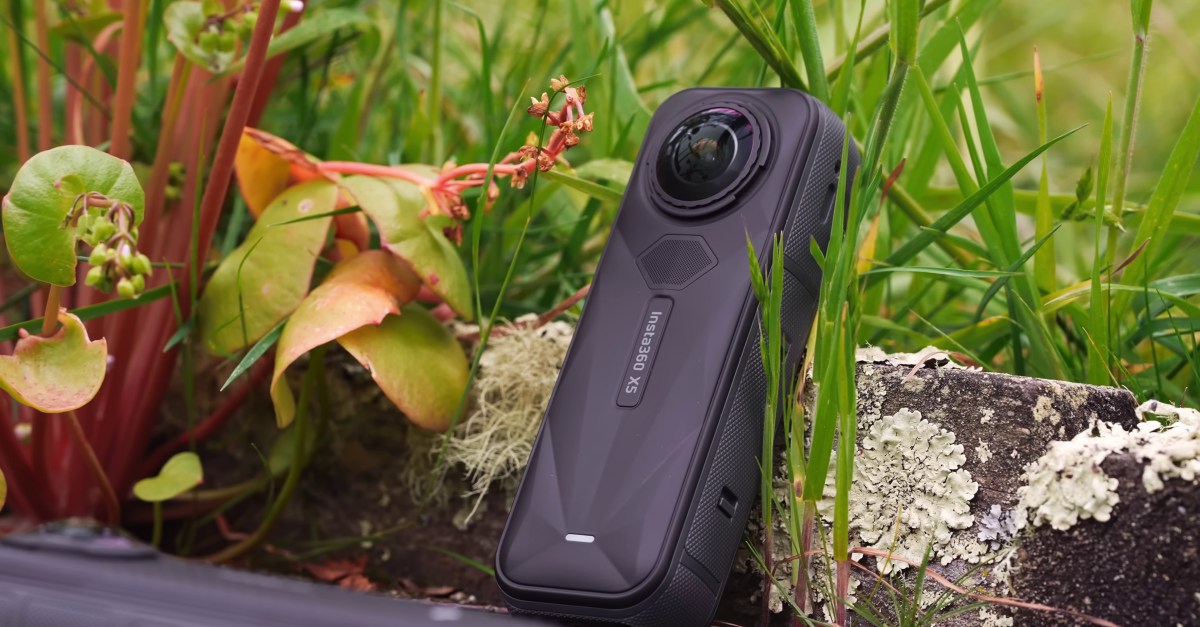
Using both an Insta360 X5 camera and an Antigravity A1, I embarked on creating my own digital realms. Although the results aren’t flawless—the splats can sometimes resemble a dreamy, computer-generated painting—it’s evident that this innovation will attract creators and businesses alike. According to Insta360 co-founder Max Richter, their cameras were already popular for applications like virtual real estate tours, monitoring construction progress, and inspecting facilities. If I were in real estate, I’d invest in one of these cameras just for this capability.
Here’s a glimpse of my Antigravity A1 capture, featuring a massive play structure in my local park. You can use the WASD keys on a keyboard to navigate and a mouse to steer, or simply drag the on-screen controls on your phone.
And here’s a capture of a well-worn basketball hoop at another nearby park. Thanks to Splatica’s technology, most of the people in the scene are automatically edited out, lending the park a more tranquil appearance than in reality.
If you tap the path button in the upper-right hand corner, underneath “SD” and “HD,” you should see the exact winding path I took with each camera (and the Insta360 X5’s selfie stick) to create these results.
When I simply circle around the hoop once, as you can see below, it doesn’t look nearly as good. Splatica can only recreate what your camera sees, so you need to film from every place you might want to “stand” in the virtual world.
Below, I tried to simulate a basic bridge inspection at the same park, focusing on one pillar underneath the BART commuter rail. I’m not sure it has enough detail to satisfy real surveyors or safety inspectors — perhaps that’s because the drone’s overzealous obstacle avoidance kept pausing my flight.
But when I spent over five minutes capturing my own backyard with the X5, the results were so expansive my wife and I didn’t feel quite feel comfortable sharing the whole scan. Instead, check out how Splatica recreated all the objects in my backyard by generating a 3D point cloud:


All of these scans can be downloaded in PLY and USDZ format and associated with real-world measurements: Splatica co-founder Andrey Shelomentsev tells me there’s typically a one percent error every 100 centimeters, “good enough for surveying and some rough exploration of the space,” and says measurements can be more accurate by placing some markers around an area.
This actually isn’t the first time I’ve tried to 3D scan my backyard: in 2021, I did it with a Skydio self-flying drone. But back then, Skydio was charging $2,999 per year for the feature, not including a drone or a service to stitch the photos together, while Splatica claims its service does it all autonomously with a normal 360-degree video.
Splatica’s own sample scenes are even more interesting than mine, particularly now that it’s trying to prove companies can use its service to train robots before deploying them for real in factories around the world. Here’s the Imecar Elektronik factory in Antalya, Türkiye:
And for something completely different, here’s part of the Leighton House in London:
How is this possible just by walking around with a camera? Shelomentsev tells me his company’s built a proprietary version of SLAM (the Simultaneous Localization and Mapping technique that lets all kinds of robots, self-driving cars, and VR headsets know their position in 3D space) specifically designed to create accurate point clouds from 360-degree video. You can think of point clouds as the “bones” of 3D objects that then get painted with color.
And while Splatica says it can work with any 360-degree camera, it helps that Insta360 and Antigravity’s cameras put all kinds of extra metadata into the video files themselves. “The files carry everything we need: lens distortion parameters, shutter speed, accelerometer and gyroscope data, and GPS — streamed from the Insta360 mobile app directly to the camera during capture,” Splatica CEO and co-founder Eugene Nikolskii tells The Verge.
Above: Corridor Crew visually explains how splats work.
The Insta360/Splatica combo does have its limitations. If you zoom into any of my embedded or linked examples to see fine details, you’ll probably see slightly translucent blobs of color rather than legible textures — that’s how splats are made, after all. Traditional high-res photogrammetry might do a better job if surfaces are what you care about most.
But that isn’t stopping Insta360, Antigravity, and Splatica from launching a marketing campaign called Project Eternal, which the companies are touting as a “global initiative” to preserve cultural landmarks for future generations. It’s offering prizes for the best Gaussian splats, 1,000 free Splatica uploads (first-come first served), and a pilot project to scan Pompeii and the stunning Civita di Bagnoregio in Italy. They’re also “inviting creators worldwide” to scan sites like Roman theaters and Korea’s Jeju Island.
(The companies wouldn’t tell us how much they’re investing in Project Eternal, and admitted they’re not helping creators secure permits for those locations — but Splatica claims it’ll maintain public access indefinitely to any scene submitted to its “Open Heritage Dataset,” and the company’s got a decent privacy policy that makes it clear your content belongs to you.)
Beyond that, Insta360’s Richter says his company already has enterprise customers piloting 3D reconstruction and digital twin workflows in the construction and facilities management realms, and hopes to provide richer data from the camera to 3D reconstruction services and make the process more seamless.
Right now, the biggest barrier to entry with Splatica might be that the service isn’t cheap. The company charges anywhere between 18 cents and 25 cents per second of processed video, and you have to pay a monthly subscription too. The company’s currently experimenting with pricing — last week it was $70, $200, or $385 per month depending on how big a scan you need, while this week the same tiers are $50, $150, and $300.
But if you want to give it a try, you might still be able to get one of the 1,000 free slots. Splatica says it’s waiving its subscription fee for those first 1,000 users, who should each be able to turn around 10 minutes of 360-degree footage into little 3D worlds. You can also explore over 100 additional splats in Splatica’s public gallery.