Donald Trump has found himself on the back foot following a swift closure of the criminal investigation into Federal Reserve Chairman Jerome Powell. This unexpected turn of events may pave the way for potential interest rate reductions.
In an unforeseen development, Jeanine Pirro, Washington, DC’s chief federal prosecutor, announced via a post on X that she had instructed her office to terminate the investigation into Powell.
The investigation, which focused on alleged cost overruns in a $2.5 billion renovation of the Federal Reserve’s Washington headquarters, is now set to be transferred to the central bank’s internal oversight body.
This decision represents a significant retreat after a series of legal challenges and escalating political tension. More importantly, it clears the main hurdle for Trump to advance his choice for leading the Fed, Kevin Warsh.
Republican Senator Thom Tillis had previously stated he would block Warsh’s nomination while the probe was active, citing concerns that it could jeopardize the Federal Reserve’s independence.
With the investigation looming over Powell, the White House found itself at an impasse, unable to advance its preferred candidate until the matter was resolved.
Analysts believe that if he is successfully confirmed by the Senate, Warsh would be likely to meet Trump’s demands to cut interest rates immediately.


Criminal probe into Federal Reserve chairman Jerome Powell was abruptly shut down
A prosecutor handling the case conceded at a closed-door court hearing in March that the government hadn´t yet found any evidence of a crime, and a judge subsequently quashed subpoenas issued to the Federal Reserve.
The judge, James Boasberg, said prosecutors had produced ‘essentially zero evidence’ to suspect Powell of a crime. Boasberg called their justification for the subpoenas ‘thin and unsubstantiated.’
More recently, prosecutors made an unannounced visit to a construction site at the Fed’s headquarters but were turned away, drawing a rebuke from a defense attorney in the case who called the maneuver ‘not appropriate.’
The inquiry triggered a rare public response from Powell, who said in a January 11 video statement that the investigation was merely a pretext for Trump’s ongoing effort to pressure the Fed to cut interest rates and undermine the central bank’s independence.
‘The threat of criminal charges is a consequence of the Federal Reserve setting interest rates based on our best assessment of what will serve the public, rather than following the preferences of the President,’ Powell said in the video.
‘This is about whether the Fed will be able to continue to set interest rates based on evidence and economic conditions – or whether instead monetary policy will be directed by political pressure or intimidation.’
The investigation focused on Powell’s congressional testimony, internal records, and spending tied to a sweeping overhaul of the Fed’s historic buildings near the National Mall – an ambitious project that has ballooned hundreds of millions of dollars over budget.

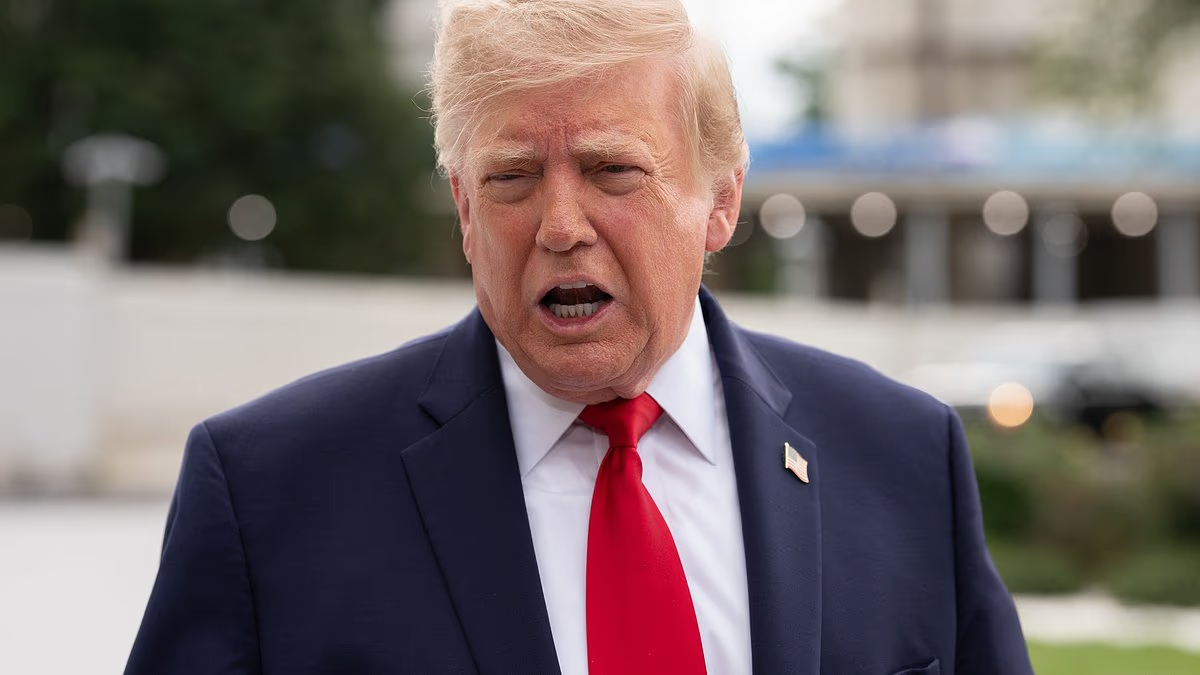
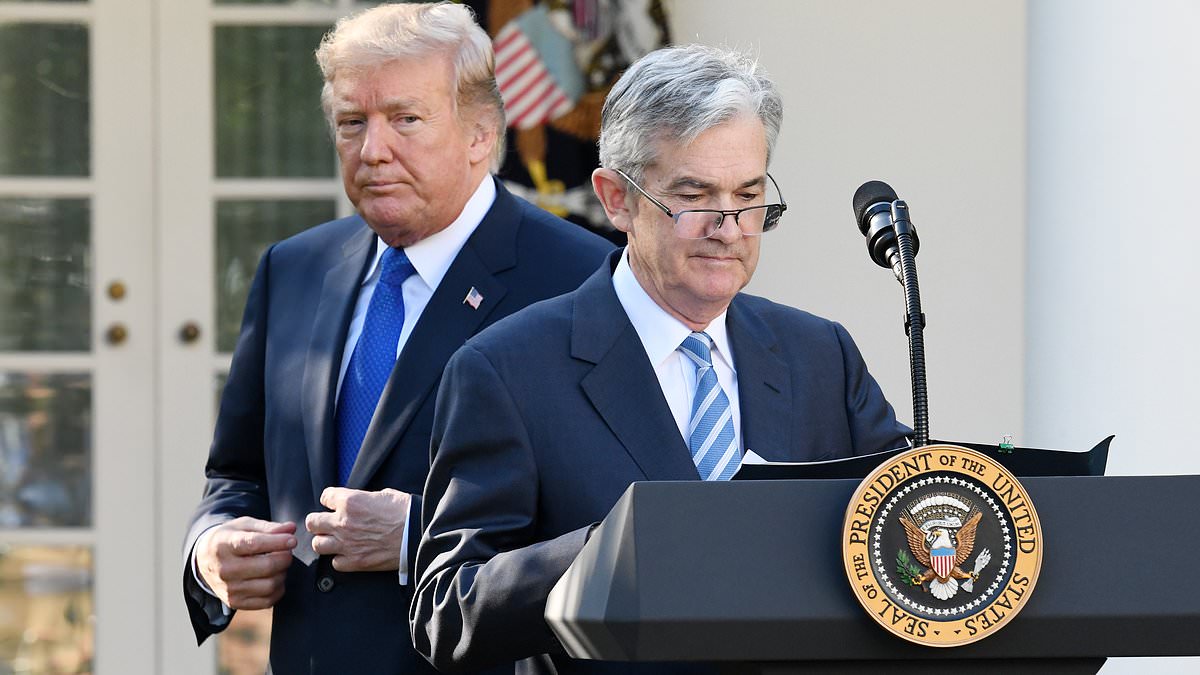
President Donald Trump and Fed chairman Jerome Powell have had a fraught relationship
In late January, President Trump nominated Warsh to take over from Powell, whose most recent filing indicated personal wealth of $19 million to $75 million.
‘On top of everything else, he is ‘central casting,’ and he will never let you down,’ Trump posted on social media.
The 55-year-old is a scholar and lecturer at Stanford, a member of the International Group of 30 and a member of the Panel of Economic Advisers at the Congressional Budget Office.
Some analysts speculate that Warsh’s nomination is a welcome one due to his Fed experience and Wall Street’s view that he won’t always do Trump’s bidding.
Throughout the selection process for the new leader of the Fed, Trump has repeatedly stated that Warsh would bring down interest rates.
While at the Fed more than ten years ago, Warsh was considered to be a ‘hawk’ – that is, very concerned about the Fed’s impact on inflation and prices – who argued against lowering rates because that would raise prices.
But Warsh has changed his tune to a degree in the lead-up to his nomination and Senate testimony, teasing comments about his more ‘dovish’ side and the need for rate cuts to boost the economy.
‘We’re … curious whether Mr Warsh will reiterate the relatively dovish views on monetary policy he expressed in the months before his nomination,’ economists at Pantheon Macroeconomics wrote in a recent note to clients.
Meanwhile, the Fed has kept on pause so far in 2026, following three consecutive quarter-point rate cuts in late 2025.
But with inflation heating up again and Iran war energy price spikes roiling the economy, forecasters say there’s little chance the Fed will slash rates again this year.