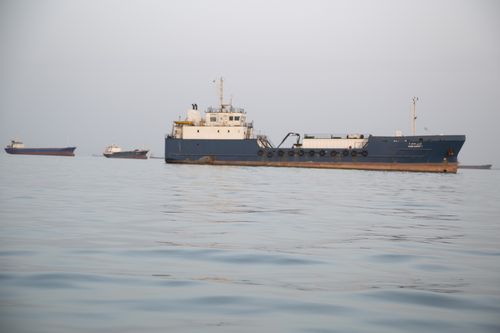

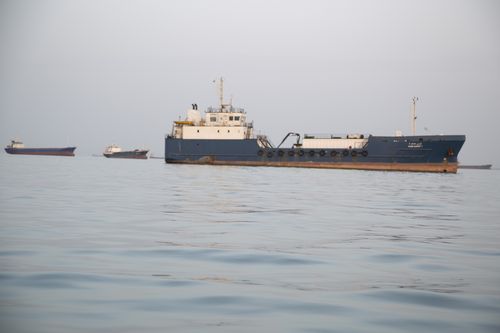
Experts caution that the process of detecting and eliminating underwater explosives could extend for months, even as a fragile ceasefire between the United States and Iran has temporarily halted hostilities. This effort is crucial in the aftermath of a prolonged conflict.
The challenge lies in convincing commercial shipping companies and their insurers that the crucial waterway—responsible for the passage of 20% of global oil supply—is truly secure once again.
“Minehunting is akin to meticulously pulling weeds from your garden, ensuring a safe path across your yard. Conversely, minesweeping resembles mowing the lawn,” explained Wills, an expert at the Center for Maritime Strategy within the Navy League of the United States.
Scott Savitz, a naval operations and mine-clearing researcher at the RAND Corporation, noted that the Navy’s mission does not necessarily require the removal of every single mine.
“There are areas still uncleared since World War II—and even World War I—due to the immense resources and time required for complete clearance,” Savitz emphasized.
According to Wills, Navy teams aboard littoral combat ships employ remotely operated, uncrewed vehicles equipped with sonar and other advanced technologies to locate mines. These vehicles are also equipped with charges to neutralize the explosives.
US Navy ships may also have explosive ordnance disposal teams, including divers, that can hunt for and destroy mines, Wills said. Helicopters can search for mines using lasers.
Shipping companies are weighing the risks
Eventually, shipping companies will be willing to take some risks to travel through the strait “particularly given how lucrative it is,” Savitz said.
Under Iran’s approval procedure for vessels wanting to transit the strait, ships must take a different route than before the war — to the north, near Iran’s coastline.
Insurers are adding a clause that requires ship owners to contact Iranian authorities to ensure safe passage, said Dylan Mortimer, U.K. marine war leader for insurance broker Marsh.
That certification does not mention mines specifically and is intended to protect against the entire spectrum of threats, including missile and drone attacks or seizures, Mortimer said.
But mines do, at the very least, play a psychological role, a phenomenon Mortimer called the “spectre of threat.”
“That plays in the Iranians’ favour, because whether there are mines there or not, people think there’s mines there and they will operate accordingly,” Mortimer said.
Those fears could mean it takes longer to restore confidence that the strait is safe even after the war.