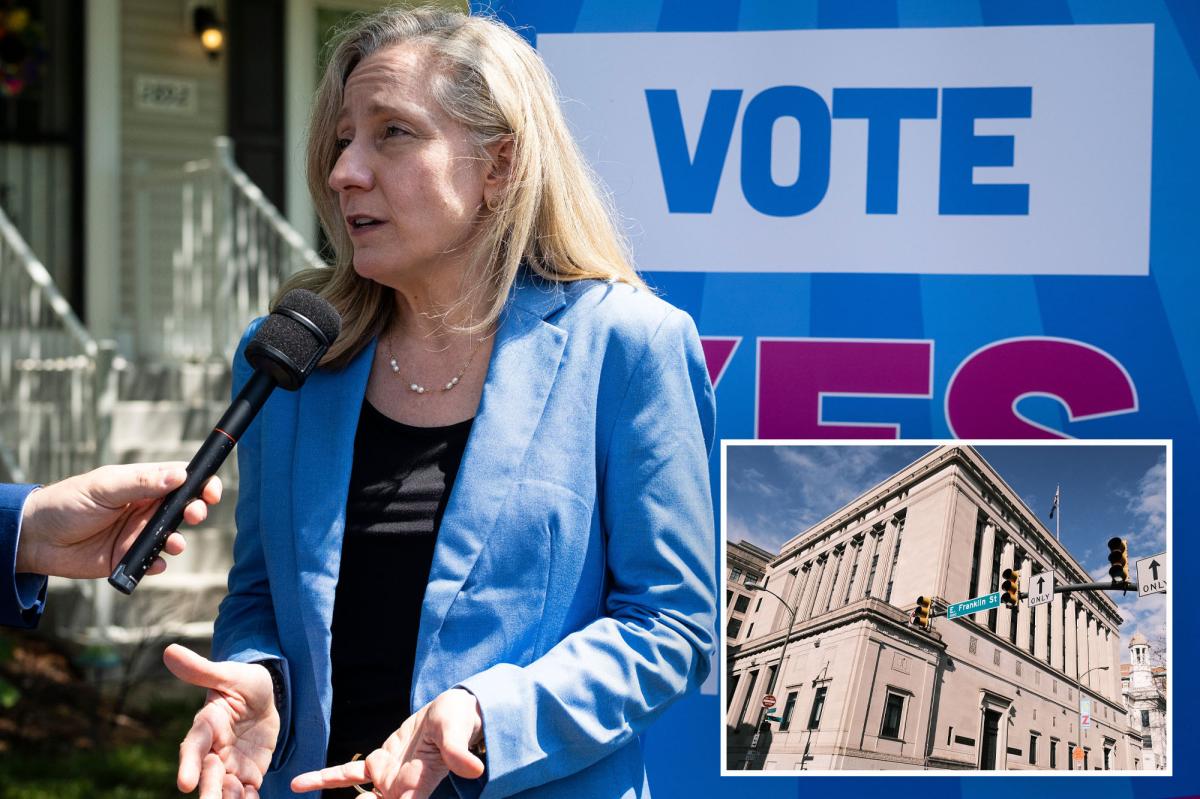


WASHINGTON — On Monday, the Virginia Supreme Court heard intense scrutiny directed at Democrats during oral arguments concerning a contentious redistricting referendum that narrowly passed in the recent election. Interestingly, most of the justices maintained an unusual silence throughout the proceedings.
Republicans have contested the referendum, which could enable Democrats to secure up to four additional congressional seats, potentially resulting in a 10-to-one advantage over Republicans. The GOP argues that the Democrat-led General Assembly bypassed procedural rules to place the referendum on the ballot.
To present the referendum to voters, a constitutional amendment was required. This process mandates that state lawmakers must approve a resolution in two consecutive legislative sessions, with an election taking place between these sessions.
Democrats assert that they fulfilled this requirement, partly due to a special session last year, which they claim was extended from 2024 and reconvened during the regular 2025 session. However, Republicans argue that such a special session does not satisfy the criteria for two separate sessions.
Furthermore, Republicans point out that the state legislature’s initial vote on the proposed amendment occurred in October while early voting for the off-year election was still underway, thus failing to meet the stipulation of having two distinct sessions with an intervening election.
The lower courts have expressed skepticism regarding whether Democrats adhered to the necessary procedural requirements.
But the Democrats’ lawyer, Matthew Seligman, argued to the state’s high court, “The General Assembly complied with every step that the Constitution requires.
“The circuit court attempted to interfere with the democratic process by halting it,” he said. “The challengers here now try to overturn the result of that democratic process.”
Right off the bat, a justice dismissed Seligman’s argument about the people of Virginia deciding the referendum and underscored the irregularities of the process.
The other justices who asked questions largely pushed Seligman over tougher procedural issues and generally had easier queries for the GOP’s lawyer
Notably, fewer than half of the state’s seven high court justices actually asked questions during oral arguments.
Another procedural issue raised involved the General Assembly neglecting to publish the proposed amendment 90 days in advance, then retroactively repealing that regulation.
“There are lots of voters across the Commonwealth who are not totally educated on everything going on in Richmond, and they need time,” contended Thomas McCarthy, the lawyer repping the Republicans.
“The Commonwealth needs time for the whole thing to be aired out,” he said of the situation — which Republican National Committee Chairman Joe Gruters has called “a blatant power grab.”
Democrats argued that the will of the voters shouldn’t be tossed out on technicalities. They’ve also contended that the Virginia Supreme Court shouldn’t be weighing in on legislative rules.
The referendum needed to temporarily allow the state legislature to redraw congressional districts instead of the constitutionally mandated bipartisan commission was approved in a 51.6% to 48.4% vote.
Virginia currently has six Democrats and five Republicans in its congressional delegation. The state legislature’s new map would create favorable conditions for a 10-1 split in favor of the Dems, though that’s not guaranteed.
It is very rare for courts to throw out a referendum result.